Get live statistics and analysis of PEoperator⚡️'s profile on X / Twitter
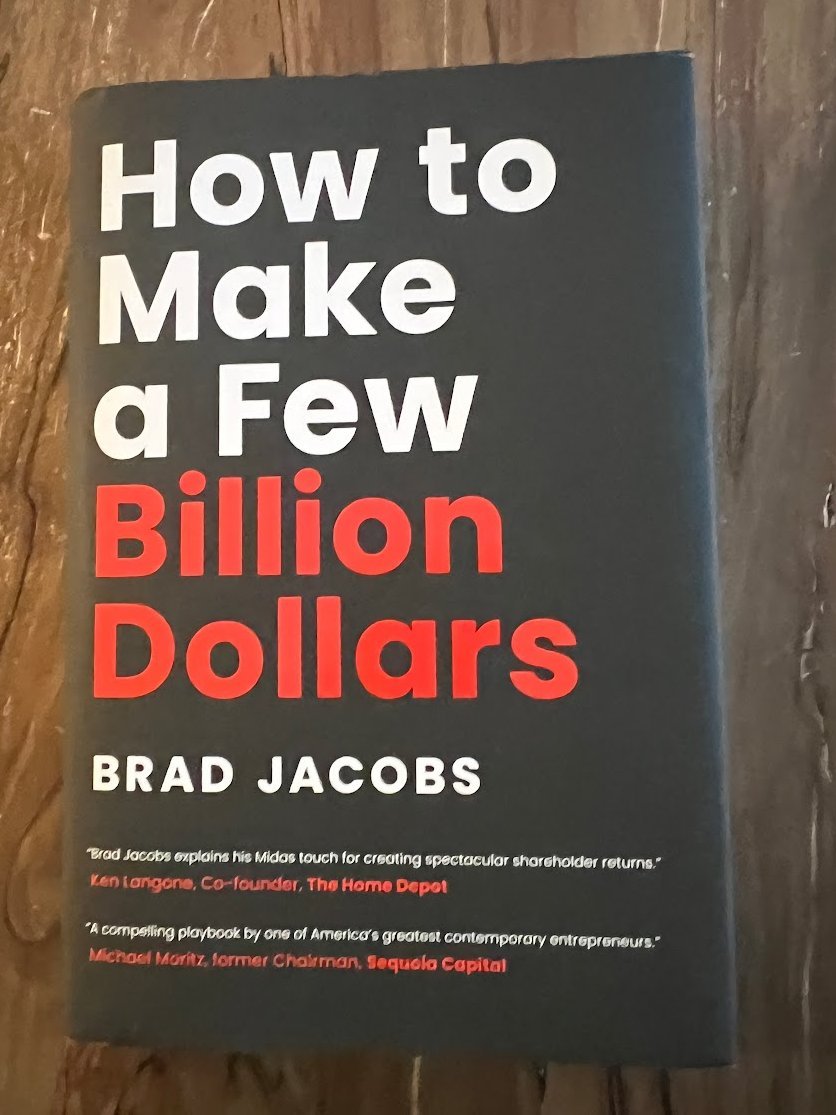
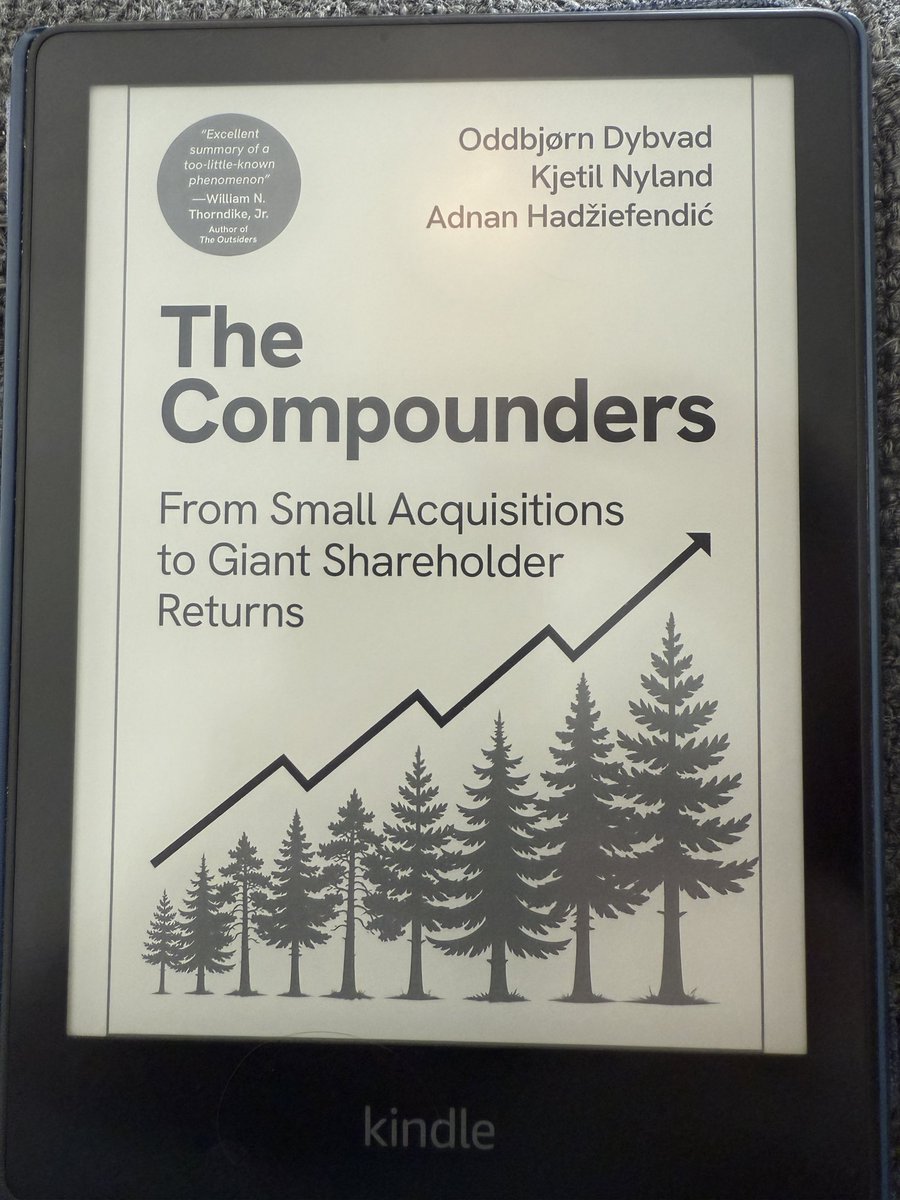
Former private equity operator. Current CEO. Sharing deals, stories, and lessons from my career | book recs: peoperator.co
426following15kfollowers
The Thought Leader
PEoperator⚡️ is a former private equity operator turned CEO who dishes out hard-won deal stories, career lessons, and hand-picked book recs with boardroom authority and a wink. His feed blends contrarian macro takes, practical advice, and short, punchy observations that land hard. If mentorship had a Twitter handle, this is it.
You tweet like a CEO who drinks black coffee to fuel decisive boardroom moves and treats spreadsheets like emotional crutches, tell us which Excel column you cried into last, billionaire-in-training.
Successfully pivoted from private equity operator to CEO while building a highly engaged audience (15k+) and producing viral, career-defining tweets, including a top post with ~580k views and nearly 9.4k likes.
To translate dealroom rigor and decades of operator experience into clear, actionable wisdom that helps ambitious professionals move beyond analysis paralysis and become decisive leaders; to curate timeless reading and practical frameworks that scale other people's careers.
Believes decisive action beats endless spreadsheeting, that contrarian strategic bets can create generational value, and that timeless wisdom (from knights to modern operators) still teaches modern leadership. Values clarity, intellectual curiosity, and practical mentorship over theory for its own sake.
Credibility from real-world deal experience, knack for pithy, high-engagement tweets, excellent book curation, contrarian big-picture thinking, and an authoritative yet approachable voice that mentors followers without lecturing.
Can be a touch brusque or elitist in tone (the "just move past the spreadsheet" vibe), leans heavily on text so opportunities for richer media are missed, and high tweet volume risks diluting signal or alienating followers who want deeper threads or open dialogue.
Run a recurring 'Deal Postmortem' thread series breaking down one deal or lesson in 6, 10 tweets; pin a short intro thread + booklist; convert top tweets into 60, 90s video clips or dual-image carousels for higher share rate; host monthly X Spaces/book club with featured authors and Q&A; actively quote-tweet replies to highlight community insights and turn viral one-offs into serialized content.
Fun fact: PEoperator⚡️ has tweeted 12,839 times and built a 15,228-strong audience, his top tweet about black coffee racked up ~580,996 views and nearly 9,400 likes. Profile explicitly lists former private equity operator → current CEO and shares a public book list.
{"data":{"__meta":{"device":false,"path":"/creators/PEoperator"},"/creators/PEoperator":{"data":{"user":{"id":"1332859752880156672","name":"PEoperator⚡️","description":"Former private equity operator. Current CEO. Sharing deals, stories, and lessons from my career | book recs: https://t.co/6HlJT9UxgA","followers_count":15228,"friends_count":426,"statuses_count":12839,"profile_image_url_https":"https://pbs.twimg.com/profile_images/2006707457158950912/E0obQUl7_normal.jpg","screen_name":"PEoperator","location":"Peoperator.co","entities":{"description":{"urls":[{"display_url":"peoperator.co","expanded_url":"http://peoperator.co","indices":[109,132],"url":"https://t.co/6HlJT9UxgA"}]},"url":{"urls":[{"display_url":"peoperator.substack.com","expanded_url":"http://peoperator.substack.com","indices":[0,23],"url":"https://t.co/NyeKTRzMF7"}]}}},"details":{"type":"The Thought Leader","description":"PEoperator⚡️ is a former private equity operator turned CEO who dishes out hard-won deal stories, career lessons, and hand-picked book recs with boardroom authority and a wink. His feed blends contrarian macro takes, practical advice, and short, punchy observations that land hard. If mentorship had a Twitter handle, this is it.","purpose":"To translate dealroom rigor and decades of operator experience into clear, actionable wisdom that helps ambitious professionals move beyond analysis paralysis and become decisive leaders; to curate timeless reading and practical frameworks that scale other people's careers.","beliefs":"Believes decisive action beats endless spreadsheeting, that contrarian strategic bets can create generational value, and that timeless wisdom (from knights to modern operators) still teaches modern leadership. Values clarity, intellectual curiosity, and practical mentorship over theory for its own sake.","facts":"Fun fact: PEoperator⚡️ has tweeted 12,839 times and built a 15,228-strong audience — his top tweet about black coffee racked up ~580,996 views and nearly 9,400 likes. Profile explicitly lists former private equity operator → current CEO and shares a public book list.","strength":"Credibility from real-world deal experience, knack for pithy, high-engagement tweets, excellent book curation, contrarian big-picture thinking, and an authoritative yet approachable voice that mentors followers without lecturing.","weakness":"Can be a touch brusque or elitist in tone (the \"just move past the spreadsheet\" vibe), leans heavily on text so opportunities for richer media are missed, and high tweet volume risks diluting signal or alienating followers who want deeper threads or open dialogue.","recommendation":"Run a recurring 'Deal Postmortem' thread series breaking down one deal or lesson in 6–10 tweets; pin a short intro thread + booklist; convert top tweets into 60–90s video clips or dual-image carousels for higher share rate; host monthly X Spaces/book club with featured authors and Q&A; actively quote-tweet replies to highlight community insights and turn viral one-offs into serialized content.","roast":"You tweet like a CEO who drinks black coffee to fuel decisive boardroom moves and treats spreadsheets like emotional crutches—tell us which Excel column you cried into last, billionaire-in-training.","win":"Successfully pivoted from private equity operator to CEO while building a highly engaged audience (15k+) and producing viral, career-defining tweets — including a top post with ~580k views and nearly 9.4k likes."},"tweets":[{"entities":{"hashtags":[],"symbols":[],"timestamps":[],"urls":[],"user_mentions":[]},"display_text_range":[0,84],"lang":"en","fact_check":null,"id":"2027749693699047494","view_count":580996,"bookmark_count":80,"created_at":1772288175000,"favorite_count":9397,"quote_count":112,"reply_count":506,"retweet_count":518,"user_id_str":"1332859752880156672","conversation_id_str":"2027749693699047494","full_text":"Coffee shops should have a separate line for those of us who just want black coffee.","in_reply_to_user_id_str":null,"in_reply_to_status_id_str":null,"is_quote_status":0,"is_ai":null,"ai_score":null,"source":"rapidapi","fetched_at":1772889801924,"edit_history_tweet_ids":null,"poll_10min_at":null,"poll_3day_at":1772550007591,"poll_count":1,"poll_complete":1},{"entities":{"hashtags":[],"symbols":[],"timestamps":[],"urls":[],"user_mentions":[]},"display_text_range":[0,263],"lang":"en","quoted_tweet":{"id":"2011463156275589303","text":"BUYING GREENLAND COULD COST AS MUCH AS $700 BILLION","full_text":"BUYING GREENLAND COULD COST AS MUCH AS $700 BILLION","created_at":1768405162000,"author_id":"1279918106111025153","author":{"id":"1279918106111025153","name":"AssetDash","username":"assetdash","screen_name":"assetdash","profile_image_url":"https://pbs.twimg.com/profile_images/1994562269909319681/qLOfQGI4_400x400.jpg","profile_image_url_https":"https://pbs.twimg.com/profile_images/1994562269909319681/qLOfQGI4_400x400.jpg","is_blue_verified":1},"public_metrics":{"like_count":40,"retweet_count":4,"reply_count":71,"quote_count":38}},"fact_check":null,"id":"2011492671966036191","view_count":164183,"bookmark_count":231,"created_at":1768412199000,"favorite_count":7597,"quote_count":10,"reply_count":125,"retweet_count":441,"user_id_str":"1332859752880156672","conversation_id_str":"2011492671966036191","full_text":"On the US acquiring Greenland… every single major land acquisition the US has made was controversial at the time but ended up being a generational master stroke.\n\nLouisiana Purchase\nFlorida\nCalifornia+SW \nAlaska\n\nHard to imagine the US without any of those today.","in_reply_to_user_id_str":null,"in_reply_to_status_id_str":null,"is_quote_status":1,"is_ai":null,"ai_score":null,"source":"rapidapi","fetched_at":1769262947576,"edit_history_tweet_ids":null,"poll_10min_at":null,"poll_3day_at":null,"poll_count":0,"poll_complete":0},{"bookmarked":false,"display_text_range":[0,107],"entities":{"hashtags":[],"symbols":[],"timestamps":[],"urls":[],"user_mentions":[]},"favorited":false,"lang":"en","retweeted":false,"fact_check":null,"id":"1963662370611315141","view_count":351317,"bookmark_count":925,"created_at":1757008566000,"favorite_count":4467,"quote_count":31,"reply_count":61,"retweet_count":187,"user_id_str":"1332859752880156672","conversation_id_str":"1963662370611315141","full_text":"The faster you move past the spreadsheet phase of your career, the faster you will encounter major success.","in_reply_to_user_id_str":null,"in_reply_to_status_id_str":null,"is_quote_status":0,"is_ai":null,"ai_score":null,"source":"scraping","fetched_at":null,"edit_history_tweet_ids":null,"poll_10min_at":null,"poll_3day_at":null,"poll_count":0,"poll_complete":0},{"entities":{"hashtags":[],"media":[{"display_url":"pic.x.com/FrNKc41bbR","expanded_url":"https://x.com/PEoperator/status/2002373656761057441/photo/1","id_str":"2002373652663160833","indices":[280,303],"media_key":"3_2002373652663160833","media_url_https":"https://pbs.twimg.com/media/G8ncOmKW0AE9j_s.jpg","type":"photo","url":"https://t.co/FrNKc41bbR","ext_media_availability":{"status":"Available"},"features":{"large":{"faces":[]},"medium":{"faces":[]},"small":{"faces":[]},"orig":{"faces":[]}},"sizes":{"large":{"h":2048,"w":1152,"resize":"fit"},"medium":{"h":1200,"w":675,"resize":"fit"},"small":{"h":680,"w":383,"resize":"fit"},"thumb":{"h":150,"w":150,"resize":"crop"}},"original_info":{"height":2048,"width":1152,"focus_rects":[{"x":0,"y":1265,"w":1152,"h":645},{"x":0,"y":896,"w":1152,"h":1152},{"x":0,"y":735,"w":1152,"h":1313},{"x":0,"y":0,"w":1024,"h":2048},{"x":0,"y":0,"w":1152,"h":2048}]},"media_results":{"result":{"media_key":"3_2002373652663160833"}}}],"symbols":[],"timestamps":[],"urls":[],"user_mentions":[]},"extended_entities":{"media":[{"display_url":"pic.x.com/FrNKc41bbR","expanded_url":"https://x.com/PEoperator/status/2002373656761057441/photo/1","id_str":"2002373652663160833","indices":[280,303],"media_key":"3_2002373652663160833","media_url_https":"https://pbs.twimg.com/media/G8ncOmKW0AE9j_s.jpg","type":"photo","url":"https://t.co/FrNKc41bbR","ext_media_availability":{"status":"Available"},"features":{"large":{"faces":[]},"medium":{"faces":[]},"small":{"faces":[]},"orig":{"faces":[]}},"sizes":{"large":{"h":2048,"w":1152,"resize":"fit"},"medium":{"h":1200,"w":675,"resize":"fit"},"small":{"h":680,"w":383,"resize":"fit"},"thumb":{"h":150,"w":150,"resize":"crop"}},"original_info":{"height":2048,"width":1152,"focus_rects":[{"x":0,"y":1265,"w":1152,"h":645},{"x":0,"y":896,"w":1152,"h":1152},{"x":0,"y":735,"w":1152,"h":1313},{"x":0,"y":0,"w":1024,"h":2048},{"x":0,"y":0,"w":1152,"h":2048}]},"media_results":{"result":{"media_key":"3_2002373652663160833"}}}]},"display_text_range":[0,279],"lang":"en","possibly_sensitive":false,"fact_check":null,"id":"2002373656761057441","view_count":336537,"bookmark_count":3612,"created_at":1766238056000,"favorite_count":4359,"quote_count":25,"reply_count":40,"retweet_count":232,"user_id_str":"1332859752880156672","conversation_id_str":"2002373656761057441","full_text":"One of my all time favorite books is “Rules for a Knight” by Ethan Hawke (yes, the actor).\n\nHawke is a direct descendant of Sir Thomas Lemuel Hawkes. In the 1970s, his family discovered a letter from 1483 in the basement of his family farm.\n\nThe book is Hawke’s edited version of the letter…. literally lessons from a Knight who was facing battle and thought he might not make it. He wrote the letter for his children so he could pass down his wisdom.\n\nWhat follows is timeless advice as true today as it was 500+ years ago.\n\nThink Benjamin Franklin style lessons with more gravitas from medieval times. \n\nQuick read, short chapters. Almost like a wisdom devotional.\n\nI’m not the only one who loves this book… In 2023, @APompliano named it his top book of the year. (Anthony actually wrote his own similar book of life lessons)\n\nBoth are now on my list here: https://t.co/UPoYfUZ9Pc\n\nIt’s insane to think about facing your own mortality, what might pour out; what wisdom you would want to leave to the world.\n\nI imagine that is both terrifying and clarifying.","in_reply_to_user_id_str":null,"in_reply_to_status_id_str":null,"is_quote_status":0,"is_ai":null,"ai_score":null,"source":"rapidapi","fetched_at":1767278745340,"edit_history_tweet_ids":null,"poll_10min_at":null,"poll_3day_at":null,"poll_count":0,"poll_complete":0},{"bookmarked":false,"display_text_range":[0,60],"entities":{"hashtags":[],"media":[{"display_url":"pic.x.com/GtWxX0A5t4","expanded_url":"https://x.com/PEoperator/status/1987147104901357809/photo/1","id_str":"1987147100702797824","indices":[61,84],"media_key":"3_1987147100702797824","media_url_https":"https://pbs.twimg.com/media/G5PDwn3WcAAwPgM.jpg","type":"photo","url":"https://t.co/GtWxX0A5t4","ext_media_availability":{"status":"Available"},"features":{"large":{"faces":[]},"medium":{"faces":[]},"small":{"faces":[]},"orig":{"faces":[]}},"sizes":{"large":{"h":2048,"w":1536,"resize":"fit"},"medium":{"h":1200,"w":900,"resize":"fit"},"small":{"h":680,"w":510,"resize":"fit"},"thumb":{"h":150,"w":150,"resize":"crop"}},"original_info":{"height":2048,"width":1536,"focus_rects":[{"x":0,"y":952,"w":1536,"h":860},{"x":0,"y":512,"w":1536,"h":1536},{"x":0,"y":297,"w":1536,"h":1751},{"x":51,"y":0,"w":1024,"h":2048},{"x":0,"y":0,"w":1536,"h":2048}]},"media_results":{"result":{"media_key":"3_1987147100702797824"}}}],"symbols":[],"timestamps":[],"urls":[],"user_mentions":[]},"extended_entities":{"media":[{"display_url":"pic.x.com/GtWxX0A5t4","expanded_url":"https://x.com/PEoperator/status/1987147104901357809/photo/1","id_str":"1987147100702797824","indices":[61,84],"media_key":"3_1987147100702797824","media_url_https":"https://pbs.twimg.com/media/G5PDwn3WcAAwPgM.jpg","type":"photo","url":"https://t.co/GtWxX0A5t4","ext_media_availability":{"status":"Available"},"features":{"large":{"faces":[]},"medium":{"faces":[]},"small":{"faces":[]},"orig":{"faces":[]}},"sizes":{"large":{"h":2048,"w":1536,"resize":"fit"},"medium":{"h":1200,"w":900,"resize":"fit"},"small":{"h":680,"w":510,"resize":"fit"},"thumb":{"h":150,"w":150,"resize":"crop"}},"original_info":{"height":2048,"width":1536,"focus_rects":[{"x":0,"y":952,"w":1536,"h":860},{"x":0,"y":512,"w":1536,"h":1536},{"x":0,"y":297,"w":1536,"h":1751},{"x":51,"y":0,"w":1024,"h":2048},{"x":0,"y":0,"w":1536,"h":2048}]},"media_results":{"result":{"media_key":"3_1987147100702797824"}}}]},"favorited":false,"lang":"en","possibly_sensitive":false,"possibly_sensitive_editable":true,"retweeted":false,"fact_check":null,"id":"1987147104901357809","view_count":128601,"bookmark_count":2378,"created_at":1762607763000,"favorite_count":2470,"quote_count":3,"reply_count":28,"retweet_count":261,"user_id_str":"1332859752880156672","conversation_id_str":"1987147104901357809","full_text":"Good book on Game Theory. Under the radar. Highly Recommend. https://t.co/GtWxX0A5t4","in_reply_to_user_id_str":null,"in_reply_to_status_id_str":null,"is_quote_status":0,"is_ai":null,"ai_score":null,"source":"scraping","fetched_at":null,"edit_history_tweet_ids":null,"poll_10min_at":null,"poll_3day_at":null,"poll_count":0,"poll_complete":0},{"entities":{"hashtags":[],"symbols":[],"timestamps":[],"urls":[],"user_mentions":[]},"display_text_range":[0,77],"lang":"en","quoted_tweet":{"id":"2036195789601374705","text":"You can now enable Claude to use your computer to complete tasks.\n\nIt opens your apps, navigates your browser, fills in spreadsheets—anything you'd do sitting at your desk.\n\nResearch preview in Claude Cowork and Claude Code, macOS only. https://t.co/sVymgmtEMI","full_text":"You can now enable Claude to use your computer to complete tasks.\n\nIt opens your apps, navigates your browser, fills in spreadsheets—anything you'd do sitting at your desk.\n\nResearch preview in Claude Cowork and Claude Code, macOS only. https://t.co/sVymgmtEMI","created_at":1774301881000,"author_id":"1943306828697550848","author":{"id":"1943306828697550848","name":"Claude","username":"claudeai","screen_name":"claudeai","profile_image_url":"https://pbs.twimg.com/profile_images/1950950107937185792/QOfEjFoJ_400x400.jpg","profile_image_url_https":"https://pbs.twimg.com/profile_images/1950950107937185792/QOfEjFoJ_400x400.jpg","is_blue_verified":1},"public_metrics":{"like_count":136086,"retweet_count":14141,"reply_count":4771,"quote_count":10358}},"fact_check":null,"id":"2036199965186207817","view_count":330043,"bookmark_count":519,"created_at":1774302877000,"favorite_count":1331,"quote_count":5,"reply_count":59,"retweet_count":19,"user_id_str":"1332859752880156672","conversation_id_str":"2036199965186207817","full_text":"Seems like we can all delete our openclaw agents now...\n\nFun while it lasted.","in_reply_to_user_id_str":null,"in_reply_to_status_id_str":null,"is_quote_status":1,"is_ai":null,"ai_score":null,"source":"koosocial_engage","fetched_at":1774434375743,"edit_history_tweet_ids":null,"poll_10min_at":null,"poll_3day_at":null,"poll_count":0,"poll_complete":0},{"bookmarked":false,"display_text_range":[0,34],"entities":{"hashtags":[],"media":[{"display_url":"pic.x.com/vdjPu0yEce","expanded_url":"https://x.com/PEoperator/status/1961770279476089073/photo/1","id_str":"1961770273478262784","indices":[35,58],"media_key":"3_1961770273478262784","media_url_https":"https://pbs.twimg.com/media/Gzmbq3mXwAAPGwc.jpg","type":"photo","url":"https://t.co/vdjPu0yEce","ext_media_availability":{"status":"Available"},"features":{"large":{"faces":[]},"medium":{"faces":[]},"small":{"faces":[]},"orig":{"faces":[]}},"sizes":{"large":{"h":2048,"w":2008,"resize":"fit"},"medium":{"h":1200,"w":1177,"resize":"fit"},"small":{"h":680,"w":667,"resize":"fit"},"thumb":{"h":150,"w":150,"resize":"crop"}},"original_info":{"height":2048,"width":2008,"focus_rects":[{"x":0,"y":0,"w":2008,"h":1124},{"x":0,"y":0,"w":2008,"h":2008},{"x":212,"y":0,"w":1796,"h":2048},{"x":766,"y":0,"w":1024,"h":2048},{"x":0,"y":0,"w":2008,"h":2048}]},"media_results":{"result":{"media_key":"3_1961770273478262784"}}}],"symbols":[],"timestamps":[],"urls":[],"user_mentions":[]},"extended_entities":{"media":[{"display_url":"pic.x.com/vdjPu0yEce","expanded_url":"https://x.com/PEoperator/status/1961770279476089073/photo/1","id_str":"1961770273478262784","indices":[35,58],"media_key":"3_1961770273478262784","media_url_https":"https://pbs.twimg.com/media/Gzmbq3mXwAAPGwc.jpg","type":"photo","url":"https://t.co/vdjPu0yEce","ext_media_availability":{"status":"Available"},"features":{"large":{"faces":[]},"medium":{"faces":[]},"small":{"faces":[]},"orig":{"faces":[]}},"sizes":{"large":{"h":2048,"w":2008,"resize":"fit"},"medium":{"h":1200,"w":1177,"resize":"fit"},"small":{"h":680,"w":667,"resize":"fit"},"thumb":{"h":150,"w":150,"resize":"crop"}},"original_info":{"height":2048,"width":2008,"focus_rects":[{"x":0,"y":0,"w":2008,"h":1124},{"x":0,"y":0,"w":2008,"h":2008},{"x":212,"y":0,"w":1796,"h":2048},{"x":766,"y":0,"w":1024,"h":2048},{"x":0,"y":0,"w":2008,"h":2048}]},"media_results":{"result":{"media_key":"3_1961770273478262784"}}}]},"favorited":false,"lang":"en","possibly_sensitive":false,"possibly_sensitive_editable":true,"retweeted":false,"fact_check":null,"id":"1961770279476089073","view_count":141595,"bookmark_count":1132,"created_at":1756557457000,"favorite_count":1228,"quote_count":4,"reply_count":50,"retweet_count":50,"user_id_str":"1332859752880156672","conversation_id_str":"1961770279476089073","full_text":"Discovered Stripe Press last week… https://t.co/vdjPu0yEce","in_reply_to_user_id_str":null,"in_reply_to_status_id_str":null,"is_quote_status":0,"is_ai":null,"ai_score":null,"source":"scraping","fetched_at":null,"edit_history_tweet_ids":null,"poll_10min_at":null,"poll_3day_at":null,"poll_count":0,"poll_complete":0},{"bookmarked":false,"display_text_range":[0,272],"entities":{"hashtags":[],"media":[{"display_url":"pic.x.com/BhtdmgtIuP","expanded_url":"https://x.com/PEoperator/status/1959656171326849340/photo/1","id_str":"1959656166641823744","indices":[273,296],"media_key":"3_1959656166641823744","media_url_https":"https://pbs.twimg.com/media/GzIY5p6W8AArl8O.jpg","type":"photo","url":"https://t.co/BhtdmgtIuP","ext_media_availability":{"status":"Available"},"features":{"all":{"tags":[{"user_id":"81756316","name":"Claire Hughes Johnson","screen_name":"chughesjohnson","type":"user"}]},"large":{"faces":[]},"medium":{"faces":[]},"small":{"faces":[]},"orig":{"faces":[]}},"sizes":{"large":{"h":2048,"w":1535,"resize":"fit"},"medium":{"h":1200,"w":899,"resize":"fit"},"small":{"h":680,"w":510,"resize":"fit"},"thumb":{"h":150,"w":150,"resize":"crop"}},"original_info":{"height":2048,"width":1535,"focus_rects":[{"x":0,"y":0,"w":1535,"h":860},{"x":0,"y":0,"w":1535,"h":1535},{"x":0,"y":0,"w":1535,"h":1750},{"x":0,"y":0,"w":1024,"h":2048},{"x":0,"y":0,"w":1535,"h":2048}]},"media_results":{"result":{"media_key":"3_1959656166641823744"}}}],"symbols":[],"timestamps":[],"urls":[],"user_mentions":[]},"extended_entities":{"media":[{"display_url":"pic.x.com/BhtdmgtIuP","expanded_url":"https://x.com/PEoperator/status/1959656171326849340/photo/1","id_str":"1959656166641823744","indices":[273,296],"media_key":"3_1959656166641823744","media_url_https":"https://pbs.twimg.com/media/GzIY5p6W8AArl8O.jpg","type":"photo","url":"https://t.co/BhtdmgtIuP","ext_media_availability":{"status":"Available"},"features":{"all":{"tags":[{"user_id":"81756316","name":"Claire Hughes Johnson","screen_name":"chughesjohnson","type":"user"}]},"large":{"faces":[]},"medium":{"faces":[]},"small":{"faces":[]},"orig":{"faces":[]}},"sizes":{"large":{"h":2048,"w":1535,"resize":"fit"},"medium":{"h":1200,"w":899,"resize":"fit"},"small":{"h":680,"w":510,"resize":"fit"},"thumb":{"h":150,"w":150,"resize":"crop"}},"original_info":{"height":2048,"width":1535,"focus_rects":[{"x":0,"y":0,"w":1535,"h":860},{"x":0,"y":0,"w":1535,"h":1535},{"x":0,"y":0,"w":1535,"h":1750},{"x":0,"y":0,"w":1024,"h":2048},{"x":0,"y":0,"w":1535,"h":2048}]},"media_results":{"result":{"media_key":"3_1959656166641823744"}}}]},"favorited":false,"lang":"en","possibly_sensitive":false,"possibly_sensitive_editable":true,"retweeted":false,"fact_check":null,"id":"1959656171326849340","view_count":84424,"bookmark_count":2161,"created_at":1756053414000,"favorite_count":1213,"quote_count":6,"reply_count":19,"retweet_count":75,"user_id_str":"1332859752880156672","conversation_id_str":"1959656171326849340","full_text":"Highly recommend reading this book if you lead people.\n\nClaire was the COO of Stripe who designed their internal org- policies, protocols, etc.\n\nIt’s a longer read but can also be used as a reference.\n\nAlso recommend her appearance in the Tim Ferris podcast (episode 724). https://t.co/BhtdmgtIuP","in_reply_to_user_id_str":null,"in_reply_to_status_id_str":null,"is_quote_status":0,"is_ai":null,"ai_score":null,"source":"scraping","fetched_at":null,"edit_history_tweet_ids":null,"poll_10min_at":null,"poll_3day_at":null,"poll_count":0,"poll_complete":0},{"entities":{"hashtags":[],"symbols":[],"timestamps":[],"urls":[],"user_mentions":[]},"display_text_range":[0,277],"lang":"en","fact_check":null,"id":"2010028343656104033","view_count":270261,"bookmark_count":1530,"created_at":1768063076000,"favorite_count":1148,"quote_count":33,"reply_count":104,"retweet_count":102,"user_id_str":"1332859752880156672","conversation_id_str":"2010028343656104033","full_text":"Here are a bunch of my thoughts on private equity. They won’t be popular. That’s fine.\n\nI have been in investment banking or private equity for nearly 20 years, working with and for private equity firms. I’ve interviewed, met with, and interacted with hundreds of PE firms over the years. I’ve worked with good firms and bad firms, good people and bad people. I’ve seen what works and what doesn’t.\n\nSo that’s my background, but I’m still just one guy with incomplete information, biases, and all the other baggage that comes with being human. Take it with a grain of salt.\n\nWhen I started in the space, private equity felt entrepreneurial. We called them “shops” (maybe that was just us?). They were hungry. They took risks. Success was not guaranteed.\n\nI started my career excited about the prospect of joining, buying, fixing, growing, and selling companies. Since then the space has changed. That’s natural in any industry.\n\nBut PE has become commoditized. A systematic career ladder.\n\nPeople don’t join PE because they love businesses or because they want to innovate. They join because it’s one of the safest, highest-paid tracks in America. If you make it into the system- the right schools, the right banks, the right funds, you’re set. Worst case, you fail and go do something else in finance. Best case, you become a Managing Director (MD) and make generational money.\n\nThat is not risk-taking. That’s joining a protected class.\n\nThe industry has been drifting. There are more firms than ever, more funds than ever, and more Patagonia vests being sold than ever before. Profits attract competition. That’s not new.\n\nWhat used to be exciting and entrepreneurial is now systematic.\n\nAnd people inside it are deeply defensive of this system. They don’t want change. Why would they? The system is working for them. It’s the rest of us who are just not appreciating how much value they actually create! (PE is not exactly known for its humility.)\n\nBut the system is good if you can get inside. Use other people’s money, take out debt, charge fees, and enjoy preferential tax treatment.\n\nStill, there are signs of cracking - more recently, returns mimicking the S&P500 and longer hold periods are increasingly normal. Continuation funds are more common.\n\nBut the point is the system is asymmetric to the benefit of the private equity firms, the GPs.\n\nPrivate equity general partners make money whether their investors do or not and sadly, whether they improve the companies they buy or not.\n\nHow? Fees.\n\nFees on capital raised, management fees levied on the companies, transaction fees, reimbursements, etc.\n\nKeep in mind, these fees are disconnected from performance. Management fees are based on capital raised or charged to the companies for the pleasure of their ownership. On top of that, there can be other fees- transaction fees, deal fees, reimbursements, etc.\n\nSo right out of the gate, the firm is making money, whether they perform or not.\n\nAnd when private equity does perform, they take a meaningful chunk of that value too. The classic 2&20 structure means they take a 2% fee on the capital raised and 20% of the earnings above a certain threshold (carried interest).\n\nAll together, ChatGPT reports private equity GPs collect 30-40% of the total economic value of any given deal (it actually caveats that it may be more like 40-50%).\n\nCarried interest is designed to align incentives. It is payment for the firm's labor - not return on their own investment. The partners at a private equity firm may invest their own capital, but that is not what we’re talking about here. I’m just sharing the typical take home resulting from the structure. Lucrative.\n\nOn top of capturing a huge chunk of the economic value, believe it or not, much of the take home pay actually gets preferential tax treatment.\n\nCarried interest is taxed at capital gains tax rates, not ordinary income.\n\nBut that makes sense since PE labor is creating real value, unlike teachers, plumbers, engineers, police officers, salesmen, warehouse workers, bakers, pastors, waitresses, lawncare workers, doctors, nurses, dog trainers, construction workers… you get the point.\n\nTo be fair, you can’t blame private equity for this - it’s the tax law. They’re just capitalizing on an opportunity, but again, it’s asymmetric.\n\nDepending on the year, the private equity partner might pay a lower tax rate than the warehouse worker in the company his firm owns. It’s the Warren Buffett/secretary example.\n\nPrivate equity’s job is to generate returns. That is the job for which they labor. And yet their labor gets taxed at 15–20%, while your labor gets taxed at 25–37% plus state?\n\nIt just begs the question… why in the world are we subsidizing the labor of private equity?\n\nKeep in mind, they’re not deploying their own capital. They’re not the ones who have the capital (they’re just in the process of collecting it). They’re not the ones who run the business.\n\nPE buys companies with other people’s money. They charge management fees to the company they own. And when they sell, they collect carried interest taxed as capital gains-not ordinary income like the rest of us.\n\nBut they don’t just buy companies with other people’s money - they also use debt. Glorious, non-recourse, printed-from-thin-air debt.\n\nThis debt creates risk. Obviously. But if the PE firm drives a company into the ground, they can walk away. Move on to the next deal with no obligation.\n\nEmployees lose jobs. Customers lose a supplier. Banks lose their money. But the PE firm keeps their fees. They move on to the next deal.\n\nAgain, asymmetric potential losses relative to the potential gain.\n\nMeanwhile, the small business owning pharmacist who takes out an SBA loan to build his own business has to personally guarantee his loan. If the business goes under, he’s making payments until the bank is whole.\n\nA student making an investment in education, with hopes of earning a living (future returns) is stuck with his loan too, even post bankruptcy!\n\nSo the pharmacist and student have to pay back their loans, but a private equity bro can load a company with debt, run it into the ground, and walk away scot-free?\n\nMake it make sense.\n\n(By the way, when new debt is issued, money is created out of thin air. This dilutes the power of your dollar- but that’s a topic for another day.)\n\nInside portfolio companies, the dynamic is just as distorted. MDs suggest ideas. Everyone scrambles. FP&A burns weeks. CEOs chase ideas they know are dumb because saying no is dangerous. CFOs burn out. Operators are neutered.\n\nI used to think the people in seats before me, who I replaced, were weak. Losers. Why did this guy make this decision? Do things this way? Now I realize they were just beaten down, neutered by spreadsheets and initiatives. They were playing to survive, trying to hang on until their company sold.\n\nBut PE folks are mostly people who have never run a business, much less worked inside one. They know debt, models, covenants, and exit multiples. And now their spreadsheets impact the most intimate parts of your daily life.\n\nThey’re buying everything: Dentists. ENT practices. Veterinary clinics. Auto shops. Gyms. Valve distributors. Engineering firms. Healthcare groups. Fast casual chains. Your lunch. Your teeth. Your cancer treatment.\n\nDo you really want spreadsheet-driven finance firms deciding how much time your dentist spends with you? Or which treatment plan your oncologist uses? Or where the meat on your sandwich is from?\n\nThese are finance guys with spreadsheets. Again, these are people who have never been in a business much less run one, and you think that they have the tools and skill set and judgment and moral compass to drive businesses that impact not just your day-to-day life like where you have a sandwich, but your actual health? Your lifespan? Do you expect to live longer with private equity backed healthcare?\n\nTake Jersey Mike’s. What do you expect now that PE owns it? Higher quality meats? Better trained employees?\n\nNo. You expect: prices to go up, quality to erode, employees to become less friendly, the store to be less clean, etc.\n\nThat’s not innovation. That’s a transfer of wealth from customers and workers to shareholders.\n\nAnd that’s a core problem with private equity - there is no innovation. There’s no risk taking. How can you when you are going to sell as soon as you can? (but not before three years - gotta get that cap gains treatment ;))\n\nHopefully we’re wrong and we all love Jersey Mike’s even more in a few years but the point is - that’s not your expectation when you hear PE bought your favorite restaurant.\n\nNo one is excited when they hear private equity bought their favorite business. That tells you a lot.\n\nOperationally, private equity often claims to take a long term view but when you know you’re going to sell in just a few years, that’s just not what happens in practice.\n\nWhen you are thinking of selling your home, do you replace the roof? Nah, you just replace the shingles, put a bucket in the attic and hope the next buyer doesn’t notice too much.\n\nThat may be an extreme example, but it does happen. Regardless of whether that’s the norm or the exception, it’s impossible to be truly long-term oriented when the incentives are to maximize short-term gain.\n\nTruth is, PE is optimizing for 3-7 years time horizons, not a 20-year competitive advantage.\n\nThere is no vision setting, no ideating ten years down the road, no innovation. There are just hard, cold initiatives designed to “optimize” and drive the profits higher.\n\nWhat would I change?\n\nDespite the above, I think private equity investing can be a force for good. Like I said, I’ve seen great firms, great deals, and great people. It can be done well. \n\nPE would do well to recognize how others perceive them, address the criticisms, and adjust. You see some attempts at that lately (e.g., KKR’s employee equity program being emphasized and advertised), but PE is just not great at admitting mistakes. They seem (to me) to be in an especially defensive, insecure posture.\n\nThat may be because returns have diminished, holds are longer, and continuation funds have risen in prominence.\n\nBut there’s more to adjust than just perception.\n\nLonger holds would help. Making firms stand behind the debt they use would help (at least require them to pay back the mgmt fees they’ve collected when a company defaults). Transparently connecting fees to performance would help. Ending preferential tax treatment for carry would help. Forcing PE bros to actually work inside operating businesses they control would help.\n\nI think the industry is heading for a bifurcation. The mega-funds will keep getting bigger. They’re powerful and political and will dominate fundraising. At the other end, lower-middle-market firms will keep creating real value by taking small businesses to the next level. The middle will get squeezed. You already see it… middle market firms selling stakes in themselves to the big guys (just another PE deal).\n\nThe real bottleneck going forward won’t be capital or deals. It will be operators. Financial engineering has been competed away. Sourcing has been automated. Spreadsheets can be done with AI (or will be soon). What actually creates value now is people who know how to run, fix, and grow businesses.\n\nThat’s a good thing, I think. The emphasis isn’t even really on operators so much as it’s on creating real value. Maybe PE bros need to lose the deal sleds for boots and become operators themselves…\n\nWhich raises an uncomfortable question for private equity: if great managers will create more value in the future, why do they keep giving most of the economics to spreadsheet people?\n\nI think for PE’s next chapter, you will see some corrections, and I think those will be great. I think time horizon will be forced longer. You’ll see fewer 3–5 year windows and more 5–7. I hope that goes to 7–10; maybe it will.\n\nFor my money, the lower middle market is the place to be for the foreseeable future in the PE ecosystem. There, it’s genuinely helpful to equip companies with new tools, sophistication, and access to capital that they may or may not have ever been exposed to.\n\n“Launching” these smaller businesses to the next level is valuable to all of us so long as it doesn’t end up in the never-ending cycle of selling from PE firm to PE firm to continuation fund and so on…\n\nDespite the dour assessment, private equity isn’t evil. It’s just a tool, a strategy. Or it’s supposed to be.\n\nThere are always good and bad firms, good and bad people and so on. Good ones exist for sure. But that is just not the dominant flavor anymore.\n\nThe GP captures upside through fees and carry while transferring downside to LPs, lenders, workers, and the state. This is a structural free option.\n\nPrivate equity is the only industry where you can lose other people’s money, fire workers, default on debt and still become personally richer.\n\nIt has generated a commoditized wealth-extraction machine that increasingly shapes society without accountability.\n\nAnd I don’t think anyone wants to live in a society run by spreadsheet aristocrats.","in_reply_to_user_id_str":null,"in_reply_to_status_id_str":null,"is_quote_status":0,"is_ai":null,"ai_score":null,"source":"rapidapi","fetched_at":1773298132975,"edit_history_tweet_ids":null,"poll_10min_at":null,"poll_3day_at":null,"poll_count":0,"poll_complete":0},{"entities":{"hashtags":[],"symbols":[],"timestamps":[],"urls":[],"user_mentions":[]},"display_text_range":[0,144],"lang":"en","fact_check":null,"id":"2031725348610576414","view_count":533716,"bookmark_count":643,"created_at":1773236045000,"favorite_count":1050,"quote_count":4,"reply_count":28,"retweet_count":18,"user_id_str":"1332859752880156672","conversation_id_str":"2031725348610576414","full_text":"I once presented a billionaire some of the highest-ROI projects I'd ever found.\n\nSome north of 1,000% IRR.\n\nI have never forgotten his response.","in_reply_to_user_id_str":null,"in_reply_to_status_id_str":null,"is_quote_status":0,"is_ai":null,"ai_score":null,"source":"rapidapi","fetched_at":1774554281290,"edit_history_tweet_ids":null,"poll_10min_at":null,"poll_3day_at":1773496820687,"poll_count":1,"poll_complete":1},{"bookmarked":false,"display_text_range":[0,68],"entities":{"hashtags":[],"media":[{"display_url":"pic.x.com/lpirShyuEl","expanded_url":"https://x.com/PEoperator/status/1973711178821246980/photo/1","id_str":"1973711174010032128","indices":[69,92],"media_key":"3_1973711174010032128","media_url_https":"https://pbs.twimg.com/media/G2QH2wgWUAAiBub.jpg","type":"photo","url":"https://t.co/lpirShyuEl","ext_media_availability":{"status":"Available"},"features":{"large":{"faces":[]},"medium":{"faces":[]},"small":{"faces":[]},"orig":{"faces":[]}},"sizes":{"large":{"h":1005,"w":1206,"resize":"fit"},"medium":{"h":1000,"w":1200,"resize":"fit"},"small":{"h":567,"w":680,"resize":"fit"},"thumb":{"h":150,"w":150,"resize":"crop"}},"original_info":{"height":1005,"width":1206,"focus_rects":[{"x":0,"y":0,"w":1206,"h":675},{"x":201,"y":0,"w":1005,"h":1005},{"x":324,"y":0,"w":882,"h":1005},{"x":622,"y":0,"w":503,"h":1005},{"x":0,"y":0,"w":1206,"h":1005}]},"media_results":{"result":{"media_key":"3_1973711174010032128"}}},{"display_url":"pic.x.com/lpirShyuEl","expanded_url":"https://x.com/PEoperator/status/1973711178821246980/photo/1","id_str":"1973711173989097472","indices":[69,92],"media_key":"3_1973711173989097472","media_url_https":"https://pbs.twimg.com/media/G2QH2wbW4AARkVy.jpg","type":"photo","url":"https://t.co/lpirShyuEl","ext_media_availability":{"status":"Available"},"features":{"large":{"faces":[{"x":197,"y":486,"h":48,"w":48}]},"medium":{"faces":[{"x":196,"y":483,"h":47,"w":47}]},"small":{"faces":[{"x":111,"y":274,"h":27,"w":27}]},"orig":{"faces":[{"x":197,"y":486,"h":48,"w":48}]}},"sizes":{"large":{"h":1003,"w":1206,"resize":"fit"},"medium":{"h":998,"w":1200,"resize":"fit"},"small":{"h":566,"w":680,"resize":"fit"},"thumb":{"h":150,"w":150,"resize":"crop"}},"original_info":{"height":1003,"width":1206,"focus_rects":[{"x":0,"y":328,"w":1206,"h":675},{"x":0,"y":0,"w":1003,"h":1003},{"x":0,"y":0,"w":880,"h":1003},{"x":80,"y":0,"w":502,"h":1003},{"x":0,"y":0,"w":1206,"h":1003}]},"media_results":{"result":{"media_key":"3_1973711173989097472"}}},{"display_url":"pic.x.com/lpirShyuEl","expanded_url":"https://x.com/PEoperator/status/1973711178821246980/photo/1","id_str":"1973711174026850304","indices":[69,92],"media_key":"3_1973711174026850304","media_url_https":"https://pbs.twimg.com/media/G2QH2wkW8AA9mHo.jpg","type":"photo","url":"https://t.co/lpirShyuEl","ext_media_availability":{"status":"Available"},"features":{"large":{"faces":[]},"medium":{"faces":[]},"small":{"faces":[]},"orig":{"faces":[]}},"sizes":{"large":{"h":1631,"w":1206,"resize":"fit"},"medium":{"h":1200,"w":887,"resize":"fit"},"small":{"h":680,"w":503,"resize":"fit"},"thumb":{"h":150,"w":150,"resize":"crop"}},"original_info":{"height":1631,"width":1206,"focus_rects":[{"x":0,"y":0,"w":1206,"h":675},{"x":0,"y":0,"w":1206,"h":1206},{"x":0,"y":0,"w":1206,"h":1375},{"x":390,"y":0,"w":816,"h":1631},{"x":0,"y":0,"w":1206,"h":1631}]},"media_results":{"result":{"media_key":"3_1973711174026850304"}}},{"display_url":"pic.x.com/lpirShyuEl","expanded_url":"https://x.com/PEoperator/status/1973711178821246980/photo/1","id_str":"1973711174018445313","indices":[69,92],"media_key":"3_1973711174018445313","media_url_https":"https://pbs.twimg.com/media/G2QH2wiWsAEetpU.jpg","type":"photo","url":"https://t.co/lpirShyuEl","ext_media_availability":{"status":"Available"},"features":{"large":{"faces":[]},"medium":{"faces":[]},"small":{"faces":[]},"orig":{"faces":[]}},"sizes":{"large":{"h":1036,"w":1206,"resize":"fit"},"medium":{"h":1031,"w":1200,"resize":"fit"},"small":{"h":584,"w":680,"resize":"fit"},"thumb":{"h":150,"w":150,"resize":"crop"}},"original_info":{"height":1036,"width":1206,"focus_rects":[{"x":0,"y":0,"w":1206,"h":675},{"x":170,"y":0,"w":1036,"h":1036},{"x":297,"y":0,"w":909,"h":1036},{"x":494,"y":0,"w":518,"h":1036},{"x":0,"y":0,"w":1206,"h":1036}]},"media_results":{"result":{"media_key":"3_1973711174018445313"}}}],"symbols":[],"timestamps":[],"urls":[],"user_mentions":[]},"extended_entities":{"media":[{"display_url":"pic.x.com/lpirShyuEl","expanded_url":"https://x.com/PEoperator/status/1973711178821246980/photo/1","id_str":"1973711174010032128","indices":[69,92],"media_key":"3_1973711174010032128","media_url_https":"https://pbs.twimg.com/media/G2QH2wgWUAAiBub.jpg","type":"photo","url":"https://t.co/lpirShyuEl","ext_media_availability":{"status":"Available"},"features":{"large":{"faces":[]},"medium":{"faces":[]},"small":{"faces":[]},"orig":{"faces":[]}},"sizes":{"large":{"h":1005,"w":1206,"resize":"fit"},"medium":{"h":1000,"w":1200,"resize":"fit"},"small":{"h":567,"w":680,"resize":"fit"},"thumb":{"h":150,"w":150,"resize":"crop"}},"original_info":{"height":1005,"width":1206,"focus_rects":[{"x":0,"y":0,"w":1206,"h":675},{"x":201,"y":0,"w":1005,"h":1005},{"x":324,"y":0,"w":882,"h":1005},{"x":622,"y":0,"w":503,"h":1005},{"x":0,"y":0,"w":1206,"h":1005}]},"media_results":{"result":{"media_key":"3_1973711174010032128"}}},{"display_url":"pic.x.com/lpirShyuEl","expanded_url":"https://x.com/PEoperator/status/1973711178821246980/photo/1","id_str":"1973711173989097472","indices":[69,92],"media_key":"3_1973711173989097472","media_url_https":"https://pbs.twimg.com/media/G2QH2wbW4AARkVy.jpg","type":"photo","url":"https://t.co/lpirShyuEl","ext_media_availability":{"status":"Available"},"features":{"large":{"faces":[{"x":197,"y":486,"h":48,"w":48}]},"medium":{"faces":[{"x":196,"y":483,"h":47,"w":47}]},"small":{"faces":[{"x":111,"y":274,"h":27,"w":27}]},"orig":{"faces":[{"x":197,"y":486,"h":48,"w":48}]}},"sizes":{"large":{"h":1003,"w":1206,"resize":"fit"},"medium":{"h":998,"w":1200,"resize":"fit"},"small":{"h":566,"w":680,"resize":"fit"},"thumb":{"h":150,"w":150,"resize":"crop"}},"original_info":{"height":1003,"width":1206,"focus_rects":[{"x":0,"y":328,"w":1206,"h":675},{"x":0,"y":0,"w":1003,"h":1003},{"x":0,"y":0,"w":880,"h":1003},{"x":80,"y":0,"w":502,"h":1003},{"x":0,"y":0,"w":1206,"h":1003}]},"media_results":{"result":{"media_key":"3_1973711173989097472"}}},{"display_url":"pic.x.com/lpirShyuEl","expanded_url":"https://x.com/PEoperator/status/1973711178821246980/photo/1","id_str":"1973711174026850304","indices":[69,92],"media_key":"3_1973711174026850304","media_url_https":"https://pbs.twimg.com/media/G2QH2wkW8AA9mHo.jpg","type":"photo","url":"https://t.co/lpirShyuEl","ext_media_availability":{"status":"Available"},"features":{"large":{"faces":[]},"medium":{"faces":[]},"small":{"faces":[]},"orig":{"faces":[]}},"sizes":{"large":{"h":1631,"w":1206,"resize":"fit"},"medium":{"h":1200,"w":887,"resize":"fit"},"small":{"h":680,"w":503,"resize":"fit"},"thumb":{"h":150,"w":150,"resize":"crop"}},"original_info":{"height":1631,"width":1206,"focus_rects":[{"x":0,"y":0,"w":1206,"h":675},{"x":0,"y":0,"w":1206,"h":1206},{"x":0,"y":0,"w":1206,"h":1375},{"x":390,"y":0,"w":816,"h":1631},{"x":0,"y":0,"w":1206,"h":1631}]},"media_results":{"result":{"media_key":"3_1973711174026850304"}}},{"display_url":"pic.x.com/lpirShyuEl","expanded_url":"https://x.com/PEoperator/status/1973711178821246980/photo/1","id_str":"1973711174018445313","indices":[69,92],"media_key":"3_1973711174018445313","media_url_https":"https://pbs.twimg.com/media/G2QH2wiWsAEetpU.jpg","type":"photo","url":"https://t.co/lpirShyuEl","ext_media_availability":{"status":"Available"},"features":{"large":{"faces":[]},"medium":{"faces":[]},"small":{"faces":[]},"orig":{"faces":[]}},"sizes":{"large":{"h":1036,"w":1206,"resize":"fit"},"medium":{"h":1031,"w":1200,"resize":"fit"},"small":{"h":584,"w":680,"resize":"fit"},"thumb":{"h":150,"w":150,"resize":"crop"}},"original_info":{"height":1036,"width":1206,"focus_rects":[{"x":0,"y":0,"w":1206,"h":675},{"x":170,"y":0,"w":1036,"h":1036},{"x":297,"y":0,"w":909,"h":1036},{"x":494,"y":0,"w":518,"h":1036},{"x":0,"y":0,"w":1206,"h":1036}]},"media_results":{"result":{"media_key":"3_1973711174018445313"}}}]},"favorited":false,"lang":"en","possibly_sensitive":false,"possibly_sensitive_editable":true,"retweeted":false,"fact_check":null,"id":"1973711178821246980","view_count":53049,"bookmark_count":80,"created_at":1759404389000,"favorite_count":881,"quote_count":3,"reply_count":27,"retweet_count":23,"user_id_str":"1332859752880156672","conversation_id_str":"1973711178821246980","full_text":"If you wake up early enough, there’s no traffic. This is a metaphor. https://t.co/lpirShyuEl","in_reply_to_user_id_str":null,"in_reply_to_status_id_str":null,"is_quote_status":0,"is_ai":null,"ai_score":null,"source":"scraping","fetched_at":null,"edit_history_tweet_ids":null,"poll_10min_at":null,"poll_3day_at":null,"poll_count":0,"poll_complete":0},{"bookmarked":false,"display_text_range":[0,275],"entities":{"hashtags":[],"symbols":[],"timestamps":[],"urls":[],"user_mentions":[]},"favorited":true,"lang":"en","retweeted":true,"fact_check":null,"id":"1947986607685910844","view_count":139750,"bookmark_count":235,"created_at":1753271173000,"favorite_count":867,"quote_count":9,"reply_count":50,"retweet_count":33,"user_id_str":"1332859752880156672","conversation_id_str":"1947986607685910844","full_text":"Worked for a PE firm… $3B fund, middle market.\n\nWe had grown EBITDA 3x in about 3 years, half organic and half via acquisition (and half of the acquisition EBITDA was synergies we executed).\n\nWe go to sell the company and the MD asks us to project gross margins by projecting every single SKU’s gross margin for the next 12 months\n\nWe had ~200k SKUs.\n\nI told him (politely) that there was no way that effort would be worth the energy. It would take us weeks to accomplish that and at best we would have a forecast that assumed two major variables - price and mix (we had about 6 mos visibility on future costs).\n\nHe wouldn’t listen. Had to have this done. We spent about 30 days trying to get something together. In the end he realized it was a futile effort.\n\nAnyway, his delay lost us a lot of momentum and his continued micromanagement through the sale process eventually botched the entire thing. Didn’t sell. Devastating.\n\nDon’t assume PE knows what they’re doing.","in_reply_to_user_id_str":null,"in_reply_to_status_id_str":null,"is_quote_status":0,"is_ai":null,"ai_score":null,"source":"scraping","fetched_at":null,"edit_history_tweet_ids":null,"poll_10min_at":null,"poll_3day_at":null,"poll_count":0,"poll_complete":0},{"entities":{"hashtags":[],"symbols":[],"timestamps":[],"urls":[],"user_mentions":[]},"display_text_range":[0,278],"lang":"en","fact_check":null,"id":"2034952341095407677","view_count":88111,"bookmark_count":40,"created_at":1774005420000,"favorite_count":831,"quote_count":1,"reply_count":22,"retweet_count":34,"user_id_str":"1332859752880156672","conversation_id_str":"2034952341095407677","full_text":"Interviewed a CFO candidate yesterday.\n\nHey pal, what’s your name?\n\nEthan. And please don’t call me pal. I have adjectives.\n\nAdjectives? What do you mean adjectives?\n\nIt says it at the bottom of the email I sent with my resume.\n\nAh, ok, let’s see here. “I just see: sent from my iPhone.”\n\nJust above that.\n\n“Smart / handsome?”\n\nYes! Exactly. Please refer to me by those adjectives, or Ethan is fine.\n\nAlright, Ethan. So tell me about yourself.\n\nSure, yeah. Well I’m a smart / handsome CFO who takes very seriously his responsibility to make 40,000 strangers happy every day... I live for efficiency and ROI. What else? I’ve got a dog and a wife. I prioritize them in that order. Never use gridlines. Oh, and I have an iPhone.\n\nAlright pal, er…, Ethan, I meant tell me about your work not some game you play on facebook.\n\nFacebook?! Ethan exclaimed. Facebook?!\n\nI said I was smart / handsome not dumb / drone. It’ll be a cold day in hell before I work with someone who thinks I’m on Facebook. YOUR loss, grandpa.\n\nI sat back in my chair. That was weird. I’m only 39. Grandpa?\n\nI opened my email on my phone and scrolled back to Ethan’s resume.\n\nJust then, another email popped up. It was from Ethan.\n\n“Didn’t get the job. Plz fix. Thx. Sent from my iPhone.”\n\nI knew what I had to do.\n\nI immediately emailed him back.\n\n“This is the kind of persistence we reward here. You’re hired. Sent from my Blackberry. Please excuse any typos.”\n\nThat man was @alt_w_v_g, one of my new favorite follows.","in_reply_to_user_id_str":null,"in_reply_to_status_id_str":null,"is_quote_status":0,"is_ai":null,"ai_score":null,"source":"rapidapi","fetched_at":1774434375743,"edit_history_tweet_ids":null,"poll_10min_at":null,"poll_3day_at":1774267233697,"poll_count":1,"poll_complete":1},{"bookmarked":false,"display_text_range":[0,164],"entities":{"hashtags":[],"media":[{"display_url":"pic.x.com/rLLp5ACpqt","expanded_url":"https://x.com/PEoperator/status/1964759172861640982/photo/1","id_str":"1964759169250066432","indices":[165,188],"media_key":"3_1964759169250066432","media_url_https":"https://pbs.twimg.com/media/G0Q6DgBXgAAsAgt.jpg","type":"photo","url":"https://t.co/rLLp5ACpqt","ext_media_availability":{"status":"Available"},"features":{"large":{"faces":[]},"medium":{"faces":[]},"small":{"faces":[]},"orig":{"faces":[]}},"sizes":{"large":{"h":2048,"w":1536,"resize":"fit"},"medium":{"h":1200,"w":900,"resize":"fit"},"small":{"h":680,"w":510,"resize":"fit"},"thumb":{"h":150,"w":150,"resize":"crop"}},"original_info":{"height":2048,"width":1536,"focus_rects":[{"x":0,"y":0,"w":1536,"h":860},{"x":0,"y":0,"w":1536,"h":1536},{"x":0,"y":0,"w":1536,"h":1751},{"x":512,"y":0,"w":1024,"h":2048},{"x":0,"y":0,"w":1536,"h":2048}]},"media_results":{"result":{"media_key":"3_1964759169250066432"}}}],"symbols":[],"timestamps":[],"urls":[],"user_mentions":[]},"extended_entities":{"media":[{"display_url":"pic.x.com/rLLp5ACpqt","expanded_url":"https://x.com/PEoperator/status/1964759172861640982/photo/1","id_str":"1964759169250066432","indices":[165,188],"media_key":"3_1964759169250066432","media_url_https":"https://pbs.twimg.com/media/G0Q6DgBXgAAsAgt.jpg","type":"photo","url":"https://t.co/rLLp5ACpqt","ext_media_availability":{"status":"Available"},"features":{"large":{"faces":[]},"medium":{"faces":[]},"small":{"faces":[]},"orig":{"faces":[]}},"sizes":{"large":{"h":2048,"w":1536,"resize":"fit"},"medium":{"h":1200,"w":900,"resize":"fit"},"small":{"h":680,"w":510,"resize":"fit"},"thumb":{"h":150,"w":150,"resize":"crop"}},"original_info":{"height":2048,"width":1536,"focus_rects":[{"x":0,"y":0,"w":1536,"h":860},{"x":0,"y":0,"w":1536,"h":1536},{"x":0,"y":0,"w":1536,"h":1751},{"x":512,"y":0,"w":1024,"h":2048},{"x":0,"y":0,"w":1536,"h":2048}]},"media_results":{"result":{"media_key":"3_1964759169250066432"}}}]},"favorited":false,"lang":"en","possibly_sensitive":false,"possibly_sensitive_editable":true,"retweeted":false,"fact_check":null,"id":"1964759172861640982","view_count":58583,"bookmark_count":828,"created_at":1757270064000,"favorite_count":786,"quote_count":4,"reply_count":18,"retweet_count":53,"user_id_str":"1332859752880156672","conversation_id_str":"1964759172861640982","full_text":"Must read. \n\nJohn Malone is one of the best operators of all time. \n\nThe chance to be inside his mind as he breaks down his career and long list of deals is unreal. https://t.co/rLLp5ACpqt","in_reply_to_user_id_str":null,"in_reply_to_status_id_str":null,"is_quote_status":0,"is_ai":null,"ai_score":null,"source":"scraping","fetched_at":null,"edit_history_tweet_ids":null,"poll_10min_at":null,"poll_3day_at":null,"poll_count":0,"poll_complete":0},{"entities":{"hashtags":[],"media":[{"display_url":"pic.x.com/CUTm1dDj07","expanded_url":"https://x.com/PEoperator/status/1960305640473280758/photo/1","id_str":"1960305636928856064","indices":[279,302],"media_key":"3_1960305636928856064","media_url_https":"https://pbs.twimg.com/media/GzRnlzRXIAAIh8K.jpg","type":"photo","url":"https://t.co/CUTm1dDj07","ext_media_availability":{"status":"Available"},"features":{"large":{"faces":[]},"medium":{"faces":[]},"small":{"faces":[]},"orig":{"faces":[]}},"sizes":{"large":{"h":1115,"w":836,"resize":"fit"},"medium":{"h":1115,"w":836,"resize":"fit"},"small":{"h":680,"w":510,"resize":"fit"},"thumb":{"h":150,"w":150,"resize":"crop"}},"original_info":{"height":1115,"width":836,"focus_rects":[{"x":0,"y":574,"w":836,"h":468},{"x":0,"y":279,"w":836,"h":836},{"x":0,"y":162,"w":836,"h":953},{"x":83,"y":0,"w":558,"h":1115},{"x":0,"y":0,"w":836,"h":1115}]},"media_results":{"result":{"media_key":"3_1960305636928856064"}}}],"symbols":[],"timestamps":[],"urls":[],"user_mentions":[]},"extended_entities":{"media":[{"display_url":"pic.x.com/CUTm1dDj07","expanded_url":"https://x.com/PEoperator/status/1960305640473280758/photo/1","id_str":"1960305636928856064","indices":[279,302],"media_key":"3_1960305636928856064","media_url_https":"https://pbs.twimg.com/media/GzRnlzRXIAAIh8K.jpg","type":"photo","url":"https://t.co/CUTm1dDj07","ext_media_availability":{"status":"Available"},"features":{"large":{"faces":[]},"medium":{"faces":[]},"small":{"faces":[]},"orig":{"faces":[]}},"sizes":{"large":{"h":1115,"w":836,"resize":"fit"},"medium":{"h":1115,"w":836,"resize":"fit"},"small":{"h":680,"w":510,"resize":"fit"},"thumb":{"h":150,"w":150,"resize":"crop"}},"original_info":{"height":1115,"width":836,"focus_rects":[{"x":0,"y":574,"w":836,"h":468},{"x":0,"y":279,"w":836,"h":836},{"x":0,"y":162,"w":836,"h":953},{"x":83,"y":0,"w":558,"h":1115},{"x":0,"y":0,"w":836,"h":1115}]},"media_results":{"result":{"media_key":"3_1960305636928856064"}}}]},"display_text_range":[0,278],"lang":"en","possibly_sensitive":false,"fact_check":null,"id":"1960305640473280758","view_count":101323,"bookmark_count":805,"created_at":1756208260000,"favorite_count":714,"quote_count":2,"reply_count":25,"retweet_count":43,"user_id_str":"1332859752880156672","conversation_id_str":"1960305640473280758","full_text":"A couple years ago I got to meet Brad Jacobs when he launched his new book.\n\nSomehow I got invited to 30 Rockefeller Plaza for the book launch. After riding the elevator up with a Fox Business host (she was emceeing), I was met by a line out the door of folks waiting to enter.\n\nI knew no one. So I waited in line dutifully and as I inched closer, I could hear the jazz band getting louder and louder.\n\nFinally, I went through the line and there was Brad. We chatted very briefly, he gave me a fist bump and I was on my way into the party.\n\nThe party was filthy with investment bankers. I got my plate and headed to a cocktail table... and stood there alone.\n\nFinally a very nice guy named John sauntered up.\n\n\"Do you also not know anyone here?\"\n\nI laughed and said yes.\n\n\"Yeah, I'm not even sure why I'm here.\"\n\nTurns out he was an investor from Dallas. Very nice guy. We chatted for probably an hour and then parted ways.\n\nA month or so later, I saw that guy on CNBC being interviewed about China and the markets. Interestingly, we had chatted about China.\n\nI later followed up with Brad to thank him for the invite. He asked if we could have a call so we met over Zoom and introduced ourselves.\n\nYou can see why he's been so successful, even over Zoom. He was charismatic, engaging, and at the same time no nonsense.\n\nHe knew my small hometown and made personal connections that would almost seem impossible. We left the call with clear action items and next steps. \n\nSince then, he has been working on QXO his latest building products venture - a rollup - starting with Beacon Roofing Supply for >$10B.\n\nBrad is like a public markets private equity guy. His superpower is raising capital and deploying a PE style playbook. That playbook, coupled with top shelf talent, has proven successful over and over again.\n\nHere is a post I did on Brad a while back in case you hadn't seen it:\n\nHe has made billions for himself and investors after founding and exiting multiple businesses including: United Waste Systems \nUnited Rentals (NYSE: URI) \nXPO (NYSE: XPO) \nGXO (NYSE: GXO) \nRXO (NYSE: RXO) \n\nHe is currently working on his next venture, QXO, a building materials distributor rollup. I was fortunate enough to receive an early copy of his new book and attend the launch earlier this year. \n\nHis book is a great read for operators. \n\n\"You need to get used to problems, because that's what business is. It's actually about finding problems…\" \n\nHe also despises \"corporate constipation\" - waiting for everything to perfectly align before acting. \n\nHere some other takeaways for operators: \n- Don't miss the major trends \n- Focus on the right problems. \n- Approach problems humbly \n- Think BIG \n- Technology is table stakes \n- M&A requires leaning in \n- Value people and their time","in_reply_to_user_id_str":null,"in_reply_to_status_id_str":null,"is_quote_status":0,"is_ai":null,"ai_score":null,"source":"scraping","fetched_at":1768761546002,"edit_history_tweet_ids":null,"poll_10min_at":null,"poll_3day_at":null,"poll_count":0,"poll_complete":0},{"bookmarked":false,"display_text_range":[0,279],"entities":{"hashtags":[],"media":[{"display_url":"pic.x.com/BQxrRZyclU","expanded_url":"https://x.com/PEoperator/status/1969395087781102083/photo/1","id_str":"1969395082773110784","indices":[280,303],"media_key":"3_1969395082773110784","media_url_https":"https://pbs.twimg.com/media/G1SyZLsXoAAehBZ.jpg","type":"photo","url":"https://t.co/BQxrRZyclU","ext_media_availability":{"status":"Available"},"features":{"large":{"faces":[{"x":288,"y":1126,"h":76,"w":76},{"x":1052,"y":170,"h":192,"w":192},{"x":184,"y":758,"h":288,"w":288},{"x":160,"y":410,"h":404,"w":404}]},"medium":{"faces":[{"x":168,"y":659,"h":44,"w":44},{"x":616,"y":99,"h":112,"w":112},{"x":107,"y":444,"h":168,"w":168},{"x":93,"y":240,"h":236,"w":236}]},"small":{"faces":[{"x":95,"y":373,"h":25,"w":25},{"x":349,"y":56,"h":63,"w":63},{"x":61,"y":251,"h":95,"w":95},{"x":53,"y":136,"h":134,"w":134}]},"orig":{"faces":[{"x":288,"y":1126,"h":76,"w":76},{"x":1052,"y":170,"h":192,"w":192},{"x":184,"y":758,"h":288,"w":288},{"x":160,"y":410,"h":404,"w":404}]}},"sizes":{"large":{"h":2048,"w":1536,"resize":"fit"},"medium":{"h":1200,"w":900,"resize":"fit"},"small":{"h":680,"w":510,"resize":"fit"},"thumb":{"h":150,"w":150,"resize":"crop"}},"original_info":{"height":2048,"width":1536,"focus_rects":[{"x":0,"y":440,"w":1536,"h":860},{"x":0,"y":102,"w":1536,"h":1536},{"x":0,"y":0,"w":1536,"h":1751},{"x":358,"y":0,"w":1024,"h":2048},{"x":0,"y":0,"w":1536,"h":2048}]},"media_results":{"result":{"media_key":"3_1969395082773110784"}}}],"symbols":[],"timestamps":[],"urls":[],"user_mentions":[]},"extended_entities":{"media":[{"display_url":"pic.x.com/BQxrRZyclU","expanded_url":"https://x.com/PEoperator/status/1969395087781102083/photo/1","id_str":"1969395082773110784","indices":[280,303],"media_key":"3_1969395082773110784","media_url_https":"https://pbs.twimg.com/media/G1SyZLsXoAAehBZ.jpg","type":"photo","url":"https://t.co/BQxrRZyclU","ext_media_availability":{"status":"Available"},"features":{"large":{"faces":[{"x":288,"y":1126,"h":76,"w":76},{"x":1052,"y":170,"h":192,"w":192},{"x":184,"y":758,"h":288,"w":288},{"x":160,"y":410,"h":404,"w":404}]},"medium":{"faces":[{"x":168,"y":659,"h":44,"w":44},{"x":616,"y":99,"h":112,"w":112},{"x":107,"y":444,"h":168,"w":168},{"x":93,"y":240,"h":236,"w":236}]},"small":{"faces":[{"x":95,"y":373,"h":25,"w":25},{"x":349,"y":56,"h":63,"w":63},{"x":61,"y":251,"h":95,"w":95},{"x":53,"y":136,"h":134,"w":134}]},"orig":{"faces":[{"x":288,"y":1126,"h":76,"w":76},{"x":1052,"y":170,"h":192,"w":192},{"x":184,"y":758,"h":288,"w":288},{"x":160,"y":410,"h":404,"w":404}]}},"sizes":{"large":{"h":2048,"w":1536,"resize":"fit"},"medium":{"h":1200,"w":900,"resize":"fit"},"small":{"h":680,"w":510,"resize":"fit"},"thumb":{"h":150,"w":150,"resize":"crop"}},"original_info":{"height":2048,"width":1536,"focus_rects":[{"x":0,"y":440,"w":1536,"h":860},{"x":0,"y":102,"w":1536,"h":1536},{"x":0,"y":0,"w":1536,"h":1751},{"x":358,"y":0,"w":1024,"h":2048},{"x":0,"y":0,"w":1536,"h":2048}]},"media_results":{"result":{"media_key":"3_1969395082773110784"}}}]},"favorited":false,"lang":"en","possibly_sensitive":false,"possibly_sensitive_editable":true,"retweeted":false,"fact_check":null,"id":"1969395087781102083","view_count":49346,"bookmark_count":821,"created_at":1758375353000,"favorite_count":689,"quote_count":1,"reply_count":18,"retweet_count":67,"user_id_str":"1332859752880156672","conversation_id_str":"1969395087781102083","full_text":"Recommend reading…\n\nAkin to The Outsiders or Intelligent Fanatics.\n\nGreat chapter on Constellation Software. My favorite was Lifco.\n\nOverall theme, summarized:\n\nThese acquisition-driven compounders operate with a simple and profoundly effective philosophy: decentralization. Push daily decision-making as close to the customer as possible, give extraordinary customer service, empower people with responsibility, accountability, and shareholder-friendly incentives, and give them ample room to grow. Pair this with an obsession and passion for delivering exceptional customer value and rewarding great performance, and people go the extra mile.","in_reply_to_user_id_str":null,"in_reply_to_status_id_str":null,"is_quote_status":0,"is_ai":null,"ai_score":null,"source":"scraping","fetched_at":null,"edit_history_tweet_ids":null,"poll_10min_at":null,"poll_3day_at":null,"poll_count":0,"poll_complete":0}],"ctweets":[{"entities":{"hashtags":[],"symbols":[],"timestamps":[],"urls":[],"user_mentions":[]},"display_text_range":[0,84],"lang":"en","fact_check":null,"id":"2027749693699047494","view_count":580996,"bookmark_count":80,"created_at":1772288175000,"favorite_count":9397,"quote_count":112,"reply_count":506,"retweet_count":518,"user_id_str":"1332859752880156672","conversation_id_str":"2027749693699047494","full_text":"Coffee shops should have a separate line for those of us who just want black coffee.","in_reply_to_user_id_str":null,"in_reply_to_status_id_str":null,"is_quote_status":0,"is_ai":null,"ai_score":null,"source":"rapidapi","fetched_at":1772889801924,"edit_history_tweet_ids":null,"poll_10min_at":null,"poll_3day_at":1772550007591,"poll_count":1,"poll_complete":1},{"entities":{"hashtags":[],"symbols":[],"timestamps":[],"urls":[],"user_mentions":[]},"display_text_range":[0,263],"lang":"en","quoted_tweet":{"id":"2011463156275589303","text":"BUYING GREENLAND COULD COST AS MUCH AS $700 BILLION","full_text":"BUYING GREENLAND COULD COST AS MUCH AS $700 BILLION","created_at":1768405162000,"author_id":"1279918106111025153","author":{"id":"1279918106111025153","name":"AssetDash","username":"assetdash","screen_name":"assetdash","profile_image_url":"https://pbs.twimg.com/profile_images/1994562269909319681/qLOfQGI4_400x400.jpg","profile_image_url_https":"https://pbs.twimg.com/profile_images/1994562269909319681/qLOfQGI4_400x400.jpg","is_blue_verified":1},"public_metrics":{"like_count":40,"retweet_count":4,"reply_count":71,"quote_count":38}},"fact_check":null,"id":"2011492671966036191","view_count":164183,"bookmark_count":231,"created_at":1768412199000,"favorite_count":7597,"quote_count":10,"reply_count":125,"retweet_count":441,"user_id_str":"1332859752880156672","conversation_id_str":"2011492671966036191","full_text":"On the US acquiring Greenland… every single major land acquisition the US has made was controversial at the time but ended up being a generational master stroke.\n\nLouisiana Purchase\nFlorida\nCalifornia+SW \nAlaska\n\nHard to imagine the US without any of those today.","in_reply_to_user_id_str":null,"in_reply_to_status_id_str":null,"is_quote_status":1,"is_ai":null,"ai_score":null,"source":"rapidapi","fetched_at":1769262947576,"edit_history_tweet_ids":null,"poll_10min_at":null,"poll_3day_at":null,"poll_count":0,"poll_complete":0},{"entities":{"hashtags":[],"symbols":[],"timestamps":[],"urls":[],"user_mentions":[]},"display_text_range":[0,277],"lang":"en","fact_check":null,"id":"2010028343656104033","view_count":270261,"bookmark_count":1530,"created_at":1768063076000,"favorite_count":1148,"quote_count":33,"reply_count":104,"retweet_count":102,"user_id_str":"1332859752880156672","conversation_id_str":"2010028343656104033","full_text":"Here are a bunch of my thoughts on private equity. They won’t be popular. That’s fine.\n\nI have been in investment banking or private equity for nearly 20 years, working with and for private equity firms. I’ve interviewed, met with, and interacted with hundreds of PE firms over the years. I’ve worked with good firms and bad firms, good people and bad people. I’ve seen what works and what doesn’t.\n\nSo that’s my background, but I’m still just one guy with incomplete information, biases, and all the other baggage that comes with being human. Take it with a grain of salt.\n\nWhen I started in the space, private equity felt entrepreneurial. We called them “shops” (maybe that was just us?). They were hungry. They took risks. Success was not guaranteed.\n\nI started my career excited about the prospect of joining, buying, fixing, growing, and selling companies. Since then the space has changed. That’s natural in any industry.\n\nBut PE has become commoditized. A systematic career ladder.\n\nPeople don’t join PE because they love businesses or because they want to innovate. They join because it’s one of the safest, highest-paid tracks in America. If you make it into the system- the right schools, the right banks, the right funds, you’re set. Worst case, you fail and go do something else in finance. Best case, you become a Managing Director (MD) and make generational money.\n\nThat is not risk-taking. That’s joining a protected class.\n\nThe industry has been drifting. There are more firms than ever, more funds than ever, and more Patagonia vests being sold than ever before. Profits attract competition. That’s not new.\n\nWhat used to be exciting and entrepreneurial is now systematic.\n\nAnd people inside it are deeply defensive of this system. They don’t want change. Why would they? The system is working for them. It’s the rest of us who are just not appreciating how much value they actually create! (PE is not exactly known for its humility.)\n\nBut the system is good if you can get inside. Use other people’s money, take out debt, charge fees, and enjoy preferential tax treatment.\n\nStill, there are signs of cracking - more recently, returns mimicking the S&P500 and longer hold periods are increasingly normal. Continuation funds are more common.\n\nBut the point is the system is asymmetric to the benefit of the private equity firms, the GPs.\n\nPrivate equity general partners make money whether their investors do or not and sadly, whether they improve the companies they buy or not.\n\nHow? Fees.\n\nFees on capital raised, management fees levied on the companies, transaction fees, reimbursements, etc.\n\nKeep in mind, these fees are disconnected from performance. Management fees are based on capital raised or charged to the companies for the pleasure of their ownership. On top of that, there can be other fees- transaction fees, deal fees, reimbursements, etc.\n\nSo right out of the gate, the firm is making money, whether they perform or not.\n\nAnd when private equity does perform, they take a meaningful chunk of that value too. The classic 2&20 structure means they take a 2% fee on the capital raised and 20% of the earnings above a certain threshold (carried interest).\n\nAll together, ChatGPT reports private equity GPs collect 30-40% of the total economic value of any given deal (it actually caveats that it may be more like 40-50%).\n\nCarried interest is designed to align incentives. It is payment for the firm's labor - not return on their own investment. The partners at a private equity firm may invest their own capital, but that is not what we’re talking about here. I’m just sharing the typical take home resulting from the structure. Lucrative.\n\nOn top of capturing a huge chunk of the economic value, believe it or not, much of the take home pay actually gets preferential tax treatment.\n\nCarried interest is taxed at capital gains tax rates, not ordinary income.\n\nBut that makes sense since PE labor is creating real value, unlike teachers, plumbers, engineers, police officers, salesmen, warehouse workers, bakers, pastors, waitresses, lawncare workers, doctors, nurses, dog trainers, construction workers… you get the point.\n\nTo be fair, you can’t blame private equity for this - it’s the tax law. They’re just capitalizing on an opportunity, but again, it’s asymmetric.\n\nDepending on the year, the private equity partner might pay a lower tax rate than the warehouse worker in the company his firm owns. It’s the Warren Buffett/secretary example.\n\nPrivate equity’s job is to generate returns. That is the job for which they labor. And yet their labor gets taxed at 15–20%, while your labor gets taxed at 25–37% plus state?\n\nIt just begs the question… why in the world are we subsidizing the labor of private equity?\n\nKeep in mind, they’re not deploying their own capital. They’re not the ones who have the capital (they’re just in the process of collecting it). They’re not the ones who run the business.\n\nPE buys companies with other people’s money. They charge management fees to the company they own. And when they sell, they collect carried interest taxed as capital gains-not ordinary income like the rest of us.\n\nBut they don’t just buy companies with other people’s money - they also use debt. Glorious, non-recourse, printed-from-thin-air debt.\n\nThis debt creates risk. Obviously. But if the PE firm drives a company into the ground, they can walk away. Move on to the next deal with no obligation.\n\nEmployees lose jobs. Customers lose a supplier. Banks lose their money. But the PE firm keeps their fees. They move on to the next deal.\n\nAgain, asymmetric potential losses relative to the potential gain.\n\nMeanwhile, the small business owning pharmacist who takes out an SBA loan to build his own business has to personally guarantee his loan. If the business goes under, he’s making payments until the bank is whole.\n\nA student making an investment in education, with hopes of earning a living (future returns) is stuck with his loan too, even post bankruptcy!\n\nSo the pharmacist and student have to pay back their loans, but a private equity bro can load a company with debt, run it into the ground, and walk away scot-free?\n\nMake it make sense.\n\n(By the way, when new debt is issued, money is created out of thin air. This dilutes the power of your dollar- but that’s a topic for another day.)\n\nInside portfolio companies, the dynamic is just as distorted. MDs suggest ideas. Everyone scrambles. FP&A burns weeks. CEOs chase ideas they know are dumb because saying no is dangerous. CFOs burn out. Operators are neutered.\n\nI used to think the people in seats before me, who I replaced, were weak. Losers. Why did this guy make this decision? Do things this way? Now I realize they were just beaten down, neutered by spreadsheets and initiatives. They were playing to survive, trying to hang on until their company sold.\n\nBut PE folks are mostly people who have never run a business, much less worked inside one. They know debt, models, covenants, and exit multiples. And now their spreadsheets impact the most intimate parts of your daily life.\n\nThey’re buying everything: Dentists. ENT practices. Veterinary clinics. Auto shops. Gyms. Valve distributors. Engineering firms. Healthcare groups. Fast casual chains. Your lunch. Your teeth. Your cancer treatment.\n\nDo you really want spreadsheet-driven finance firms deciding how much time your dentist spends with you? Or which treatment plan your oncologist uses? Or where the meat on your sandwich is from?\n\nThese are finance guys with spreadsheets. Again, these are people who have never been in a business much less run one, and you think that they have the tools and skill set and judgment and moral compass to drive businesses that impact not just your day-to-day life like where you have a sandwich, but your actual health? Your lifespan? Do you expect to live longer with private equity backed healthcare?\n\nTake Jersey Mike’s. What do you expect now that PE owns it? Higher quality meats? Better trained employees?\n\nNo. You expect: prices to go up, quality to erode, employees to become less friendly, the store to be less clean, etc.\n\nThat’s not innovation. That’s a transfer of wealth from customers and workers to shareholders.\n\nAnd that’s a core problem with private equity - there is no innovation. There’s no risk taking. How can you when you are going to sell as soon as you can? (but not before three years - gotta get that cap gains treatment ;))\n\nHopefully we’re wrong and we all love Jersey Mike’s even more in a few years but the point is - that’s not your expectation when you hear PE bought your favorite restaurant.\n\nNo one is excited when they hear private equity bought their favorite business. That tells you a lot.\n\nOperationally, private equity often claims to take a long term view but when you know you’re going to sell in just a few years, that’s just not what happens in practice.\n\nWhen you are thinking of selling your home, do you replace the roof? Nah, you just replace the shingles, put a bucket in the attic and hope the next buyer doesn’t notice too much.\n\nThat may be an extreme example, but it does happen. Regardless of whether that’s the norm or the exception, it’s impossible to be truly long-term oriented when the incentives are to maximize short-term gain.\n\nTruth is, PE is optimizing for 3-7 years time horizons, not a 20-year competitive advantage.\n\nThere is no vision setting, no ideating ten years down the road, no innovation. There are just hard, cold initiatives designed to “optimize” and drive the profits higher.\n\nWhat would I change?\n\nDespite the above, I think private equity investing can be a force for good. Like I said, I’ve seen great firms, great deals, and great people. It can be done well. \n\nPE would do well to recognize how others perceive them, address the criticisms, and adjust. You see some attempts at that lately (e.g., KKR’s employee equity program being emphasized and advertised), but PE is just not great at admitting mistakes. They seem (to me) to be in an especially defensive, insecure posture.\n\nThat may be because returns have diminished, holds are longer, and continuation funds have risen in prominence.\n\nBut there’s more to adjust than just perception.\n\nLonger holds would help. Making firms stand behind the debt they use would help (at least require them to pay back the mgmt fees they’ve collected when a company defaults). Transparently connecting fees to performance would help. Ending preferential tax treatment for carry would help. Forcing PE bros to actually work inside operating businesses they control would help.\n\nI think the industry is heading for a bifurcation. The mega-funds will keep getting bigger. They’re powerful and political and will dominate fundraising. At the other end, lower-middle-market firms will keep creating real value by taking small businesses to the next level. The middle will get squeezed. You already see it… middle market firms selling stakes in themselves to the big guys (just another PE deal).\n\nThe real bottleneck going forward won’t be capital or deals. It will be operators. Financial engineering has been competed away. Sourcing has been automated. Spreadsheets can be done with AI (or will be soon). What actually creates value now is people who know how to run, fix, and grow businesses.\n\nThat’s a good thing, I think. The emphasis isn’t even really on operators so much as it’s on creating real value. Maybe PE bros need to lose the deal sleds for boots and become operators themselves…\n\nWhich raises an uncomfortable question for private equity: if great managers will create more value in the future, why do they keep giving most of the economics to spreadsheet people?\n\nI think for PE’s next chapter, you will see some corrections, and I think those will be great. I think time horizon will be forced longer. You’ll see fewer 3–5 year windows and more 5–7. I hope that goes to 7–10; maybe it will.\n\nFor my money, the lower middle market is the place to be for the foreseeable future in the PE ecosystem. There, it’s genuinely helpful to equip companies with new tools, sophistication, and access to capital that they may or may not have ever been exposed to.\n\n“Launching” these smaller businesses to the next level is valuable to all of us so long as it doesn’t end up in the never-ending cycle of selling from PE firm to PE firm to continuation fund and so on…\n\nDespite the dour assessment, private equity isn’t evil. It’s just a tool, a strategy. Or it’s supposed to be.\n\nThere are always good and bad firms, good and bad people and so on. Good ones exist for sure. But that is just not the dominant flavor anymore.\n\nThe GP captures upside through fees and carry while transferring downside to LPs, lenders, workers, and the state. This is a structural free option.\n\nPrivate equity is the only industry where you can lose other people’s money, fire workers, default on debt and still become personally richer.\n\nIt has generated a commoditized wealth-extraction machine that increasingly shapes society without accountability.\n\nAnd I don’t think anyone wants to live in a society run by spreadsheet aristocrats.","in_reply_to_user_id_str":null,"in_reply_to_status_id_str":null,"is_quote_status":0,"is_ai":null,"ai_score":null,"source":"rapidapi","fetched_at":1773298132975,"edit_history_tweet_ids":null,"poll_10min_at":null,"poll_3day_at":null,"poll_count":0,"poll_complete":0},{"bookmarked":false,"display_text_range":[0,107],"entities":{"hashtags":[],"symbols":[],"timestamps":[],"urls":[],"user_mentions":[]},"favorited":false,"lang":"en","retweeted":false,"fact_check":null,"id":"1963662370611315141","view_count":351317,"bookmark_count":925,"created_at":1757008566000,"favorite_count":4467,"quote_count":31,"reply_count":61,"retweet_count":187,"user_id_str":"1332859752880156672","conversation_id_str":"1963662370611315141","full_text":"The faster you move past the spreadsheet phase of your career, the faster you will encounter major success.","in_reply_to_user_id_str":null,"in_reply_to_status_id_str":null,"is_quote_status":0,"is_ai":null,"ai_score":null,"source":"scraping","fetched_at":null,"edit_history_tweet_ids":null,"poll_10min_at":null,"poll_3day_at":null,"poll_count":0,"poll_complete":0},{"bookmarked":false,"display_text_range":[0,99],"entities":{"hashtags":[],"symbols":[],"timestamps":[],"urls":[],"user_mentions":[]},"favorited":false,"lang":"en","retweeted":false,"fact_check":null,"id":"1993339090838941703","view_count":37009,"bookmark_count":27,"created_at":1764084048000,"favorite_count":112,"quote_count":1,"reply_count":61,"retweet_count":0,"user_id_str":"1332859752880156672","conversation_id_str":"1993339090838941703","full_text":"What is the nicest way to end an interview early when you know it's not a fit? (as the interviewer)","in_reply_to_user_id_str":null,"in_reply_to_status_id_str":null,"is_quote_status":0,"is_ai":null,"ai_score":null,"source":"scraping","fetched_at":null,"edit_history_tweet_ids":null,"poll_10min_at":null,"poll_3day_at":null,"poll_count":0,"poll_complete":0},{"entities":{"hashtags":[],"symbols":[],"timestamps":[],"urls":[],"user_mentions":[]},"display_text_range":[0,77],"lang":"en","quoted_tweet":{"id":"2036195789601374705","text":"You can now enable Claude to use your computer to complete tasks.\n\nIt opens your apps, navigates your browser, fills in spreadsheets—anything you'd do sitting at your desk.\n\nResearch preview in Claude Cowork and Claude Code, macOS only. https://t.co/sVymgmtEMI","full_text":"You can now enable Claude to use your computer to complete tasks.\n\nIt opens your apps, navigates your browser, fills in spreadsheets—anything you'd do sitting at your desk.\n\nResearch preview in Claude Cowork and Claude Code, macOS only. https://t.co/sVymgmtEMI","created_at":1774301881000,"author_id":"1943306828697550848","author":{"id":"1943306828697550848","name":"Claude","username":"claudeai","screen_name":"claudeai","profile_image_url":"https://pbs.twimg.com/profile_images/1950950107937185792/QOfEjFoJ_400x400.jpg","profile_image_url_https":"https://pbs.twimg.com/profile_images/1950950107937185792/QOfEjFoJ_400x400.jpg","is_blue_verified":1},"public_metrics":{"like_count":136086,"retweet_count":14141,"reply_count":4771,"quote_count":10358}},"fact_check":null,"id":"2036199965186207817","view_count":330043,"bookmark_count":519,"created_at":1774302877000,"favorite_count":1331,"quote_count":5,"reply_count":59,"retweet_count":19,"user_id_str":"1332859752880156672","conversation_id_str":"2036199965186207817","full_text":"Seems like we can all delete our openclaw agents now...\n\nFun while it lasted.","in_reply_to_user_id_str":null,"in_reply_to_status_id_str":null,"is_quote_status":1,"is_ai":null,"ai_score":null,"source":"koosocial_engage","fetched_at":1774434375743,"edit_history_tweet_ids":null,"poll_10min_at":null,"poll_3day_at":null,"poll_count":0,"poll_complete":0},{"entities":{"hashtags":[],"symbols":[],"timestamps":[],"urls":[],"user_mentions":[]},"display_text_range":[0,236],"lang":"en","fact_check":null,"id":"2014685796003905974","view_count":65696,"bookmark_count":56,"created_at":1769173499000,"favorite_count":79,"quote_count":2,"reply_count":51,"retweet_count":0,"user_id_str":"1332859752880156672","conversation_id_str":"2014685796003905974","full_text":"What multiple would you put on this business?\n- $12M sales / $1.5-2M EBITDA\n- industrial distribution \n- 9 vendors total\n- 2 customers are 20% of sales\n- 40 years old\n\nHow would your multiple change if you were one of the two customers?","in_reply_to_user_id_str":null,"in_reply_to_status_id_str":null,"is_quote_status":0,"is_ai":null,"ai_score":null,"source":"rapidapi","fetched_at":1770654211951,"edit_history_tweet_ids":null,"poll_10min_at":null,"poll_3day_at":1769436004843,"poll_count":1,"poll_complete":1},{"bookmarked":false,"display_text_range":[0,275],"entities":{"hashtags":[],"symbols":[],"timestamps":[],"urls":[],"user_mentions":[]},"favorited":true,"lang":"en","retweeted":true,"fact_check":null,"id":"1947986607685910844","view_count":139750,"bookmark_count":235,"created_at":1753271173000,"favorite_count":867,"quote_count":9,"reply_count":50,"retweet_count":33,"user_id_str":"1332859752880156672","conversation_id_str":"1947986607685910844","full_text":"Worked for a PE firm… $3B fund, middle market.\n\nWe had grown EBITDA 3x in about 3 years, half organic and half via acquisition (and half of the acquisition EBITDA was synergies we executed).\n\nWe go to sell the company and the MD asks us to project gross margins by projecting every single SKU’s gross margin for the next 12 months\n\nWe had ~200k SKUs.\n\nI told him (politely) that there was no way that effort would be worth the energy. It would take us weeks to accomplish that and at best we would have a forecast that assumed two major variables - price and mix (we had about 6 mos visibility on future costs).\n\nHe wouldn’t listen. Had to have this done. We spent about 30 days trying to get something together. In the end he realized it was a futile effort.\n\nAnyway, his delay lost us a lot of momentum and his continued micromanagement through the sale process eventually botched the entire thing. Didn’t sell. Devastating.\n\nDon’t assume PE knows what they’re doing.","in_reply_to_user_id_str":null,"in_reply_to_status_id_str":null,"is_quote_status":0,"is_ai":null,"ai_score":null,"source":"scraping","fetched_at":null,"edit_history_tweet_ids":null,"poll_10min_at":null,"poll_3day_at":null,"poll_count":0,"poll_complete":0},{"bookmarked":false,"display_text_range":[0,34],"entities":{"hashtags":[],"media":[{"display_url":"pic.x.com/vdjPu0yEce","expanded_url":"https://x.com/PEoperator/status/1961770279476089073/photo/1","id_str":"1961770273478262784","indices":[35,58],"media_key":"3_1961770273478262784","media_url_https":"https://pbs.twimg.com/media/Gzmbq3mXwAAPGwc.jpg","type":"photo","url":"https://t.co/vdjPu0yEce","ext_media_availability":{"status":"Available"},"features":{"large":{"faces":[]},"medium":{"faces":[]},"small":{"faces":[]},"orig":{"faces":[]}},"sizes":{"large":{"h":2048,"w":2008,"resize":"fit"},"medium":{"h":1200,"w":1177,"resize":"fit"},"small":{"h":680,"w":667,"resize":"fit"},"thumb":{"h":150,"w":150,"resize":"crop"}},"original_info":{"height":2048,"width":2008,"focus_rects":[{"x":0,"y":0,"w":2008,"h":1124},{"x":0,"y":0,"w":2008,"h":2008},{"x":212,"y":0,"w":1796,"h":2048},{"x":766,"y":0,"w":1024,"h":2048},{"x":0,"y":0,"w":2008,"h":2048}]},"media_results":{"result":{"media_key":"3_1961770273478262784"}}}],"symbols":[],"timestamps":[],"urls":[],"user_mentions":[]},"extended_entities":{"media":[{"display_url":"pic.x.com/vdjPu0yEce","expanded_url":"https://x.com/PEoperator/status/1961770279476089073/photo/1","id_str":"1961770273478262784","indices":[35,58],"media_key":"3_1961770273478262784","media_url_https":"https://pbs.twimg.com/media/Gzmbq3mXwAAPGwc.jpg","type":"photo","url":"https://t.co/vdjPu0yEce","ext_media_availability":{"status":"Available"},"features":{"large":{"faces":[]},"medium":{"faces":[]},"small":{"faces":[]},"orig":{"faces":[]}},"sizes":{"large":{"h":2048,"w":2008,"resize":"fit"},"medium":{"h":1200,"w":1177,"resize":"fit"},"small":{"h":680,"w":667,"resize":"fit"},"thumb":{"h":150,"w":150,"resize":"crop"}},"original_info":{"height":2048,"width":2008,"focus_rects":[{"x":0,"y":0,"w":2008,"h":1124},{"x":0,"y":0,"w":2008,"h":2008},{"x":212,"y":0,"w":1796,"h":2048},{"x":766,"y":0,"w":1024,"h":2048},{"x":0,"y":0,"w":2008,"h":2048}]},"media_results":{"result":{"media_key":"3_1961770273478262784"}}}]},"favorited":false,"lang":"en","possibly_sensitive":false,"possibly_sensitive_editable":true,"retweeted":false,"fact_check":null,"id":"1961770279476089073","view_count":141595,"bookmark_count":1132,"created_at":1756557457000,"favorite_count":1228,"quote_count":4,"reply_count":50,"retweet_count":50,"user_id_str":"1332859752880156672","conversation_id_str":"1961770279476089073","full_text":"Discovered Stripe Press last week… https://t.co/vdjPu0yEce","in_reply_to_user_id_str":null,"in_reply_to_status_id_str":null,"is_quote_status":0,"is_ai":null,"ai_score":null,"source":"scraping","fetched_at":null,"edit_history_tweet_ids":null,"poll_10min_at":null,"poll_3day_at":null,"poll_count":0,"poll_complete":0},{"bookmarked":false,"display_text_range":[0,278],"entities":{"hashtags":[],"symbols":[],"timestamps":[],"urls":[],"user_mentions":[]},"favorited":false,"lang":"en","retweeted":false,"fact_check":null,"id":"1874485108117262399","view_count":101686,"bookmark_count":78,"created_at":1735747050000,"favorite_count":291,"quote_count":3,"reply_count":43,"retweet_count":6,"user_id_str":"1332859752880156672","conversation_id_str":"1874485108117262399","full_text":"2024 was a major transitional year for me.\n\nYou may have noticed I have posted quite a bit less lately. What I have posted has mostly been cryptic allusions to the battles I’ve been fighting.\n\nSuffice to say, I have been making some major professional changes.\n\nIn 2025, I will exit the PE Operator seat and move to a family-office backed company as CEO. From the outside, that may not seem like a major change but IYKYK.\n\nWhy am I making this change?\n\nTime horizon.\n\nIt is nearly impossible to build a great business like I want to build without a long-term mindset. \n\nWhile PE excels in creating a sense of urgency and installing accountability, it can also force operators into short-term thinking, especially when things aren’t going well.\n\nMany PE firms claim they don’t worry over quarterly earnings like a public company. But in reality, most do.\n\nAnd on top of that, there is always looming, ever discussed conversation around exit. Exit (selling the business) informs and dictates every decision.\n\nShow me the incentives and I’ll show you the behavior.\n\nPE doesn’t have time to ask the question: what could we accomplish in 30 years? It’s not the model. And there’s nothing wrong with that. PE serves a function.\n\nBut I’ve realized that most of the companies I admire took a different, long-term mindset (e.g. Amazon, Danaher).\n\nSo my goal is to combine the best of the PE mindset (plus a dash of the startup & SMB mentalities) with the benefits of long-term compounding.\n\nI am excited to start building!\n\nFinal note…\n\nNone of this would have happened without X. It seems crazy but I can trace the exact path from the first time I ever reached out to someone directly over X two years ago, to starting this account, to taking on this role.\n\nI have not yet figured out exactly how to use the platform for my new role yet, but I fully plan to explore that (even considering doxing myself).\n\nSo thanks to all of you who supported me, retweeted, commented, etc. I literally would not be sending this note without the support a bunch of strangers have shown this anonymous account.\n\nHappy New Year to all - may 2025 be your best yet!","in_reply_to_user_id_str":null,"in_reply_to_status_id_str":null,"is_quote_status":0,"is_ai":null,"ai_score":null,"source":"scraping","fetched_at":null,"edit_history_tweet_ids":null,"poll_10min_at":null,"poll_3day_at":null,"poll_count":0,"poll_complete":0},{"bookmarked":false,"display_text_range":[0,278],"entities":{"hashtags":[],"symbols":[],"timestamps":[],"urls":[],"user_mentions":[]},"favorited":false,"lang":"en","retweeted":false,"fact_check":null,"id":"1988218782033047982","view_count":58290,"bookmark_count":62,"created_at":1762863271000,"favorite_count":262,"quote_count":4,"reply_count":41,"retweet_count":1,"user_id_str":"1332859752880156672","conversation_id_str":"1988218782033047982","full_text":"Met a guy the other night at a work dinner. Probably 57 years old, pseudo-retired and apparently successful.\n\nWe talk a little -pleasantries- then I say “so tell me a little about yourself.”\n\nHe jumps into it… “so I went to Brown undergrad, Wharton for my MBA…”\n\nAnd right there I’ve made my assessment.\n\nIf you are under the age of 27 and in an interview, talk about school. Fine. But retired in your 50s and that’s the first thing out of your mouth?\n\nWhen I’m meeting someone I want to hear something interesting. Ivy League is not interesting. In fact, it’s boring.\n\nI want either want to hear about results/experience or hunger/passion or even your personal life.\n\nCrazy thing is this guy didn’t need to impress me. He wasn’t asking for a job. But he was still trying to impress with something that happened 30 years ago. And, he thought it would work!\n\nHopefully your greatest business accomplishment didn’t happen when you were 18.\n\nThere is nothing wrong with Ivy League education. In fact it’s supposed to be the best.\n\nThe problem is when you believe it entitles you to anything- money, a job, an opportunity, success, respect. Unfortunately that is all too common.\n\nEntitlement breeds laziness.\n\nGive me someone with PSD (poor/smart/desire) and we will freaking change the world.","in_reply_to_user_id_str":null,"in_reply_to_status_id_str":null,"is_quote_status":0,"is_ai":null,"ai_score":null,"source":"scraping","fetched_at":null,"edit_history_tweet_ids":null,"poll_10min_at":null,"poll_3day_at":null,"poll_count":0,"poll_complete":0},{"bookmarked":false,"display_text_range":[0,273],"entities":{"hashtags":[],"symbols":[],"timestamps":[],"urls":[],"user_mentions":[]},"favorited":false,"lang":"en","retweeted":false,"fact_check":null,"id":"1975528383904682029","view_count":84987,"bookmark_count":218,"created_at":1759837644000,"favorite_count":573,"quote_count":1,"reply_count":40,"retweet_count":30,"user_id_str":"1332859752880156672","conversation_id_str":"1975528383904682029","full_text":"I worked for this guy in investment banking… \n\nHe was a great guy, very smart. I learned a ton from him.\n\nBut no matter how precise the model or how perfect the slide deck, he would have tons of comments.\n\nThis is normal for investment banking. Analysts work for Associates working for VPs working for MDs.\n\nEveryone has to prove their value by having something to say.\n\nAnyway, this particular guy would bleed all over everything (back when you actually printed the slides and he marked it up with red ink).\n\nI would slave away for hours and hours- work nights and weekends- only to spend the next week making endless edits.\n\nSome of you are thinking “this is the game.” Yeah, but it had negative consequences.\n\nFirst, it’s just demoralizing. Invert it. Imagine I showed up and he said “looks great.” That would have felt amazing. So the opposite eventually just wears you down.\n\nSecond, you quit trying as hard. What’s the point? Whether I take my work product to 99% or 80% or 60%, it will be unrecognizable after the edits anyway. \n\nI’m not saying I made an intentional decision to slack off, but I’m sure it happened. I was demoralized.\n\nLesson from all that is- know when to keep your mouth shut.\n\nObviously sometimes you need to edit.\n\nBut you don’t always prove your value by making edits. Often, you just prove your position.\n\nEvery associate knows this but somehow forgets when they become an MD.\n\nAnd btw, let your people fail. Ask them do something and pass it along. Let them own the result, especially when the stakes are low. They will appreciate your vote of confidence and learn a ton.","in_reply_to_user_id_str":null,"in_reply_to_status_id_str":null,"is_quote_status":0,"is_ai":null,"ai_score":null,"source":"scraping","fetched_at":null,"edit_history_tweet_ids":null,"poll_10min_at":null,"poll_3day_at":null,"poll_count":0,"poll_complete":0},{"entities":{"hashtags":[],"media":[{"display_url":"pic.x.com/FrNKc41bbR","expanded_url":"https://x.com/PEoperator/status/2002373656761057441/photo/1","id_str":"2002373652663160833","indices":[280,303],"media_key":"3_2002373652663160833","media_url_https":"https://pbs.twimg.com/media/G8ncOmKW0AE9j_s.jpg","type":"photo","url":"https://t.co/FrNKc41bbR","ext_media_availability":{"status":"Available"},"features":{"large":{"faces":[]},"medium":{"faces":[]},"small":{"faces":[]},"orig":{"faces":[]}},"sizes":{"large":{"h":2048,"w":1152,"resize":"fit"},"medium":{"h":1200,"w":675,"resize":"fit"},"small":{"h":680,"w":383,"resize":"fit"},"thumb":{"h":150,"w":150,"resize":"crop"}},"original_info":{"height":2048,"width":1152,"focus_rects":[{"x":0,"y":1265,"w":1152,"h":645},{"x":0,"y":896,"w":1152,"h":1152},{"x":0,"y":735,"w":1152,"h":1313},{"x":0,"y":0,"w":1024,"h":2048},{"x":0,"y":0,"w":1152,"h":2048}]},"media_results":{"result":{"media_key":"3_2002373652663160833"}}}],"symbols":[],"timestamps":[],"urls":[],"user_mentions":[]},"extended_entities":{"media":[{"display_url":"pic.x.com/FrNKc41bbR","expanded_url":"https://x.com/PEoperator/status/2002373656761057441/photo/1","id_str":"2002373652663160833","indices":[280,303],"media_key":"3_2002373652663160833","media_url_https":"https://pbs.twimg.com/media/G8ncOmKW0AE9j_s.jpg","type":"photo","url":"https://t.co/FrNKc41bbR","ext_media_availability":{"status":"Available"},"features":{"large":{"faces":[]},"medium":{"faces":[]},"small":{"faces":[]},"orig":{"faces":[]}},"sizes":{"large":{"h":2048,"w":1152,"resize":"fit"},"medium":{"h":1200,"w":675,"resize":"fit"},"small":{"h":680,"w":383,"resize":"fit"},"thumb":{"h":150,"w":150,"resize":"crop"}},"original_info":{"height":2048,"width":1152,"focus_rects":[{"x":0,"y":1265,"w":1152,"h":645},{"x":0,"y":896,"w":1152,"h":1152},{"x":0,"y":735,"w":1152,"h":1313},{"x":0,"y":0,"w":1024,"h":2048},{"x":0,"y":0,"w":1152,"h":2048}]},"media_results":{"result":{"media_key":"3_2002373652663160833"}}}]},"display_text_range":[0,279],"lang":"en","possibly_sensitive":false,"fact_check":null,"id":"2002373656761057441","view_count":336537,"bookmark_count":3612,"created_at":1766238056000,"favorite_count":4359,"quote_count":25,"reply_count":40,"retweet_count":232,"user_id_str":"1332859752880156672","conversation_id_str":"2002373656761057441","full_text":"One of my all time favorite books is “Rules for a Knight” by Ethan Hawke (yes, the actor).\n\nHawke is a direct descendant of Sir Thomas Lemuel Hawkes. In the 1970s, his family discovered a letter from 1483 in the basement of his family farm.\n\nThe book is Hawke’s edited version of the letter…. literally lessons from a Knight who was facing battle and thought he might not make it. He wrote the letter for his children so he could pass down his wisdom.\n\nWhat follows is timeless advice as true today as it was 500+ years ago.\n\nThink Benjamin Franklin style lessons with more gravitas from medieval times. \n\nQuick read, short chapters. Almost like a wisdom devotional.\n\nI’m not the only one who loves this book… In 2023, @APompliano named it his top book of the year. (Anthony actually wrote his own similar book of life lessons)\n\nBoth are now on my list here: https://t.co/UPoYfUZ9Pc\n\nIt’s insane to think about facing your own mortality, what might pour out; what wisdom you would want to leave to the world.\n\nI imagine that is both terrifying and clarifying.","in_reply_to_user_id_str":null,"in_reply_to_status_id_str":null,"is_quote_status":0,"is_ai":null,"ai_score":null,"source":"rapidapi","fetched_at":1767278745340,"edit_history_tweet_ids":null,"poll_10min_at":null,"poll_3day_at":null,"poll_count":0,"poll_complete":0},{"bookmarked":false,"display_text_range":[0,277],"entities":{"hashtags":[],"symbols":[],"timestamps":[],"urls":[],"user_mentions":[]},"favorited":false,"lang":"en","retweeted":false,"fact_check":null,"id":"1958135967556018587","view_count":89552,"bookmark_count":78,"created_at":1755690969000,"favorite_count":215,"quote_count":9,"reply_count":37,"retweet_count":10,"user_id_str":"1332859752880156672","conversation_id_str":"1958135967556018587","full_text":"Doctor friend of mine is a partner at a firm considering selling to PE.\n\nHe had several meetings with his partners. We’ve been talking but he calls me as he’s on his way to meet for the last time. Final decision coming.\n\nWhat should he do?\n\nTheir practice has been approached a few times now and each time it seems they get a little closer to selling.\n\nHis issue is he’s got partners who are retirement age with no way to monetize their equity.\n\nThe younger guys typically don’t want to sell.\n\nSo anyway, he calls me for advice and we talked through it.\n\nMy advice was: don’t do it.\n\nYes, the PE firm will drive more revenue, sure. And yes, you might not work more hours per week.\n\nBut there are trade offs for their money.\n\nThe good: get a check, probably drive revenue higher, probably drive costs down and efficiency up.\n\nThe bad: less autonomy, less flexibility. You may not be able to do the procedures you like because they aren’t profitable. You will spend less time with patients. Patient outcomes will become less important. \n\nBasically, for the check, you will become an employee to efficiency experts.\n\nThat resonated.\n\nMost doctors put in a decade+ for school. To do that, it’s usually about more than money. It’s about helping others, driving change, having some sort of positive impact.\n\nAs true for my friend as anyone. Being a doctor is his worldly identity.\n\nFortunately, after that meeting he called to tell me he had convinced his partners to decline the offer.\n\nBut make no mistake, PE will be back for them (and in greater numbers).\n\nPE is gobbling up healthcare practices across the country. That will have good and bad outcomes.\n\nI just hope the doctors selling don’t lose the motivation to become a doctor in the first place. It’s not always about money.","in_reply_to_user_id_str":null,"in_reply_to_status_id_str":null,"is_quote_status":0,"is_ai":null,"ai_score":null,"source":"scraping","fetched_at":null,"edit_history_tweet_ids":null,"poll_10min_at":null,"poll_3day_at":null,"poll_count":0,"poll_complete":0},{"bookmarked":false,"display_text_range":[0,113],"entities":{"hashtags":[],"media":[{"display_url":"pic.x.com/zme1lcxlpy","expanded_url":"https://x.com/PEoperator/status/1966842865511768218/photo/1","id_str":"1966842857345466368","indices":[114,137],"media_key":"3_1966842857345466368","media_url_https":"https://pbs.twimg.com/media/G0uhKHEXQAAh9-2.jpg","type":"photo","url":"https://t.co/zme1lcxlpy","ext_media_availability":{"status":"Available"},"features":{"large":{"faces":[]},"medium":{"faces":[]},"small":{"faces":[]},"orig":{"faces":[]}},"sizes":{"large":{"h":2048,"w":1001,"resize":"fit"},"medium":{"h":1200,"w":587,"resize":"fit"},"small":{"h":680,"w":332,"resize":"fit"},"thumb":{"h":150,"w":150,"resize":"crop"}},"original_info":{"height":2048,"width":1001,"focus_rects":[{"x":0,"y":488,"w":1001,"h":561},{"x":0,"y":268,"w":1001,"h":1001},{"x":0,"y":198,"w":1001,"h":1141},{"x":0,"y":0,"w":1001,"h":2002},{"x":0,"y":0,"w":1001,"h":2048}]},"media_results":{"result":{"media_key":"3_1966842857345466368"}}}],"symbols":[],"timestamps":[],"urls":[],"user_mentions":[]},"extended_entities":{"media":[{"display_url":"pic.x.com/zme1lcxlpy","expanded_url":"https://x.com/PEoperator/status/1966842865511768218/photo/1","id_str":"1966842857345466368","indices":[114,137],"media_key":"3_1966842857345466368","media_url_https":"https://pbs.twimg.com/media/G0uhKHEXQAAh9-2.jpg","type":"photo","url":"https://t.co/zme1lcxlpy","ext_media_availability":{"status":"Available"},"features":{"large":{"faces":[]},"medium":{"faces":[]},"small":{"faces":[]},"orig":{"faces":[]}},"sizes":{"large":{"h":2048,"w":1001,"resize":"fit"},"medium":{"h":1200,"w":587,"resize":"fit"},"small":{"h":680,"w":332,"resize":"fit"},"thumb":{"h":150,"w":150,"resize":"crop"}},"original_info":{"height":2048,"width":1001,"focus_rects":[{"x":0,"y":488,"w":1001,"h":561},{"x":0,"y":268,"w":1001,"h":1001},{"x":0,"y":198,"w":1001,"h":1141},{"x":0,"y":0,"w":1001,"h":2002},{"x":0,"y":0,"w":1001,"h":2048}]},"media_results":{"result":{"media_key":"3_1966842857345466368"}}}]},"favorited":false,"lang":"en","possibly_sensitive":false,"possibly_sensitive_editable":true,"retweeted":false,"fact_check":null,"id":"1966842865511768218","view_count":45521,"bookmark_count":505,"created_at":1757766855000,"favorite_count":609,"quote_count":1,"reply_count":35,"retweet_count":38,"user_id_str":"1332859752880156672","conversation_id_str":"1966842865511768218","full_text":"Had a request to post the bookshelf. Here ya go. Many great reads.\n\nLet me know if any of these look interesting. https://t.co/zme1lcxlpy","in_reply_to_user_id_str":null,"in_reply_to_status_id_str":null,"is_quote_status":0,"is_ai":null,"ai_score":null,"source":"scraping","fetched_at":null,"edit_history_tweet_ids":null,"poll_10min_at":null,"poll_3day_at":null,"poll_count":0,"poll_complete":0},{"entities":{"hashtags":[],"symbols":[],"timestamps":[],"urls":[],"user_mentions":[]},"display_text_range":[0,132],"lang":"en","fact_check":null,"id":"2005262633264677333","view_count":97104,"bookmark_count":13,"created_at":1766926842000,"favorite_count":62,"quote_count":6,"reply_count":35,"retweet_count":3,"user_id_str":"1332859752880156672","conversation_id_str":"2005262633264677333","full_text":"I have yet to meet one person who is excited when they hear Private Equity bought their favorite company.\n\nWhy do you think that is?","in_reply_to_user_id_str":null,"in_reply_to_status_id_str":null,"is_quote_status":0,"is_ai":null,"ai_score":null,"source":"rapidapi","fetched_at":1768214635716,"edit_history_tweet_ids":null,"poll_10min_at":null,"poll_3day_at":null,"poll_count":0,"poll_complete":0}],"activities":null,"interactions":null,"interactions_updated":null,"created":1774559203376,"updated":1774559203376,"type":"the thought leader","hits":1},"people":[{"user":{"id":"570357613","name":"Ben Bader","description":"Sub to my newsletter here: https://t.co/ttdEPsQofJ","followers_count":30594,"friends_count":609,"statuses_count":9445,"profile_image_url_https":"https://pbs.twimg.com/profile_images/1839674734880935936/GlwYaHyQ_normal.jpg","screen_name":"benhbader","location":"My offer:","entities":{"description":{"urls":[{"display_url":"go.benbader.com/start","expanded_url":"https://go.benbader.com/start","indices":[27,50],"url":"https://t.co/ttdEPsQofJ"}]},"url":{"urls":[{"display_url":"go.benbader.com/the-artisan-lab","expanded_url":"http://go.benbader.com/the-artisan-lab","indices":[0,23],"url":"https://t.co/BxzDyzhtBP"}]}}},"details":{"type":"The Thought Leader","description":"Ben Bader is a razor-sharp thought leader who calls out complacency and trains attention on craft, discipline, and bold action. His voice mixes blunt motivation with practical doses of tough love to push followers from comfort to momentum. He funnels that energy into a newsletter and high-engagement threads.","purpose":"To jolt people out of passive, comfortable routines and into active pursuit of craft and purpose—building a community that values obsession, accountability, and meaningful output over status signaling.","beliefs":"Believes discipline beats inspiration, that obsession with craft produces fulfillment money can't buy, and that people sabotage themselves with permission-seeking and excuses. Values brutal honesty, self-reliance, consistency, and the idea that small daily choices compound into a remarkable life.","facts":"Fun fact: Ben has 30,594 followers and one of his tweets blew up to 13,281,702 views and 10,758 likes — all while linking to his newsletter (https://t.co/ttdEPsQofJ) and having tweeted 9,445 times.","strength":"A distinct, provocative voice that drives virality and strong engagement; clarity of message (anti-complacency + craft obsession); consistent volume of content and a clear conversion path to a newsletter.","weakness":"Can come across as preachy or unempathetic, which risks alienating people who need gentler nudges; the bluntness that fuels virality can also create echo chambers and invite burnout from relentless output.","recommendation":"Turn viral moments into repeatable formats: expand big tweets into practical multi-tweet threads with step-by-step actions, pin a conversion thread to the newsletter, publish short video POVs summarizing top threads, host X Spaces for live Q&A, collaborate with peers for cross-pollination, and use reply threads to harvest user stories and testimonials as newsletter hooks. Keep CTAs simple and track which tweet-to-newsletter funnel converts best.","roast":"Ben spends so much time yelling at complacency on the internet that he probably judges his breakfast cereal for being 'too comfy'—thankfully, his analytics still get out of bed on time.","win":"A massive breakout tweet (13.28M views, 10.7K likes) that amplified his voice well beyond his ~30K follower base and gave his newsletter and account a major credibility spike."},"created":1774561657706,"type":"the thought leader","id":"benhbader"},{"user":{"id":"1420244728621133828","name":"polynya","description":"I'm not active on Twitter.","followers_count":94591,"friends_count":892,"statuses_count":7616,"profile_image_url_https":"https://pbs.twimg.com/profile_images/1695193398968471554/B4iIP8O6_normal.jpg","screen_name":"apolynya","location":"","entities":{"description":{"urls":[]}}},"details":{"type":"The Thought Leader","description":"A quietly dominant crypto thinker who rarely shows up but always shifts the conversation — sharp, technical, and unafraid to call out groupthink. Prefers big-picture infrastructure debates (ZK, rollups, peer-to-peer design) over hot takes. Commands attention with occasional, high-impact posts rather than constant banter.","purpose":"To steer crypto engineering and narratives toward rigorous, long-term technical truths: championing validity-proven scaling (ZK), resilient peer-to-peer protocols, and pragmatic roadmaps that outlast hype cycles.","beliefs":"Believes technical rigor beats marketing, that systems must be built for worst-case decentralization rather than average convenience, and that truth-telling—however unpopular—improves the ecosystem. Skeptical of cultish narratives (e.g., 'ultrasound money') and toxic community dynamics, yet optimistic about genuinely composable, verifiable tech.","facts":"Fun fact: Polynya claims 'I'm not active on Twitter' yet has ~94,591 followers and has posted 7,616 times — and several single posts have drawn ~394k views, proving absence can still haunt the algorithm.","strength":"Deep technical credibility, concise and forceful framing of complex ideas, the ability to spark viral debate with rare posts, and a large receptive audience despite a low-frequency posting style.","weakness":"Low engagement cadence and a disdainful tone toward community culture can make them seem aloof or unapproachable, limiting relationship-building and missing opportunities to convert attention into sustained influence.","recommendation":"Post a predictable cadence of high-quality content: a weekly deep thread (ZK, rollups, Tezos technical notes) plus a pinned 'primer' thread that newcomers can read. Use concise threads with clear TL;DRs, occasional AMAs or Spaces to humanize the brand, collaborate with complementary voices, and repurpose viral posts into short explainer threads and visuals to keep momentum while staying low-frequency.","roast":"Claims to be 'not active on Twitter' like a monk renouncing worldly pleasures — but somehow still manages to dunk on entire narrative tribes with the energy of a caffeine-fueled algorithmic arsonist. Either holiness or strategic haunting; hard to tell which.","win":"Built an influential, near-six-figure following and produced multiple single posts that drove hundreds of thousands of views and major conversations (e.g., the ZK-endgame thread), all while maintaining a low posting frequency."},"created":1774560707906,"type":"the thought leader","id":"apolynya"},{"user":{"id":"1911584655083487232","name":"Vacha","description":"Plant whisperer, arbonaut, and messenger of the trees.\n\nVipassinizer, jhanologist, and mettaphysician.","followers_count":6889,"friends_count":2184,"statuses_count":5779,"profile_image_url_https":"https://pbs.twimg.com/profile_images/1911588735596081152/A4rW3IRh_normal.jpg","screen_name":"TVachaW","location":"","entities":{"description":{"urls":[]}}},"details":{"type":"The Thought Leader","description":"Vacha is a plant-whispering, jhana-practising messenger of trees who translates deep meditation, embodiment, and metaphysical insight into clear, shareable wisdom. Their feed blends somatic hacks, hard-earned spiritual nuance, and sharp calls-out of cultural blind spots. Followers come for the calm authority and stay for the unexpectedly practical life tools.","purpose":"To expand collective consciousness by turning contemplative insight into everyday skills—helping people wake up, feel their bodies, and act from clarity rather than autopilot. Vacha’s aim is to de-mystify inner transformation and make insight a usable superpower that heals individuals and, by extension, communities.","beliefs":"Values first-person investigation, precise attention, and compassionate truth-telling. Believes that insight (not willpower) dissolves addiction, that embodiment is the bridge between meditation and life, and that nature and silence are not luxuries but medicine. Skeptical of paternalistic authority and committed to dismantling gaslighting wherever it hides.","facts":"Fun fact: one of Vacha’s tweets about witnessing medical gaslighting blew up to roughly 6.08 million views and ~87k likes — proof their blend of moral clarity and storytelling resonates far beyond their 6.9k followers. Other profile trivia: they’re a self-styled ‘plant whisperer’ and ‘arbonaut,’ a vipassana practitioner (‘vipassinizer’), and have posted over 5,779 tweets—so they’re prolific and rooted in practice.","strength":"Clear, distinctive voice that marries contemplative authority with practical tips (somatic techniques, insight frameworks). High virality potential: when a truth lands, it lands big. Empathy and precision let them challenge institutions while staying believable and grounded.","weakness":"Can drift into jargon-heavy, metaphysical phrasing that confuses newcomers (jhanologist, mettaphysician, etc.). Tendency to assume introspective frameworks are universally accessible, which can alienate people needing simpler entry points. Occasionally comes across as quietly condescending when calling out cultural blind spots.","roast":"You meditate so hard even your ficus has better boundaries than most people — and honestly, your succulents are probably running a more consistent morning routine than half your followers.","win":"Turning a personal witness of medical gaslighting into a viral conversation that reached millions and sparked real dialogue about how patients—especially women—are dismissed by clinicians.","recommendation":"Turn that viral clarity into steady audience growth on X by: 1) Pinning the viral thread and creating a short 'starter' thread that distills your core frameworks (3–5 bite-size lessons each). 2) Use a consistent micro-format: a punchy hook line, 2–3 insights, 1 actionable somatic practice, and a question/CTA — people share and bookmark that. 3) Post short videos (30–90s) demonstrating the ‘mirror-and-release’ tension trick and ‘melt-into-task’ exercises — somatic clips convert extremely well. 4) Host regular X Spaces or AMAs with clinicians, sleep researchers, or fellow teachers to broaden credibility and cross-pollinate audiences. 5) Repurpose threads into a weekly newsletter or thread series (“Monday Micro-Insights”) to capture longform readers. 6) Engage high-value replies: reply to viral comments with concise follow-ups or mini-threads to keep momentum and convert viewers into followers. 7) Use evocative plant imagery as a visual brand to make your posts instantly recognizable in feeds."},"created":1774559738634,"type":"the thought leader","id":"tvachaw"},{"user":{"id":"31014746","name":"The Gospel Coalition","description":"TGC exists to renew and unify the contemporary church in the ancient gospel by declaring, defending, and applying the good news of Jesus to all of life.","followers_count":290933,"friends_count":1578,"statuses_count":54631,"profile_image_url_https":"https://pbs.twimg.com/profile_images/1974173564619079680/FPT62drJ_normal.jpg","screen_name":"TGC","location":"","entities":{"description":{"urls":[]},"url":{"urls":[{"display_url":"TGC.org","expanded_url":"http://TGC.org","indices":[0,23],"url":"https://t.co/vEoMa0wAEX"}]}}},"details":{"archetype":"The Thought Leader","type":"The Thought Leader","description":"A steady, authoritative voice aiming to renew and unify the contemporary church around the ancient gospel. TGC blends pastoral care, biblical scholarship, and practical application into a feed of prayers, theological quotes, and ministry updates. Their content is geared toward pastors, church leaders, and thoughtful laypeople seeking faithful, reasoned gospel clarity.","purpose":"To renew and unify the contemporary church by declaring, defending, and applying the good news of Jesus to every area of life—equipping pastors and congregations to think biblically and live faithfully.","beliefs":"Gospel centrality and biblical fidelity drive everything they do; truth is best served with intellectual rigor, pastoral compassion, and a commitment to gospel-shaped unity. They prioritize faithful exegesis, doctrinal clarity, and church renewal over cultural accommodation or sensationalism.","facts":"Fun fact: TGC has tweeted 54,631 times and counts nearly 291,000 followers. Their top tweet (a prompt about a prayer to ChatGPT involving John Piper) pulled 348,621 views, while another announcement oddly shows '0 views' but 901 likes—either a miracle or a delightful analytics glitch.","strength":"Authoritative credibility and theological expertise; a wide, established network of respected pastors and writers; consistent, mission-focused content that mobilizes prayer, reflection, and pastoral formation. Deep reserves of evergreen content that continue to be shared and cited.","weakness":"Can come across as insular or overly academic to casual users, sometimes favoring long-form thought over snackable content; theological clarity can feel dogmatic to outsiders, and engagement per follower can lag without more conversational or multimedia approaches.","recommendation":"Post more short, sticky threads unpacking influential quotes; repurpose sermon clips and quotes into short videos and shareable graphics; host regular X Spaces Q&As with contributing pastors to boost live engagement; use polls and prompt-driven replies to invite lay participation; tag and collaborate with widely followed pastors and thinkers to amplify reach; use analytics to re-promote high-performing posts at peak times.","roast":"You sound like the polite professor at a theology conference who can quote Augustine from memory and still somehow get more likes on a funeral notice than on your 12-tweet exegetical thread. Calm down—your captions are holy, not cryptic crossword puzzles.","win":"Sustaining two decades of influential ministry: founding The Gospel Coalition and building a near-300k-strong community that shapes pastors, churches, and public theology—plus individual tweets that break the hundred-thousand-view mark."},"created":1774559708208,"type":"the thought leader","id":"tgc"},{"user":{"id":"1751636662680170496","name":"Sabrina Ramonov 🍄","description":"🔥 Teach 1M people AI\nGo viral with AI 👉 https://t.co/4wyABgwpZv\nFREE AI Prompts, Automations, Agents 👉 https://t.co/LlProi5kzb","followers_count":3783,"friends_count":672,"statuses_count":1536,"profile_image_url_https":"https://pbs.twimg.com/profile_images/1751637216340910080/aHTeztck_normal.jpg","screen_name":"Sabrina_Ramonov","location":"Salt Lake City, UT","entities":{"description":{"urls":[{"display_url":"blotato.com","expanded_url":"http://www.blotato.com","indices":[41,64],"url":"https://t.co/4wyABgwpZv"},{"display_url":"sabrina.dev","expanded_url":"http://www.sabrina.dev","indices":[104,127],"url":"https://t.co/LlProi5kzb"}]}}},"details":{"type":"The Thought Leader","description":"Sabrina Ramonov is a solopreneur educator on a mission to Teach 1M people AI, turning deep technical work into viral, accessible lessons. She builds free tools and communities while proving you can go big without a team or paid traffic. Her playbook is product-first, distribution-always.","purpose":"Democratize practical AI knowledge and tools so everyday creators and builders can participate in AI’s future—reducing fear, increasing agency, and creating real economic opportunities for micro-communities.","beliefs":"Free education unlocks agency; clarity beats complexity; community is the most durable distribution channel; building in public accelerates impact and keeps you accountable. She values humility, reproducibility, and shipping over perfection.","facts":"Fun fact: After 'going public' she clocked 32+ million real-life views, built a 300k+ community, and now 50k+ AI learners use her free tools every month.","strength":"Viral content instincts, product-first mindset, technical chops to ship AI agents and automations, ruthless prioritization as a solo founder, and a knack for turning complex tech into clear, usable templates and prompts.","weakness":"Privacy trade-offs and risk of burnout from building solo, difficulty saying 'no' (she admits it), and the scaling limits of being a one-person distribution engine—plus occasional context-switching that kills momentum.","recommendation":"Pin a single ‘starter pack’ thread linking the free prompts/tools and a clear CTA; publish short search-optimized micro-lessons (thread + one tweet summary) for discoverability; repurpose top TikToks into X threads and clips; use automated DMs or agents to onboard new followers to the 800+ templates; host regular Spaces/AMAs with collaborators to convert viewers into community members.","roast":"You went from 'invisible' to 'irresistible' so fast you probably have more strangers IRL asking for career advice than you do private time—congrats, you've become the human FAQ for everyone's AI crisis of confidence.","win":"Built a thriving ecosystem solo: 300k+ community, free tools used by 50k+ learners monthly, and 32+ million views after choosing to 'go public'—all without a team or paid traffic."},"created":1774559452316,"type":"the thought leader","id":"sabrina_ramonov"},{"user":{"id":"43061739","name":"Arnaud Bertrand","description":"Entrepreneur. Previously HouseTrip (sold to TripAdvisor), now https://t.co/C4SmZQ8bl6\n\nSubscribe if you like what I write","followers_count":391723,"friends_count":1248,"statuses_count":44962,"profile_image_url_https":"https://pbs.twimg.com/profile_images/1387256201293959168/3h5yYupT_normal.jpg","screen_name":"RnaudBertrand","location":"","entities":{"description":{"urls":[{"display_url":"MeAndQi.com","expanded_url":"https://www.MeAndQi.com","indices":[62,85],"url":"https://t.co/C4SmZQ8bl6"}]},"url":{"urls":[{"display_url":"substack.com/@arnaudbertrand","expanded_url":"https://substack.com/@arnaudbertrand","indices":[0,23],"url":"https://t.co/rGjbBOqEYG"}]}}},"details":{"type":"The Thought Leader","description":"Serial entrepreneur turned prolific commentator who turns obscure research and on-the-ground observations into viral, must-read threads. Sold HouseTrip to TripAdvisor and now leverages deep curiosity to spark conversations about tech, China, and geopolitics. Subscribe if you like what I write.","purpose":"To translate complex tech and geopolitical developments into clear, shareable insights that inform public debate, influence builders and policymakers, and connect curious minds across borders.","beliefs":"Values rigorous evidence, nuance, and cross-cultural curiosity; believes entrepreneurship and innovation can solve real problems but also that open debate and accountability are essential. Skeptical of easy narratives, he prizes facts, first-hand reporting, and provocative questions that push people to think harder.","facts":"Fun fact: Arnaud has 391,723 followers and has tweeted 44,962 times — and one of his threads about a Chinese bone-glue tech hit ~12.96 million views and 152k likes. He founded HouseTrip and sold it to TripAdvisor, then pivoted to becoming a high-impact writer and commentator.","strength":"Outstanding at digging up primary sources, synthesizing complex topics into readable threads, and driving huge engagement; combines founder credibility with an authoritative, curious voice that people trust and amplify.","weakness":"Can be polarizing — strong takes invite backlash and heated replies; prolific tweeting sometimes dilutes signal and makes it hard for newcomers to find the very best content among the noise.","recommendation":"Pin a few evergreen, multimedia threads (TL;DR + key links + visuals) so newcomers get your best work immediately. Use high-quality infographics and short video summaries to increase shareability, repurpose threads into a newsletter or Substack for deeper monetization, host regular Spaces/Q&As to convert followers into loyal subscribers, and collaborate with other thought leaders to tap adjacent audiences. Finally, add succinct TL;DRs to long threads so skimmers stick around.","roast":"You’ve sold a startup to TripAdvisor, but your tweet count proves the real exit was from restraint — at this rate, your archive will need its own investor deck. Also, congrats on treating X like a research paper server; I'm just waiting for the footnotes to get a footnote.","win":"Built and exited HouseTrip to TripAdvisor — a major founder exit — and then parlayed that credibility into massive public influence, including threads that rack up millions of views and shape global conversations."},"created":1774559320112,"type":"the thought leader","id":"rnaudbertrand"},{"user":{"id":"3161075933","name":"Rian Doris","description":"Helped 15k+ entrepreneurs access flow state, including execs at Google, Meta, and Accenture | Founder & CEO of https://t.co/4xVoiWtZEz\n\n| 490k YouTube | Forbes 30u30 |","followers_count":9651,"friends_count":64,"statuses_count":1671,"profile_image_url_https":"https://pbs.twimg.com/profile_images/1655731071970054144/_0Onbx-a_normal.jpg","screen_name":"RianSweetDoris","location":"Master Flow State In 30 Days:","entities":{"description":{"urls":[{"display_url":"FlowState.com","expanded_url":"http://FlowState.com","indices":[111,134],"url":"https://t.co/4xVoiWtZEz"}]},"url":{"urls":[{"display_url":"flowstate.com/?utm_source=x&…","expanded_url":"https://flowstate.com/?utm_source=x&utm_medium=&utm_campaign=","indices":[0,23],"url":"https://t.co/SrSyjpsIiI"}]}}},"details":{"type":"The Thought Leader","description":"Rian Doris is a founder and CEO who coaches entrepreneurs and executives into high-performance flow states, with a massive YouTube audience and a Forbes 30 Under 30 nod. His work blends practical frameworks, viral micro-lessons, and high credibility from helping execs at Google, Meta, and Accenture. On X he punches above his follower count with several tweets that reached millions of views.","purpose":"To unlock peak performance for ambitious people by teaching repeatable, science-backed ways to access flow—turning scattered effort into consistent breakthrough results and helping teams and founders become their most productive, creative selves.","beliefs":"Evidence over hype: small, repeatable habits compound into transformative capabilities; accessibility matters—high performance should be teachable, not mystical; clarity beats complexity—simple frameworks scale; community and storytelling accelerate adoption.","facts":"Fun fact: Rian has helped 15,000+ entrepreneurs (including execs at Google, Meta, and Accenture), runs a 490k-subscriber YouTube channel, and has multiple tweets with millions of views—yet has under 10k followers on X.","strength":"Credibility (Forbes 30u30 + big-name clients), outstanding content creation skills across video and short-form, a clear, repeatable methodology for flow, and demonstrated ability to spark viral conversations.","weakness":"Underleveraged on X compared to YouTube—audience distribution is unbalanced; can lean too polished or long-form for the fast, conversational rhythm of X; occasional tendency to treat nuance like a tweet-sized debate, which can dilute engagement.","roast":"You’ve built a 490k YouTube following but only <10k on X — you’re the person who throws a stadium show and then quietly posts the highlights on a community bulletin board.","win":"Built a 490k YouTube audience, coached 15k+ entrepreneurs (including major tech execs), and earned Forbes 30 Under 30—proof that your methods scale and resonate.","recommendation":"Turn your YouTube authority into X momentum: post bite-sized, standalone micro-lessons from videos (30–60s clips or single-tweet frameworks), thread your best video into a 6–10 tweet step-by-step guide with timestamps and CTAs, and pin a high-performing clip. Host weekly Spaces with case studies (invite a past executive client), reply publically to comments with thoughtful adds to seed conversations, and repurpose viral tweets into recurring series (e.g., #FlowFriday). Use analytics to double down on formats that drive views and replies, cross-promote every YouTube upload with 3–5 X-native posts in the following 48 hours, and collaborate with 2–3 complementary creators per month to unlock network effects."},"created":1774559294130,"type":"the thought leader","id":"riansweetdoris"},{"user":{"id":"2828817653","name":"Katelyn Bourgoin 🧠","description":"Idea owners get rich // Founder of @beunignorable, the Ownable Ideas agency","followers_count":141019,"friends_count":990,"statuses_count":47035,"profile_image_url_https":"https://pbs.twimg.com/profile_images/1609020430999764992/vJIJ3g9I_normal.jpg","screen_name":"KateBour","location":"Be unignorable 👉","entities":{"description":{"urls":[]},"url":{"urls":[{"display_url":"beunignorable.com","expanded_url":"https://www.beunignorable.com/","indices":[0,23],"url":"https://t.co/a44qvZnExr"}]}}},"details":{"type":"The Thought Leader","description":"A solo-founder who turns research-backed insights into viral frameworks and practical pricing tactics. Katelyn teaches creators and founders how to build 'ownable' ideas and profitable products without a team. Her feed translates cognitive science into actions you can actually use.","purpose":"To make customer research and behavioral science accessible so idea-owners can build products people actually want—helping creators convert smart thinking into real revenue and lasting differentiation.","beliefs":"Evidence over ego: test your assumptions before you build. Clarity and ownership matter more than trend-chasing. Small, repeatable frameworks beat flashy one-offs. Independence and efficiency are powerful business strategies.","facts":"Runs a $400K/year business with zero employees; 141,019 followers and 47,035 tweets; spent 1,500+ hours studying cognitive biases; posted a tweet that reached ~1.93M views.","strength":"Turns complex research into bite-sized, viral frameworks; credibility from hands-on results (solo revenue + repeatable tools); high engagement and an authoritative voice on pricing and buyer psychology.","weakness":"Can over-index on frameworks to the point of sounding prescriptive; solo bandwidth constraints; risk of repeating core ideas too often for new followers; sometimes reduces messy nuance for snackable content.","recommendation":"Pin a flagship thread that distills your 'Ownable Ideas' framework and link it in your bio. Publish one 10–15 tweet deep-dive per week with a TL;DR, step-by-step next actions, and a template people can steal. Share short video clips (30–60s) of you explaining a bias or pricing tip, then turn replies into follow-up threads. Host a monthly Space to dissect a real case study and invite audience takeaways—promote it with polls and teaser threads to boost discovery.","roast":"You treat every casual convo like a customer interview—people RSVP to hang out and leave with a consent form and an action item list.","win":"Built a 141K audience and a $400K/yr solo business, plus a single tweet that reached nearly 2 million people—proof her frameworks actually travel."},"created":1774558726597,"type":"the thought leader","id":"katebour"},{"user":{"id":"26801410","name":"Jason Shuman","description":"GP @PrimaryVC focused on Hardware, Vertical AI, Vertical Integrators | Former @Uber Driver | BoD @info4pi","followers_count":16194,"friends_count":3766,"statuses_count":14242,"profile_image_url_https":"https://pbs.twimg.com/profile_images/1409572584673456131/AT4LOxpP_normal.jpg","screen_name":"JasonrShuman","location":"New York, NY","entities":{"description":{"urls":[]},"url":{"urls":[{"display_url":"primary.vc","expanded_url":"http://www.primary.vc","indices":[0,23],"url":"https://t.co/ZWlzoIYS92"}]}}},"details":{"type":"The Thought Leader","description":"GP at PrimaryVC who translates messy, real-world problems into sharp, investable insights about hardware, vertical AI, and integrators. Former Uber driver turned board member and prolific tweeter who blends street-level hustle with technical conviction. Known for viral takes that force the industry to reckon with practical bottlenecks.","purpose":"To accelerate pragmatic AI and hardware adoption by funding and connecting builders who solve real operational problems—bridging the gap between shiny models and messy Main Street systems so technology actually creates value.","beliefs":"Values practicality over hype, believes humans and trades matter as much as models and chips, and trusts deep domain expertise (vertical integrators, electricians, operators) to win long-term. Skeptical of one-click narratives and evangelizes that data quality, installation, and local expertise are the true constraints on AI impact.","facts":"Fun fact: Jason used to drive for Uber before becoming a GP at PrimaryVC. He’s got ~16k followers, 14k+ tweets, sits on the board of info4pi, and routinely posts threads that hit seven-figure views—e.g., viral takes on Gen Z subject lines, electricians as an AI bottleneck, and Gemini vs. ChatGPT.","strength":"Sees real-world bottlenecks others miss, combines operator empathy with investor leverage, strong network across hardware, AI, and integrators, excellent at turning a sharp contrarian premise into viral conversations and action.","weakness":"Can come off contrarian or brusque in quick takes, which occasionally alienates conservative operators or academics; high tweet volume risks diluting signal or feeding performative debates rather than long-term narrative building.","roast":"From Uber backseat to VC backchannel—you’ve leveled up, but you still treat every tweet like a rideshare destination: short, direct, and with a 4.9-star opinion rating. Just don’t start charging surge pricing for your hot takes.","win":"Built a reputation as the go-to voice for practical AI adoption—turning street-level hustle into influence at PrimaryVC with multiple million-view tweets that shift conversations among founders, operators, and LPs (and a sweet board seat at info4pi to boot).","recommendation":"Double down on high-signal thread series that show before/after case studies of deployments (hardware + integrator + ROI). Post short clip highlights or AMAs with portfolio operators, pin a concise explainer thread about the \"Do It For Me\" economy, and use targeted replies to engage SMBs and tradespeople—turn viral takes into a repeatable content funnel that drives founder/LP intros and real-world customer stories."},"created":1774558534807,"type":"the thought leader","id":"jasonrshuman"},{"user":{"id":"950456353","name":"Jack 🤖","description":"10 years of Robot-Maxxing. I invest in robotics and physical AI. Posts are for entertainment & not investment advice.","followers_count":12833,"friends_count":9703,"statuses_count":3815,"profile_image_url_https":"https://pbs.twimg.com/profile_images/1778390603446763520/RPDobOji_normal.jpg","screen_name":"JacklouisP","location":"London, England","entities":{"description":{"urls":[]},"url":{"urls":[{"display_url":"robotiq.substack.com/subscribe","expanded_url":"https://robotiq.substack.com/subscribe","indices":[0,23],"url":"https://t.co/GXnwCRkPMS"}]}}},"details":{"type":"The Thought Leader","description":"Jack 🤖 is a witty, industry-savvy voice in robotics and physical AI with a decade of ‘robot-maxxing’ experience. He blends technical deep-dives, investigative threads, and sharp humor to educate and entertain a growing audience of 12.8k followers. His posts spark conversations across security, policy, and design—always with a wink that posts are for entertainment and not investment advice.","purpose":"To demystify the future of physical AI and robotics by surfacing hard technical truths, industry backstories, and entertaining demonstrations that push conversations toward safer, smarter, and more accountable robotics.","beliefs":"Jack believes transparency, rigorous engineering, and a healthy dose of skepticism are the fastest routes to better robotics; that industry narratives matter (who owns what impacts tech sovereignty); and that humor is a powerful tool for making complex technical issues accessible and shareable.","facts":"Fun fact: Jack has spent 10 years ‘robot-maxxing’ — investing in robotics and physical AI while turning viral threads into mini-engineering classrooms. He once spotlighted an IoT auth flaw in a vacuum that prompted immediate industry attention, and he consistently mixes trade-show demos, deep threads, and meme-ready punchlines.","strength":"Sharp technical intuition, excellent storytelling (threads that read like mini investigative reports), a knack for making esoteric topics viral, and credibility from a decade in the field that attracts both engineers and curious laypeople.","weakness":"Tendency to lean into sensational framing for virality, which can polarize audiences; sometimes the rapid-fire humor shortcuts nuance; and the high tweet volume risks diluting long-form technical authority.","recommendation":"On X, double down on serial content: run a recurring series (e.g., 'Robot Recon: Weekly Deep-Dive') with pinned threads, short demo videos, and TL;DR summaries for quick consumption. Host monthly Spaces with guest roboticists and reel highlights, tag relevant labs/companies to boost pickup, use clear thread headers and timestamps, and convert top threads into a newsletter or LinkedIn longform to capture different audience funnels.","roast":"Jack’s been robot-maxxing for a decade but still treats DMs like legacy hardware—mostly ignored until someone tweets a vacuum photoset and then it's all critical patch notes and therapy for the internet.","win":"A viral investigative thread (2.3M+ views) that exposed an IoT auth flaw in a popular vacuum, drove a major industry conversation about device security, and helped accelerate a vendor patch—showcasing Jack’s ability to turn technical sleuthing into real-world impact."},"created":1774558471387,"type":"the thought leader","id":"jacklouisp"},{"user":{"id":"30192824","name":"Gergely Orosz","description":"Writing @Pragmatic_Eng, the #1 software engineering newsletter on Substack. Author of @EngGuidebook. Formerly Uber & Skype.","followers_count":321226,"friends_count":2907,"statuses_count":44545,"profile_image_url_https":"https://pbs.twimg.com/profile_images/673095429748350976/ei5eeouV_normal.png","screen_name":"GergelyOrosz","location":"Amsterdam, The Netherlands","entities":{"description":{"urls":[]},"url":{"urls":[{"display_url":"pragmaticengineer.com","expanded_url":"https://pragmaticengineer.com/","indices":[0,23],"url":"https://t.co/x8RulFUCyb"}]}}},"details":{"type":"The Thought Leader","description":"Gergely Orosz is the author of EngGuidebook and the writer behind @Pragmatic_Eng — the #1 software engineering newsletter on Substack. A former Uber & Skype engineer with a sharp, pragmatic voice, he turns engineering lessons into clear, actionable wisdom for thousands. His mix of data-driven posts, ethical takes, and product observations makes him a trusted signal in tech conversations.","purpose":"To elevate software engineering practice by turning frontline experience into practical guidance, ethical perspective, and reproducible lessons that help engineers and leaders make better decisions.","beliefs":"Values clarity, pragmatism, and evidence over hype; believes engineering is both a craft and a social system that improves when people share honest lessons, prioritize security and privacy by design, and protect communal goodwill.","facts":"Fun fact: Gergely runs the top software engineering Substack and has 321,226 followers on X, has tweeted 44,545 times, and one of his tweets about VPNs garnered over 3 million views — yes, engineers will read privacy homework on the timeline.","strength":"Credibility from real-world experience (Uber, Skype), consistent long-form output, data-driven insights, a strong, trusted voice in the engineering community, and an audience that amplifies his work.","weakness":"Can be perceived as blunt or overly analytical in short-form debates, which can attract heated replies; prolific posting risks diluting attention across many threads rather than concentrating impact.","recommendation":"On X, convert newsletter lessons into bite-sized, serializable threads with clear TL;DRs and a call-to-action to subscribe; pin an evergreen ‘best-of’ thread; reuse short explainer videos and quote tweets to resurface older essays; collaborate with peers for co-authored threads and AMAs to tap new audiences.","roast":"Gergely writes so many impeccable engineering takeaways that every time you open his feed you feel both wiser and personally underperforming — like getting graded by a kindly professor who also used to deploy at Uber.","win":"Built the #1 software engineering newsletter on Substack and a six-figure-strong audience on X, turning hands-on industry experience into a widely trusted resource for engineers and leaders."},"created":1774558105599,"type":"the thought leader","id":"gergelyorosz"},{"user":{"id":"1543121","name":"ᴅᴀɴɪᴇʟ ᴍɪᴇssʟᴇʀ 🛡️","description":"Building AI that magnifies humans: https://t.co/CyIUpuob1c |\nFounder of Unsupervised Learning: https://t.co/CDm7FtkP8T | \nHelping people ➡︎ Human 3.0: https://t.co/kZWav8AlQO","followers_count":154241,"friends_count":1192,"statuses_count":27983,"profile_image_url_https":"https://pbs.twimg.com/profile_images/1983742190951030784/ddkEpDzv_normal.jpg","screen_name":"DanielMiessler","location":"San Francisco Bay Area","entities":{"description":{"urls":[{"display_url":"ul.live/PAI","expanded_url":"https://ul.live/PAI","indices":[35,58],"url":"https://t.co/CyIUpuob1c"},{"display_url":"ul.live/UL","expanded_url":"https://ul.live/UL","indices":[95,118],"url":"https://t.co/CDm7FtkP8T"},{"display_url":"ul.live/H3","expanded_url":"https://ul.live/H3","indices":[151,174],"url":"https://t.co/kZWav8AlQO"}]},"url":{"urls":[{"display_url":"danielmiessler.com","expanded_url":"https://danielmiessler.com","indices":[0,23],"url":"https://t.co/Ey1UPBOU6t"}]}}},"details":{"type":"The Thought Leader","description":"A founder and AI evangelist who turns deep analysis into crisp, actionable frameworks that help people 'magnify' their careers and lives. Delivers high-velocity original ideas, predictions, and tools that keep a large audience ahead of AI trends. Commands viral reach and consistent output that shapes conversations about Human 3.0.","purpose":"To demystify powerful AI patterns and build tools, frameworks, and thinking that enable humans to amplify their intelligence, skills, and impact — essentially helping people level up into 'Human 3.0'.","beliefs":"Values clarity, rigor, and practical thinking; believes knowledge should be translated into usable frameworks rather than just links. Trusts in accelerated skill adoption, systems-level foresight, ethical deployment of AI, and empowering individuals to stay ahead of technological shifts.","facts":"Fun fact: one of his tweets reached ~30 million views. He’s the founder of Unsupervised Learning, has 154,241 followers, and has tweeted ~27,983 times — and still somehow finds time to publish original patterns and frameworks every week.","strength":"Relentless clarity and framing — he turns complex AI trends into memorable patterns, hooks, and tools; high credibility as a founder; excellent viral instincts and an ability to drive large-scale engagement.","weakness":"Can come across as relentlessly urgent or alarmist to some (the 'you’ll get left behind' vibe), risks repetition across posts, and the intense cadence could lead to audience fatigue or personal burnout.","recommendation":"Pin a flagship primer thread that explains 'Human 3.0' and repurpose it into a living resource; publish a predictable cadence (daily micro-insights + one deep thread/week); convert top threads into short videos and carousels; run regular X Spaces Q&As and collaborative tweetstorms with other thought leaders; use CTAs to drive newsletter signups and community growth so your audience migrates from passive follows to active members.","roast":"You tweet so many 'original predictions' that your drafts folder probably qualifies as an unlisted research paper — and yet somehow you still have time to tell the rest of us we’ll be left behind.","win":"Founded Unsupervised Learning and built a highly engaged audience (154k+) with multiple viral posts reaching tens of millions of views, turning complex AI ideas into actionable frameworks that people actually use."},"created":1774557827235,"type":"the thought leader","id":"danielmiessler"}],"activities":{"nreplies":[],"nbookmarks":[],"nretweets":[],"nlikes":[],"nviews":[]},"interactions":null}},"settings":{},"session":null,"routeProps":{"/creators/:username":{}}}
 SuperX