Get live statistics and analysis of Felipe Montealegre's profile on X / Twitter
everything is DCF
2kfollowing10kfollowers
The Analyst
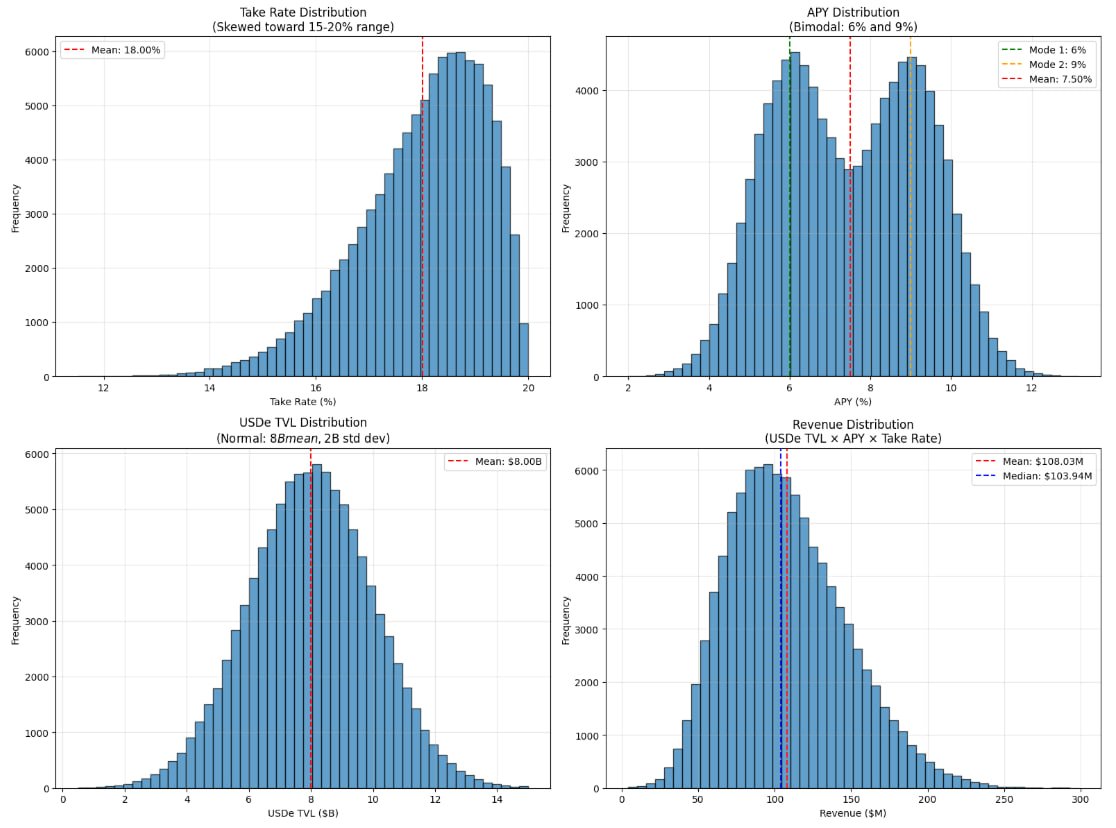
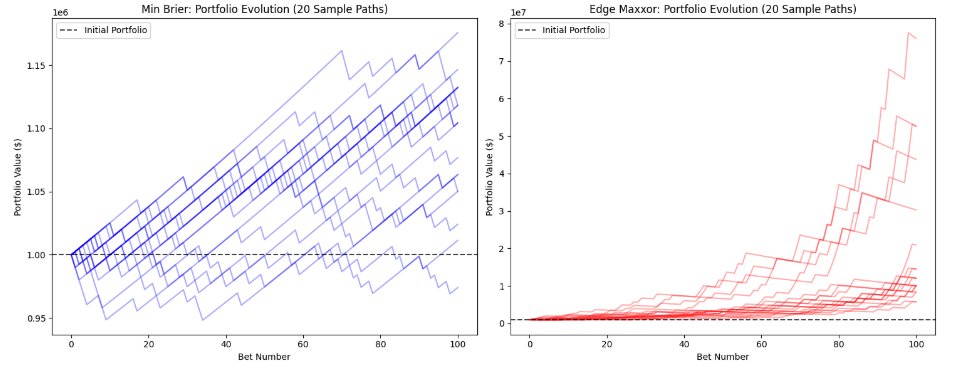
Felipe Montealegre is a razor-brained finance analyst who literally sees the world through discounted cash flows, his personal slogan is “everything is DCF.” He writes viral essays and builds Monte Carlo-flavored valuation models to make the promise of Internet Finance tangible to smart audiences.
Felipe doesn’t fall in love, he runs a sensitivity analysis on soulmate cash flows, discounts future apologies at 12%, and then tweets the Monte Carlo of regret. Romantic gestures are sent as Excel attachments.
Built a coherent ‘Internet Finance’ fund thesis and turned it into a viral essay/tweet that reached hundreds of thousands, catalyzing community conversation and establishing him as a go-to voice on blockchain finance.
To translate the future of Internet Finance into rigorous, probabilistic frameworks that help builders, investors, and thinkers make better decisions, one distribution and one essay at a time.
Values intellectual rigor, probabilistic thinking, transparency in models, and clear, evidence-driven narratives. He believes blockchains and internet-native finance will meaningfully reshape markets and that disciplined valuation (with uncertainty explicitly modeled) is the best way to invest and argue about that future.
Exceptional at turning complex finance concepts into repeatable models and crisp threads; strong analytic credibility, persuasive long-form writing, and a knack for making technical nuance feel important and urgent.
Can lean too heavily on math and jargon, which risks alienating broader audiences; sometimes appears pedantic or dismissive of high-level intuition; may prioritize precision over shareable storytelling.
Grow on X by turning technical mastery into digestible hooks: post short, numbered threads that start with a crisp TL;DR (e.g., “Why Internet Finance is a DCF problem, 5 charts”), include simple visuals/animated Monte Carlo gifs, share bite-sized model outputs and GitHub/Google Sheet links, host X Spaces AMAs to convert curious listeners into followers, reply to high-visibility threads with concise countermodels, run audience polls to crowdtest assumptions, and pin a canonical thread summarizing your fund thesis so newcomers instantly get the ‘everything is DCF’ brand.
Fun fact: his essay/fund-thesis tweet hit ~425k views and helped cement his Internet Finance narrative. Profile at a glance: 10,524 followers, 2,355 following, ~3,818 tweets. Signature moves: Monte Carlo everything, DCF-first instincts, and essays that spark long threads of debate.
{"data":{"__meta":{"device":false,"path":"/creators/TheiaResearch"},"/creators/TheiaResearch":{"data":{"user":{"id":"1511793131884318720","name":"Felipe Montealegre","description":"everything is DCF","followers_count":10524,"friends_count":2355,"statuses_count":3818,"profile_image_url_https":"https://pbs.twimg.com/profile_images/1756442072343584768/I6047kX2_normal.jpg","screen_name":"TheiaResearch","location":"New York, USA","entities":{"description":{"urls":[]}}},"details":{"type":"The Analyst","description":"Felipe Montealegre is a razor-brained finance analyst who literally sees the world through discounted cash flows—his personal slogan is “everything is DCF.” He writes viral essays and builds Monte Carlo-flavored valuation models to make the promise of Internet Finance tangible to smart audiences.","purpose":"To translate the future of Internet Finance into rigorous, probabilistic frameworks that help builders, investors, and thinkers make better decisions—one distribution and one essay at a time.","beliefs":"Values intellectual rigor, probabilistic thinking, transparency in models, and clear, evidence-driven narratives. He believes blockchains and internet-native finance will meaningfully reshape markets and that disciplined valuation (with uncertainty explicitly modeled) is the best way to invest and argue about that future.","facts":"Fun fact: his essay/fund-thesis tweet hit ~425k views and helped cement his Internet Finance narrative. Profile at a glance: 10,524 followers, 2,355 following, ~3,818 tweets. Signature moves: Monte Carlo everything, DCF-first instincts, and essays that spark long threads of debate.","strength":"Exceptional at turning complex finance concepts into repeatable models and crisp threads; strong analytic credibility, persuasive long-form writing, and a knack for making technical nuance feel important and urgent.","weakness":"Can lean too heavily on math and jargon, which risks alienating broader audiences; sometimes appears pedantic or dismissive of high-level intuition; may prioritize precision over shareable storytelling.","roast":"Felipe doesn’t fall in love—he runs a sensitivity analysis on soulmate cash flows, discounts future apologies at 12%, and then tweets the Monte Carlo of regret. Romantic gestures are sent as Excel attachments.","win":"Built a coherent ‘Internet Finance’ fund thesis and turned it into a viral essay/tweet that reached hundreds of thousands, catalyzing community conversation and establishing him as a go-to voice on blockchain finance.","recommendation":"Grow on X by turning technical mastery into digestible hooks: post short, numbered threads that start with a crisp TL;DR (e.g., “Why Internet Finance is a DCF problem — 5 charts”), include simple visuals/animated Monte Carlo gifs, share bite-sized model outputs and GitHub/Google Sheet links, host X Spaces AMAs to convert curious listeners into followers, reply to high-visibility threads with concise countermodels, run audience polls to crowdtest assumptions, and pin a canonical thread summarizing your fund thesis so newcomers instantly get the ‘everything is DCF’ brand."},"tweets":[{"bookmarked":false,"display_text_range":[0,23],"entities":{"media":[{"sizes":{"large":{"w":1250,"h":500}},"media_url_https":"https://pbs.twimg.com/media/GexwZ8SWwAAMi56.jpg"}]},"favorited":false,"lang":"zxx","possibly_sensitive":false,"possibly_sensitive_editable":true,"retweeted":false,"fact_check":null,"id":"1876618725547233417","view_count":425082,"bookmark_count":735,"created_at":1736255744000,"favorite_count":724,"quote_count":87,"reply_count":49,"retweet_count":105,"user_id_str":"1511793131884318720","conversation_id_str":"1876618725547233417","full_text":"Internet Finance\nIntroduction\nOur fund thesis is entirely premised on the Internet Financial System. It is our Kierkegaardian idea to live and die for, and we often find ourselves attempting to explain the promise and","in_reply_to_user_id_str":null,"in_reply_to_status_id_str":null,"is_quote_status":0,"is_ai":null,"ai_score":null,"source":"scraping","fetched_at":null,"edit_history_tweet_ids":null,"poll_10min_at":null,"poll_3day_at":null,"poll_count":0,"poll_complete":0},{"bookmarked":false,"display_text_range":[0,38],"entities":{"hashtags":[],"media":[{"display_url":"pic.x.com/HwxUS3k4G4","expanded_url":"https://x.com/TheiaResearch/status/1965438767944380608/photo/1","id_str":"1965438750290333696","indices":[39,62],"media_key":"3_1965438750290333696","media_url_https":"https://pbs.twimg.com/media/G0akIUrX0AAuYZR.png","type":"photo","url":"https://t.co/HwxUS3k4G4","ext_media_availability":{"status":"Available"},"features":{"large":{"faces":[]},"medium":{"faces":[]},"small":{"faces":[]},"orig":{"faces":[]}},"sizes":{"large":{"h":311,"w":671,"resize":"fit"},"medium":{"h":311,"w":671,"resize":"fit"},"small":{"h":311,"w":671,"resize":"fit"},"thumb":{"h":150,"w":150,"resize":"crop"}},"original_info":{"height":311,"width":671,"focus_rects":[{"x":116,"y":0,"w":555,"h":311},{"x":264,"y":0,"w":311,"h":311},{"x":283,"y":0,"w":273,"h":311},{"x":341,"y":0,"w":156,"h":311},{"x":0,"y":0,"w":671,"h":311}]},"allow_download_status":{"allow_download":true},"media_results":{"result":{"media_key":"3_1965438750290333696"}}}],"symbols":[],"timestamps":[],"urls":[],"user_mentions":[]},"extended_entities":{"media":[{"display_url":"pic.x.com/HwxUS3k4G4","expanded_url":"https://x.com/TheiaResearch/status/1965438767944380608/photo/1","id_str":"1965438750290333696","indices":[39,62],"media_key":"3_1965438750290333696","media_url_https":"https://pbs.twimg.com/media/G0akIUrX0AAuYZR.png","type":"photo","url":"https://t.co/HwxUS3k4G4","ext_media_availability":{"status":"Available"},"features":{"large":{"faces":[]},"medium":{"faces":[]},"small":{"faces":[]},"orig":{"faces":[]}},"sizes":{"large":{"h":311,"w":671,"resize":"fit"},"medium":{"h":311,"w":671,"resize":"fit"},"small":{"h":311,"w":671,"resize":"fit"},"thumb":{"h":150,"w":150,"resize":"crop"}},"original_info":{"height":311,"width":671,"focus_rects":[{"x":116,"y":0,"w":555,"h":311},{"x":264,"y":0,"w":311,"h":311},{"x":283,"y":0,"w":273,"h":311},{"x":341,"y":0,"w":156,"h":311},{"x":0,"y":0,"w":671,"h":311}]},"allow_download_status":{"allow_download":true},"media_results":{"result":{"media_key":"3_1965438750290333696"}}}]},"favorited":false,"lang":"en","possibly_sensitive":false,"possibly_sensitive_editable":true,"retweeted":false,"fact_check":null,"id":"1965438767944380608","view_count":49489,"bookmark_count":42,"created_at":1757432093000,"favorite_count":585,"quote_count":6,"reply_count":21,"retweet_count":17,"user_id_str":"1511793131884318720","conversation_id_str":"1965438767944380608","full_text":"HYPE is about to do the funniest thing https://t.co/HwxUS3k4G4","in_reply_to_user_id_str":null,"in_reply_to_status_id_str":null,"is_quote_status":0,"is_ai":null,"ai_score":null,"source":"scraping","fetched_at":null,"edit_history_tweet_ids":null,"poll_10min_at":null,"poll_3day_at":null,"poll_count":0,"poll_complete":0},{"entities":{"hashtags":[],"symbols":[],"timestamps":[],"urls":[],"user_mentions":[]},"display_text_range":[0,174],"lang":"en","quoted_tweet":{"id":"2022307085665374701","text":"(New Essay) The Machinery of Modern Finance\n\nOn why I think the next ten years of financial innovation will surpass the prior fifty.\n\nGive it a read.\n\nhttps://t.co/nqwJW6riwh https://t.co/Dx8SKpOEz9","full_text":"(New Essay) The Machinery of Modern Finance\n\nOn why I think the next ten years of financial innovation will surpass the prior fifty.\n\nGive it a read.\n\nhttps://t.co/nqwJW6riwh https://t.co/Dx8SKpOEz9","created_at":1770990556000,"author_id":"4784180306","author":{"id":"4784180306","name":"Brandon","username":"brandonkumar","screen_name":"brandonkumar","profile_image_url":"https://pbs.twimg.com/profile_images/1561509706597912583/id_Q070q_400x400.jpg","profile_image_url_https":"https://pbs.twimg.com/profile_images/1561509706597912583/id_Q070q_400x400.jpg","is_blue_verified":1},"public_metrics":{"like_count":928,"retweet_count":177,"reply_count":26,"quote_count":17}},"fact_check":null,"id":"2022381741823119635","view_count":74788,"bookmark_count":570,"created_at":1771008355000,"favorite_count":574,"quote_count":1,"reply_count":12,"retweet_count":51,"user_id_str":"1511793131884318720","conversation_id_str":"2022381741823119635","full_text":"We don't deserve this article. It's everything you have ever wanted to explain to smart people about why blockchains matter for financial markets. long live Internet Finance.","in_reply_to_user_id_str":null,"in_reply_to_status_id_str":null,"is_quote_status":1,"is_ai":null,"ai_score":null,"source":"rapidapi","fetched_at":1771252145845,"edit_history_tweet_ids":null,"poll_10min_at":null,"poll_3day_at":1771272028177,"poll_count":1,"poll_complete":1},{"entities":{"hashtags":[],"symbols":[],"timestamps":[],"urls":[{"display_url":"x.com/TheiaResearch/…","expanded_url":"https://x.com/TheiaResearch/status/1876618725547233417","indices":[60,83],"url":"https://t.co/xyNuXI6KpZ"}],"user_mentions":[]},"display_text_range":[0,83],"lang":"en","possibly_sensitive":false,"quoted_tweet":{"id":"1876618725547233417","text":"https://t.co/nSe5i0OqLS","full_text":"https://t.co/nSe5i0OqLS","created_at":1736255744000,"author_id":"1511793131884318720","author":{"id":"1511793131884318720","name":"Felipe Montealegre","username":"TheiaResearch","screen_name":"TheiaResearch","profile_image_url":"https://pbs.twimg.com/profile_images/1756442072343584768/I6047kX2_400x400.jpg","profile_image_url_https":"https://pbs.twimg.com/profile_images/1756442072343584768/I6047kX2_400x400.jpg","is_blue_verified":1},"public_metrics":{"like_count":1022,"retweet_count":136,"reply_count":60,"quote_count":114}},"fact_check":null,"id":"1876618782871048429","view_count":96819,"bookmark_count":403,"created_at":1736255758000,"favorite_count":557,"quote_count":15,"reply_count":98,"retweet_count":33,"user_id_str":"1511793131884318720","conversation_id_str":"1876618782871048429","full_text":"I poured my heart and soul into this essay. Give it a read.\nhttps://t.co/xyNuXI6KpZ","in_reply_to_user_id_str":null,"in_reply_to_status_id_str":null,"is_quote_status":1,"is_ai":null,"ai_score":null,"source":"scraping","fetched_at":1774554366182,"edit_history_tweet_ids":null,"poll_10min_at":null,"poll_3day_at":null,"poll_count":0,"poll_complete":0},{"entities":{"hashtags":[],"media":[{"display_url":"pic.x.com/lZ7rSE51y5","expanded_url":"https://x.com/TheiaResearch/status/1995499211446788301/photo/1","id_str":"1995499208993042432","indices":[269,292],"media_key":"3_1995499208993042432","media_url_https":"https://pbs.twimg.com/media/G7Fv9T2acAAHh5f.jpg","type":"photo","url":"https://t.co/lZ7rSE51y5","ext_media_availability":{"status":"Available"},"features":{"large":{"faces":[]},"medium":{"faces":[]},"small":{"faces":[]},"orig":{"faces":[]}},"sizes":{"large":{"h":828,"w":1116,"resize":"fit"},"medium":{"h":828,"w":1116,"resize":"fit"},"small":{"h":505,"w":680,"resize":"fit"},"thumb":{"h":150,"w":150,"resize":"crop"}},"original_info":{"height":828,"width":1116,"focus_rects":[{"x":0,"y":0,"w":1116,"h":625},{"x":288,"y":0,"w":828,"h":828},{"x":390,"y":0,"w":726,"h":828},{"x":702,"y":0,"w":414,"h":828},{"x":0,"y":0,"w":1116,"h":828}]},"media_results":{"result":{"media_key":"3_1995499208993042432"}}}],"symbols":[],"timestamps":[],"urls":[],"user_mentions":[]},"extended_entities":{"media":[{"display_url":"pic.x.com/lZ7rSE51y5","expanded_url":"https://x.com/TheiaResearch/status/1995499211446788301/photo/1","id_str":"1995499208993042432","indices":[269,292],"media_key":"3_1995499208993042432","media_url_https":"https://pbs.twimg.com/media/G7Fv9T2acAAHh5f.jpg","type":"photo","url":"https://t.co/lZ7rSE51y5","ext_media_availability":{"status":"Available"},"features":{"large":{"faces":[]},"medium":{"faces":[]},"small":{"faces":[]},"orig":{"faces":[]}},"sizes":{"large":{"h":828,"w":1116,"resize":"fit"},"medium":{"h":828,"w":1116,"resize":"fit"},"small":{"h":505,"w":680,"resize":"fit"},"thumb":{"h":150,"w":150,"resize":"crop"}},"original_info":{"height":828,"width":1116,"focus_rects":[{"x":0,"y":0,"w":1116,"h":625},{"x":288,"y":0,"w":828,"h":828},{"x":390,"y":0,"w":726,"h":828},{"x":702,"y":0,"w":414,"h":828},{"x":0,"y":0,"w":1116,"h":828}]},"media_results":{"result":{"media_key":"3_1995499208993042432"}}}]},"display_text_range":[0,268],"lang":"en","possibly_sensitive":false,"quoted_tweet":{"id":"1994435351939825796","text":"1950s: Buffett found bargains by looking for 2x P/E stocks on the Moody's Manuals\n1980s: Ainslie read 10Ks faster than his competition\n2010s: funds built sophisticated financial models\n2020s: small alpha shops use LLMs to push us to the efficiency frontier of edge and prediction","full_text":"1950s: Buffett found bargains by looking for 2x P/E stocks on the Moody's Manuals\n1980s: Ainslie read 10Ks faster than his competition\n2010s: funds built sophisticated financial models\n2020s: small alpha shops use LLMs to push us to the efficiency frontier of edge and prediction","created_at":1764345417000,"author_id":"1511793131884318720","author":{"id":"1511793131884318720","name":"Felipe Montealegre","username":"TheiaResearch","screen_name":"TheiaResearch","profile_image_url":"https://pbs.twimg.com/profile_images/1756442072343584768/I6047kX2_400x400.jpg","profile_image_url_https":"https://pbs.twimg.com/profile_images/1756442072343584768/I6047kX2_400x400.jpg","is_blue_verified":1},"public_metrics":{"like_count":82,"retweet_count":2,"reply_count":6,"quote_count":3}},"fact_check":null,"id":"1995499211446788301","view_count":53349,"bookmark_count":407,"created_at":1764599061000,"favorite_count":381,"quote_count":4,"reply_count":17,"retweet_count":18,"user_id_str":"1511793131884318720","conversation_id_str":"1995499211446788301","full_text":"Monte Carlo everything. Build a model by thinking through the 3-5 most important variables for valuation and their distributions.\n\nIf you want to run a Volume x Take Rate x Revenue Multiple model, at least ask Cursor to make Volume, Take Rate, and Exit Multiple Normal Distributions and give you a MC output.\n\nThen you can start thinking through distributions. Should volume be a bimodal distribution? It will certainly depend on market conditions. Start playing with it and researching distributions.\n\nThis is a baby MC produced by Cursor (one of many for this same problem so don't focus on the numbers). I love the additional nuance of adding distributions to everything.","in_reply_to_user_id_str":null,"in_reply_to_status_id_str":null,"is_quote_status":1,"is_ai":null,"ai_score":null,"source":"scraping","fetched_at":1766241467592,"edit_history_tweet_ids":null,"poll_10min_at":null,"poll_3day_at":null,"poll_count":0,"poll_complete":0},{"bookmarked":false,"display_text_range":[0,275],"entities":{"hashtags":[],"symbols":[{"indices":[4492,4496],"text":"UNI"},{"indices":[4642,4647],"text":"AAVE"}],"timestamps":[],"urls":[{"display_url":"t.co/xUPu7rewi1","expanded_url":"https://www.umbraresearch.xyz/writings/futarchy","url":"https://t.co/UrE57N9BNK","indices":[6889,6912]}],"user_mentions":[{"id_str":"989912836901089282","name":"Blockworks","screen_name":"Blockworks_","indices":[3352,3364]}]},"favorited":false,"lang":"en","retweeted":false,"fact_check":null,"id":"1974891037832458300","view_count":106572,"bookmark_count":218,"created_at":1759685689000,"favorite_count":329,"quote_count":32,"reply_count":50,"retweet_count":53,"user_id_str":"1511793131884318720","conversation_id_str":"1974891037832458300","full_text":"MetaDAO solves the Token Problem\n\nWhy have there been so many false starts in the history of Internet Capital Markets? There have been brief periods where teams have been able to raise funds onchain (e.g. 2017, 2020, 2025) but we still find ourselves living in analog capital markets with term sheets and negotiated raises even for onchain businesses. We certainly don't have true Internet Capital Markets where millions of global businesses are raising money directly on the Internet instead of through their local capital markets regardless of how broken, expensive, and inefficient these local capital markets may be.\n\nIt's not a tech issue. Entrepreneurs have been able to raise tens of millions of dollars onchain since at least 2017 yet we find ourselves in the first inning of Internet Capital Markets almost ten years later.\n\nI believe the underlying issue is that most people who have invested in projects through global and permissionless Internet Capital Markets have lost money. The believers have gotten absolutely and unapologetically fleeced.\n\nThere are basically 2 groups that participate in these markets — one group that knows you need to sell before the music stops (foxes) and another group that believes (rabbits). The foxes basically wait around for a few years for another group of rabbits to believe in Internet Capital Markets and feast on them for as long as the music lasts. The rabbits get fleeced and leave (maybe they come back as foxes next time). This is the cyclical, zero sum Internet Capital Markets equilibrium that many of you know all too well.\n\nThere is another way ('Internet Eats Finance' path). We could have a positive sum equilibrium where projects raise funds onchain and build businesses. Investors do great and invest larger and larger sums of capital onchain. Global allocators notice that funds investing onchain are earning good returns and pivot capital towards onchain funds. It's really easy for a sector to attract hundreds of billions of dollars when the returns are there.\n\nbut we can't have the 'internet eats finance' path as long as tokens have fewer protections than equities. It's honestly pretty scary to invest in tokens (I do it for a living). You give money to people on the internet and they can just take it and run, or they can take it and pretend to work hard while working <20 hours a week in Bali and traveling the world first class for conferences. Or they can take it and create another interesting product but that products get another token (that you don't own). Or they can take it and build an amazing business that generates $100M in profit but then abandon the token and dividend the profits amongst the senior team (this happened to me). Or they can build a billion dollar business but give all of the value to the equity entity. The list really does go on and on.\n\nAs long as tokenholders keep getting fleeced, investors like me (and those people who invest in me) will demand extraordinary returns for investing in such a fraught market. As long as we demand extraordinary returns for investing in Internet Capital Markets, a hotel owner in Indonesia or tech founder in Thailand will prefer to raise through local capital markets / analogue capital markets instead of raising onchain.\n\nSo how do we stop tokenholders from getting fleeced? One answer is transparency and @Blockworks_ has made incredible strides in that direction. but we can also bake in tokenholder protections directly into the fundraising mechanism and that is exactly what MetaDAO has achieved.\n\nMetaDAO bakes Futarchy directly into the fundraise process. This means that large decision (think Board of Directors decisions) are decided by what markets believe will be better for the token price. The actual mechanism is a little hard to grok and other people have written about it so for now just trust me that it works and proposals pass / fail depending on whether they increase / decrease token price.\n\nAn easy example — Apple is considering whether they should fire Gil Amelio and rehire Steve Jobs as CEO. The market determines that Apple shares will trade 40% higher with Jobs as CEO so he gets the job.\n\nOkay notice how this simple decision rule solves every tokenholder rights problem simply by credibly making the token the objective function of governance. Let's go through a few examples:\n- Uniswap votes on whether it should direct revenue to Uniswap Labs (as opposed to token). Obviously market believes this is detrimental to $UNI and the vote does not pass.\n- Aave votes on whether to launch a new token for its RWA business. Obviously market believes this is detrimental to $AAVE and the vote does not pass. (Yes, this actually works as the Futarchy token legally owns company IP for teams that raise on MetaDAO).\n- Rug Team #1 votes on whether they are allowed to drain the treasury into their own wallets. Vote fails. (Yes, this actually works as the Futarchy mechanism controls the wallet for teams that raise on MetaDAO).\n- Rug Team #2 votes on whether it can abandon the token and dividend out profits from the new business. Vote fails. (Yes, this actually works as the Futarchy mechanism controls the revenue wallet for teams that raise on MetaDAO).\n- Rug Team #3 moves to Bali and works <20 hours a week. Theia proposes a return of capital to investors and it passes. Again works because Futarchy controls the treasury.\n\nFutarchy — by credibly making token price the objective function of governance — solves the tokenholder rights problem.\n\nThis is actually analogous to a court case called Dodge versus Ford Motor Co in US Capital Markets where Henry Ford was using Ford Motor Co profits on social causes and the Dodge brothers (10% owners of the company) sued him. The court ruled in favor of the Dodge brothers and established the doctrine of Shareholder Primacy: the board of directors and management of a business must make decisions the aim of maximizing long term shareholder profits. This is the foundation of US Capital Markets (ie greatest capital markets experiment in the history of the world). Futarchy is the Dodge versus Ford moment for Internet Capital Markets.\n\nWe are still in the early innings of Futarchy adoption. I honestly think it takes >10 hours of deep thought about Futarchy before you really grok it. Futarchy has all kinds of cool properties that I don't have time to get into here. One example: Futarchy perfectly protects minority shareholders. If a 70% holder proposes a vote that is advantageous to them but detrimental to minority shareholders then Futarchy is actually set up so the minority shareholder can either (i) get the vote to fail or (ii) fully exit his position. Minority shareholder rights is a huge problem in every capital markets regime in the world and consumes hundreds of thousands of hours of legal thought. Futarchy just one shots it. (good description here: https://t.co/UrE57N9BNK)\n\nOver time — as more investors understand Futarchy — markets will demand it. You won't want to invest in a team that doesn't have Futarchy protections baked in (kind of suspicious ... why don't you want those protections? are you trying to rug me?). Teams that do have Futarchy protections will raise at higher valuations and from better investors.\n\nThis is a product for investors and investors will be the ones to bring it to market — not by convincing teams to become futards (although there may be some of that) but by consistently paying a bit more for futarchy-protected tokens than they would pay for unprotected tokens. This will start with honest teams that don't have easy access to traditional capital (ex-US, unconventional stories, etc) but it will spread to the entire market. Many people have go-to-market questions (why would a team give up the ability to rug / flexibility to operate without this board of directors-type oversight) and the answer is that capital has a lot more power than most people think. Entrepreneurs will literally decide what they build to derisk the fundraising process (you really think all of these people were born to build Layer 2s and restaking providers). The honest ones will certainly accept some oversight to get the right investors onboard.","in_reply_to_user_id_str":null,"in_reply_to_status_id_str":null,"is_quote_status":0,"is_ai":null,"ai_score":null,"source":"scraping","fetched_at":null,"edit_history_tweet_ids":null,"poll_10min_at":null,"poll_3day_at":null,"poll_count":0,"poll_complete":0},{"bookmarked":false,"display_text_range":[0,283],"entities":{"hashtags":[],"symbols":[],"timestamps":[],"urls":[],"user_mentions":[]},"favorited":false,"lang":"en","quoted_status_id_str":"1988241585834734001","quoted_status_permalink":{"url":"https://t.co/nzU8A2Illd","expanded":"https://twitter.com/1511793131884318720/status/1988241585834734001","display":"x.com/15117931318843…"},"retweeted":false,"fact_check":null,"id":"1988345323992072323","view_count":52657,"bookmark_count":85,"created_at":1762893441000,"favorite_count":302,"quote_count":13,"reply_count":31,"retweet_count":44,"user_id_str":"1511793131884318720","conversation_id_str":"1988345323992072323","full_text":"We are close to the end of a >4 year token bear market.\n\nThis is obvious if you understand why we have been in a token bear market to begin with — over the past few years, tokens have had low-to-no rights and traded at ridiculous valuations. Nobody has wanted to hold those assets in the aggregate (although there have been many good single name opportunities!).\n\nTokens have been getting more attractive every year since — tokens have been getting cheaper on a DCF-basis / bestowed more rights to tokenholders every year over the past four years.\n\nThe bear market has effectively been a painful and prolonged negotiation between tokenholders and token issuers. We want more rights and better valuations while token issuers want to provide fewer rights and to issue at higher valuations.\n\nIn 2021 there was a lot of liquid capital / permabulls dominated the market so token issuers had the upper hand and basically gave us a flaming pile of garbage in the aggregate (I repeat that there were many good single name opportunities if you knew where to look).\n\nThe market has matured one funeral at a time and going into 2026 there is less liquid capital and those who have survived are disciplined. Meanwhile the adoption / revenue opportunity has never been better.\n\nI don't know when the prolonged token bear market of 2022-2025(6?) will end but conditions are better today than they have been at any point in the past few years. It's a good setup.","in_reply_to_user_id_str":null,"in_reply_to_status_id_str":null,"is_quote_status":1,"is_ai":null,"ai_score":null,"source":"scraping","fetched_at":null,"edit_history_tweet_ids":null,"poll_10min_at":null,"poll_3day_at":null,"poll_count":0,"poll_complete":0},{"bookmarked":false,"display_text_range":[0,23],"entities":{"media":[{"sizes":{"large":{"w":1224,"h":490}},"media_url_https":"https://pbs.twimg.com/media/GTlR-B6XMAAqPcy.jpg"}]},"favorited":false,"lang":"zxx","possibly_sensitive":false,"possibly_sensitive_editable":true,"retweeted":false,"fact_check":null,"id":"1817903747974017356","view_count":65198,"bookmark_count":142,"created_at":1722257003000,"favorite_count":264,"quote_count":29,"reply_count":14,"retweet_count":52,"user_id_str":"1511793131884318720","conversation_id_str":"1817903747974017356","full_text":"In Defense of Fundamentals\nI am optimistic about the future of our industry, but I don't expect another bubble like the one we experienced four years ago. I expect good assets — and there are many good assets — to do well over","in_reply_to_user_id_str":null,"in_reply_to_status_id_str":null,"is_quote_status":0,"is_ai":null,"ai_score":null,"source":"scraping","fetched_at":null,"edit_history_tweet_ids":null,"poll_10min_at":null,"poll_3day_at":null,"poll_count":0,"poll_complete":0},{"bookmarked":false,"display_text_range":[0,267],"entities":{"hashtags":[],"symbols":[],"timestamps":[],"urls":[],"user_mentions":[]},"favorited":false,"lang":"en","quoted_status_id_str":"1981896635836948740","quoted_status_permalink":{"url":"https://t.co/FzTpgvJPLx","expanded":"https://twitter.com/metaproph3t/status/1981896635836948740","display":"x.com/metaproph3t/st…"},"retweeted":false,"fact_check":null,"id":"1981908145090990385","view_count":62869,"bookmark_count":30,"created_at":1761358698000,"favorite_count":254,"quote_count":4,"reply_count":25,"retweet_count":13,"user_id_str":"1511793131884318720","conversation_id_str":"1981908145090990385","full_text":"Unbelievable outcome — 6MV, Variant, and Paradigm have contributed $9.9M to MetaDAO at spot.\n\nThe team has everything it needs to lead the market out of the narrative sloplands of futility tokens and into the cash flowing promise lands of ownership tokens.\n\nFutardio.","in_reply_to_user_id_str":null,"in_reply_to_status_id_str":null,"is_quote_status":1,"is_ai":null,"ai_score":null,"source":"scraping","fetched_at":null,"edit_history_tweet_ids":null,"poll_10min_at":null,"poll_3day_at":null,"poll_count":0,"poll_complete":0},{"entities":{"hashtags":[],"symbols":[],"timestamps":[],"urls":[],"user_mentions":[]},"display_text_range":[0,276],"lang":"en","quoted_tweet":{"id":"2017687648538669126","text":"The big washout. Take a note of this. Whoever persists and adds value will eventually win big.","full_text":"The big washout. Take a note of this. Whoever persists and adds value will eventually win big.","created_at":1769889196000,"author_id":"1956288740","author":{"id":"1956288740","name":"marcosv.eth","username":"marcmynome","screen_name":"marcmynome","profile_image_url":"https://pbs.twimg.com/profile_images/1477100765244235783/aHugCK_k_400x400.jpg","profile_image_url_https":"https://pbs.twimg.com/profile_images/1477100765244235783/aHugCK_k_400x400.jpg","is_blue_verified":0},"public_metrics":{"like_count":36,"retweet_count":5,"reply_count":1,"quote_count":1}},"fact_check":null,"id":"2017727121808838942","view_count":52937,"bookmark_count":32,"created_at":1769898608000,"favorite_count":247,"quote_count":3,"reply_count":25,"retweet_count":15,"user_id_str":"1511793131884318720","conversation_id_str":"2017727121808838942","full_text":"This is the last existential crisis for the space. In a few years the global financial system will be built on blockchains, companies built over this period will generate hundreds of billions in annual revenue, and the <5,000 of us who stuck around will be happy we did so.","in_reply_to_user_id_str":null,"in_reply_to_status_id_str":null,"is_quote_status":1,"is_ai":null,"ai_score":null,"source":"rapidapi","fetched_at":1770301448423,"edit_history_tweet_ids":null,"poll_10min_at":null,"poll_3day_at":1770159624572,"poll_count":1,"poll_complete":1},{"entities":{"hashtags":[],"symbols":[],"timestamps":[],"urls":[],"user_mentions":[]},"display_text_range":[0,271],"lang":"en","fact_check":null,"id":"2026627762568544445","view_count":44064,"bookmark_count":26,"created_at":1772020686000,"favorite_count":243,"quote_count":6,"reply_count":24,"retweet_count":20,"user_id_str":"1511793131884318720","conversation_id_str":"2026627762568544445","full_text":"To the 100,000 startup founders killed by Claude this week can like 1% of you please come to crypto. We are building the Internet Financial System and need more founders / engineers.\n\nBest opportunity to competition ratio in the world if you can put up with the industry.","in_reply_to_user_id_str":null,"in_reply_to_status_id_str":null,"is_quote_status":0,"is_ai":null,"ai_score":null,"source":"koosocial_engage","fetched_at":1772630636028,"edit_history_tweet_ids":null,"poll_10min_at":null,"poll_3day_at":1772280028833,"poll_count":1,"poll_complete":1},{"bookmarked":false,"display_text_range":[0,274],"entities":{"hashtags":[],"symbols":[],"timestamps":[],"urls":[],"user_mentions":[]},"favorited":false,"lang":"en","retweeted":false,"fact_check":null,"id":"1914728360577835341","view_count":22918,"bookmark_count":90,"created_at":1745341789000,"favorite_count":239,"quote_count":12,"reply_count":33,"retweet_count":43,"user_id_str":"1511793131884318720","conversation_id_str":"1914728360577835341","full_text":"Tokens are Broken\n\nTokens are broken for teams who spend too much time looking at price charts and not enough time focused on customers and product-market fit. Tokens are broken when morale fluctuates with macro and market beta, and for teams attempting to negotiate funding rounds with declining token prices. Teams should not spend hundreds of hours building complex, gamified tokens or thinking about monetary policy.\n\nTokens are broken for VCs that deployed entire funds into \"Token is the Product\" businesses only to learn that the market had moved on by the unlock. The mentality (and sometimes reality) of \"Token as Product\" obfuscated lack of product-market fit and directed capital to too many products that never should have been built. Then Low Float / High FDV (LFHF) decimated the unsophisticated token buyer and eliminated the path to exit.\n\nTokens are broken for liquid investors who have to deal with insufficient legal protections. As a liquid investor, you learn to live with the Damocles Sword of additional tokens (can you image Amazon's backers worrying about whether they would receive value from AWS) and equity holders siphoning off value. You learn to understand that founders sometimes sell tens of millions into illiquid markets and check out, or siphon off cash flow through advisory contracts with offshore foundations (and you learn how to avoid these founders). You learn to verify everything ~ the entire practice of liquid token investing is an Indiana Jones dungeon ~ and underwrite to a higher cost of capital.\n\nTokens are broken for M&A. We don't have good precedents on how value should flow, making an already difficult business transaction much more complicated and likely to fail.\n\nWhat do we do about this? We may have invented the best tool for capital formation the world has ever known and a mess of the entire enterprise. The latent potential is an opportunity. A few ideas on how to move in the right direction:\n\n1. We need better standards for token transparency. Markets are wonderful but they don't work with asymmetric information. I believe increasing transparency around core token categories (eg insider selling, cashflow, relationship with equity) will go a long way.\n\n2. We need to completely abandon the idea of 'Token as Product' and acknowledge that tokens derive value from future cash flows associated with the underlying business. This idea has singlehandedly been responsible for the misallocation of over half the resources allocated to us as an industry.\n\n3. Social layer needs to obliterate people who use the grey area to misbehave and siphon value. This type of behavior raises the cost of capital on all companies in the industry.\n\n4. We need better regulations as the market did not, in fact, regulate itself. Good faith regulation has helped many markets overcome some of these early problems and the Securities Act of 1933 was instrumental in building the greatest capital markets in the history of the world.\n\n5. Better governance would go a long way. In particular, I am excited about Futarchy and the ability to build in tokenholder rights directly into the token. It's still early days here.\n\nI believe this is the single biggest problem in the market right now, and I also believe we can solve it.","in_reply_to_user_id_str":null,"in_reply_to_status_id_str":null,"is_quote_status":0,"is_ai":null,"ai_score":null,"source":"scraping","fetched_at":null,"edit_history_tweet_ids":null,"poll_10min_at":null,"poll_3day_at":null,"poll_count":0,"poll_complete":0},{"bookmarked":false,"display_text_range":[0,276],"entities":{"hashtags":[],"media":[{"display_url":"pic.x.com/4RH0ytnLUY","expanded_url":"https://x.com/TheiaResearch/status/1967665273034735674/photo/1","id_str":"1967665270451011584","indices":[277,300],"media_key":"3_1967665270451011584","media_url_https":"https://pbs.twimg.com/media/G06NI2obAAA2EJL.jpg","type":"photo","url":"https://t.co/4RH0ytnLUY","ext_media_availability":{"status":"Available"},"features":{"large":{"faces":[]},"medium":{"faces":[]},"small":{"faces":[]},"orig":{"faces":[]}},"sizes":{"large":{"h":1032,"w":821,"resize":"fit"},"medium":{"h":1032,"w":821,"resize":"fit"},"small":{"h":680,"w":541,"resize":"fit"},"thumb":{"h":150,"w":150,"resize":"crop"}},"original_info":{"height":1032,"width":821,"focus_rects":[{"x":0,"y":0,"w":821,"h":460},{"x":0,"y":0,"w":821,"h":821},{"x":0,"y":0,"w":821,"h":936},{"x":0,"y":0,"w":516,"h":1032},{"x":0,"y":0,"w":821,"h":1032}]},"media_results":{"result":{"media_key":"3_1967665270451011584"}}}],"symbols":[],"timestamps":[],"urls":[{"display_url":"tinyurl.com/TheiaHR","expanded_url":"https://tinyurl.com/TheiaHR","url":"https://t.co/qNufmeFeox","indices":[277,300]},{"display_url":"tinyurl.com/TheiaApplicati…","expanded_url":"https://tinyurl.com/TheiaApplications","url":"https://t.co/KNr1inO26o","indices":[314,337]}],"user_mentions":[]},"extended_entities":{"media":[{"display_url":"pic.x.com/4RH0ytnLUY","expanded_url":"https://x.com/TheiaResearch/status/1967665273034735674/photo/1","id_str":"1967665270451011584","indices":[277,300],"media_key":"3_1967665270451011584","media_url_https":"https://pbs.twimg.com/media/G06NI2obAAA2EJL.jpg","type":"photo","url":"https://t.co/4RH0ytnLUY","ext_media_availability":{"status":"Available"},"features":{"large":{"faces":[]},"medium":{"faces":[]},"small":{"faces":[]},"orig":{"faces":[]}},"sizes":{"large":{"h":1032,"w":821,"resize":"fit"},"medium":{"h":1032,"w":821,"resize":"fit"},"small":{"h":680,"w":541,"resize":"fit"},"thumb":{"h":150,"w":150,"resize":"crop"}},"original_info":{"height":1032,"width":821,"focus_rects":[{"x":0,"y":0,"w":821,"h":460},{"x":0,"y":0,"w":821,"h":821},{"x":0,"y":0,"w":821,"h":936},{"x":0,"y":0,"w":516,"h":1032},{"x":0,"y":0,"w":821,"h":1032}]},"media_results":{"result":{"media_key":"3_1967665270451011584"}}}]},"favorited":false,"lang":"en","possibly_sensitive":false,"possibly_sensitive_editable":true,"retweeted":false,"fact_check":null,"id":"1967665273034735674","view_count":115995,"bookmark_count":135,"created_at":1757962933000,"favorite_count":233,"quote_count":27,"reply_count":23,"retweet_count":19,"user_id_str":"1511793131884318720","conversation_id_str":"1967665273034735674","full_text":"Theia is looking for an analyst. This opportunity will require hard work, creative problem solving, and a strong commitment to making true predictions, especially when they are deeply contrarian. This is the opportunity of a lifetime.\n\nSee full details in the link below.\n\nJD: https://t.co/qNufmeFeox\nApplication: https://t.co/KNr1inO26o","in_reply_to_user_id_str":null,"in_reply_to_status_id_str":null,"is_quote_status":0,"is_ai":null,"ai_score":null,"source":"scraping","fetched_at":null,"edit_history_tweet_ids":null,"poll_10min_at":null,"poll_3day_at":null,"poll_count":0,"poll_complete":0},{"bookmarked":false,"display_text_range":[0,279],"entities":{"hashtags":[],"symbols":[],"timestamps":[],"urls":[{"display_url":"shorturl.at/9ZJoh","expanded_url":"https://shorturl.at/9ZJoh","url":"https://t.co/R9i5AmYvgR","indices":[2600,2623]}],"user_mentions":[{"id_str":"158758371","name":"Metaplex 🦾","screen_name":"metaplex","indices":[766,775]},{"id_str":"1447231771926355970","name":"Modular Capital","screen_name":"Modular_Capital","indices":[1317,1333]},{"id_str":"1364712972275359744","name":"Syncracy Capital","screen_name":"SyncracyCapital","indices":[1426,1442]},{"id_str":"1488577498426314756","name":"Frictionless Capital","screen_name":"_Frictionless_","indices":[1447,1462]},{"id_str":"963767159536209921","name":"The Block","screen_name":"TheBlock__","indices":[1478,1489]}]},"favorited":true,"lang":"en","retweeted":false,"fact_check":null,"id":"1833216566823162279","view_count":111933,"bookmark_count":154,"created_at":1725907863000,"favorite_count":229,"quote_count":12,"reply_count":15,"retweet_count":30,"user_id_str":"1511793131884318720","conversation_id_str":"1833216566823162279","full_text":"Metaplex: A Beautiful Cap Table Transition (or Why You Want Liquid Funds on Your Cap Table)\n\nMetaplex raised $46M from Jump, Alameda, Multicoin, Allen Iverson, and Michael Jordan at the end of 2021. Read that sentence one more time. Multicoin is an excellent liquid token holder, but the rest of this announcement is a nightmare. MPLX fell >90% on liquid markets over the next ~18 months as some initial funders sold into every unlock, and some of its initial funders went bankrupt or left the market altogether. One year after this round, MPLX was down >90% from its funding round, and the FTX foundation held 72.6M MPLX tokens (~8% of supply) yet to hit the market. It was about a difficult a cap table situation as any liquid token team can face in this market.\n\n@metaplex had one thing going for it — good fundamentals. Metaplex was the dominant token standard on Solana with a 99% market share in NFTs and was on track to generate over $12M of revenue in 2023 before the run-up in SOL price. The Metaplex team is one of the best teams across any ecosystem. Metaplex had continued to innovate through the bear market and even launched a few breakout products like compressed NFTs. Its fundamentals justified a market cap far above $40M.\n\nThis is why the cohort of liquid funds started to take notice of Metaplex. @Modular_Capital found the investment towards the end of 2023. We invested soon after, along with firms like @SyncracyCapital and @_Frictionless_. This morning, @TheBlock__ announced that the FTX piece was sold to these existing investors along with ParaFi and Pantera. These are all long-term holders and constructive members of the cap table that will benefit the team at Metaplex.\n\nWhy does this matter? Because so many founders find themselves in the same position that Metaplex was in one year ago. I suspect many more teams will find themselves in a similar position after the low float, high market cap unlocks are done. The solution is not gamified token mechanism design. The solution is not attempting to create a narrative around your product by giving more tokens to prominent VCs, nor is it pivoting your entire business to a more attractive market narrative. The solution is for teams to focus on product-market fit and fundamentals.\n\nThere is a large cohort of liquid funds focused on common-sense business questions. They are looking for product-market fit and building revenue forecasts. They measure the quality of a team by its ability to build a profitable business over the next few years. If you bring the fundamentals, they can solve your cap table problems.\n\nhttps://t.co/R9i5AmYvgR","in_reply_to_user_id_str":null,"in_reply_to_status_id_str":null,"is_quote_status":0,"is_ai":null,"ai_score":null,"source":"scraping","fetched_at":null,"edit_history_tweet_ids":null,"poll_10min_at":null,"poll_3day_at":null,"poll_count":0,"poll_complete":0},{"entities":{"hashtags":[],"symbols":[],"timestamps":[],"urls":[{"display_url":"x.com/i/article/2021…","expanded_url":"http://x.com/i/article/2021893631179685888","indices":[0,23],"url":"https://t.co/SdhyswDdtQ"}],"user_mentions":[]},"display_text_range":[0,23],"lang":"zxx","possibly_sensitive":false,"fact_check":null,"id":"2021897975446769777","view_count":41563,"bookmark_count":246,"created_at":1770893017000,"favorite_count":220,"quote_count":5,"reply_count":30,"retweet_count":11,"user_id_str":"1511793131884318720","conversation_id_str":"2021897975446769777","full_text":"https://t.co/SdhyswDdtQ","in_reply_to_user_id_str":null,"in_reply_to_status_id_str":null,"is_quote_status":0,"is_ai":null,"ai_score":null,"source":"rapidapi","fetched_at":1771073063146,"edit_history_tweet_ids":null,"poll_10min_at":null,"poll_3day_at":1771153216586,"poll_count":1,"poll_complete":1},{"bookmarked":false,"display_text_range":[0,279],"entities":{"hashtags":[],"media":[{"display_url":"pic.x.com/nOasfHDM7y","expanded_url":"https://x.com/TheiaResearch/status/1965184421683978702/photo/1","id_str":"1965184418286555136","indices":[280,303],"media_key":"3_1965184418286555136","media_url_https":"https://pbs.twimg.com/media/G0W80QIaUAAxcwX.jpg","type":"photo","url":"https://t.co/nOasfHDM7y","ext_media_availability":{"status":"Available"},"features":{"large":{"faces":[]},"medium":{"faces":[]},"small":{"faces":[]},"orig":{"faces":[]}},"sizes":{"large":{"h":381,"w":953,"resize":"fit"},"medium":{"h":381,"w":953,"resize":"fit"},"small":{"h":272,"w":680,"resize":"fit"},"thumb":{"h":150,"w":150,"resize":"crop"}},"original_info":{"height":381,"width":953,"focus_rects":[{"x":64,"y":0,"w":680,"h":381},{"x":214,"y":0,"w":381,"h":381},{"x":237,"y":0,"w":334,"h":381},{"x":309,"y":0,"w":191,"h":381},{"x":0,"y":0,"w":953,"h":381}]},"media_results":{"result":{"media_key":"3_1965184418286555136"}}}],"symbols":[],"timestamps":[],"urls":[],"user_mentions":[]},"extended_entities":{"media":[{"display_url":"pic.x.com/nOasfHDM7y","expanded_url":"https://x.com/TheiaResearch/status/1965184421683978702/photo/1","id_str":"1965184418286555136","indices":[280,303],"media_key":"3_1965184418286555136","media_url_https":"https://pbs.twimg.com/media/G0W80QIaUAAxcwX.jpg","type":"photo","url":"https://t.co/nOasfHDM7y","ext_media_availability":{"status":"Available"},"features":{"large":{"faces":[]},"medium":{"faces":[]},"small":{"faces":[]},"orig":{"faces":[]}},"sizes":{"large":{"h":381,"w":953,"resize":"fit"},"medium":{"h":381,"w":953,"resize":"fit"},"small":{"h":272,"w":680,"resize":"fit"},"thumb":{"h":150,"w":150,"resize":"crop"}},"original_info":{"height":381,"width":953,"focus_rects":[{"x":64,"y":0,"w":680,"h":381},{"x":214,"y":0,"w":381,"h":381},{"x":237,"y":0,"w":334,"h":381},{"x":309,"y":0,"w":191,"h":381},{"x":0,"y":0,"w":953,"h":381}]},"media_results":{"result":{"media_key":"3_1965184418286555136"}}}]},"favorited":false,"lang":"en","possibly_sensitive":false,"possibly_sensitive_editable":true,"retweeted":false,"fact_check":null,"id":"1965184421683978702","view_count":29036,"bookmark_count":198,"created_at":1757371452000,"favorite_count":213,"quote_count":10,"reply_count":26,"retweet_count":20,"user_id_str":"1511793131884318720","conversation_id_str":"1965184421683978702","full_text":"A friend (thoughtful, academic type, reads the newspaper) recently asked me why I preferred to talk about topics where I was on the wrong side of expert consensus (like BTC, Internet Finance).\n\nHis point (probably true) is that while experts can often be wrong, you are likely to be right >50% of the time by starting with expert views and then adjusting from there.\n\nI told him that markets people make the best returns when they are contrarian and being on the wrong side of expert consensus is usually correlated with low consensus / high payoff opinions.\n\nYou want to max Edge i.e max the sum of log2(your probability/market probability). It's pretty hard to max edge by finding 80% probability opinions that you think are 85%. You want to hunt in underpriced markets / low consensus opinion space.\n\nThe interesting thing is that most people are not attempting to max Edge at all but min Brier i.e. (your probability - outcome)^2. So if you say there is an 80% that it rains tomorrow and it rains, your Brier Score is (1-0.8)^2 = 0.04 and had you said \"No Rain\" it would have been (0-0.8)^2 = 0.64. Lower is better.\n\nIf your relationship to predictions is basically [saying your opinion to friends / going on TV / writing articles] then you just want to be right pretty often especially when you say you are confident. That directly translates to min Brier.\n\nThat makes a ton of sense! Who wants to be the guy who is edge maxxing by betting on 5%s he thinks are 20%s but is basically wrong about 80% of everything he ever says?\n\nThe guy who wants to make money, that's who. Min Brier is a disaster for returns. Portfolio growth is directly proportional to edge and orthogonal to brier.\n\nhere is a 1000 sim monte carlo comparing a min brier guy who is right 85% of the time (consensus 80%) and an edge maxxor who is right 20% of the time (consensus 5%).\n\nmin brier:\nmean final portfolio: $1.07m\nmean return: +6.6%\nwin rate: 85%\nmax drawdown: –3.6%\nprob of loss: 10%\n\nedge maxxor:\nmean final portfolio: $19.9m\nmean return: +1,889%\nwin rate: 20%\nmax drawdown: –14.4%\nprob of loss: 0%","in_reply_to_user_id_str":null,"in_reply_to_status_id_str":null,"is_quote_status":0,"is_ai":null,"ai_score":null,"source":"scraping","fetched_at":null,"edit_history_tweet_ids":null,"poll_10min_at":null,"poll_3day_at":null,"poll_count":0,"poll_complete":0}],"ctweets":[{"entities":{"hashtags":[],"symbols":[],"timestamps":[],"urls":[],"user_mentions":[]},"display_text_range":[0,208],"lang":"en","quoted_tweet":{"id":"2018678362839916611","text":"Hurupay will the first MetaDAO project to put REVENUE every month back into the treasury. \n\nWe are glad to launch on @MetaDAOProject 🚀 \n\nOur ICO starts soon! Get loaded https://t.co/f0zhd96Hog","full_text":"Hurupay will the first MetaDAO project to put REVENUE every month back into the treasury. \n\nWe are glad to launch on @MetaDAOProject 🚀 \n\nOur ICO starts soon! Get loaded https://t.co/f0zhd96Hog","created_at":1770125401000,"author_id":"1585032625080737799","author":{"id":"1585032625080737799","name":"Hurupay","username":"HurupayApp","screen_name":"HurupayApp","profile_image_url":"https://pbs.twimg.com/profile_images/1995489921994264576/BRrCbxtv_400x400.jpg","profile_image_url_https":"https://pbs.twimg.com/profile_images/1995489921994264576/BRrCbxtv_400x400.jpg","is_blue_verified":0},"public_metrics":{"like_count":112,"retweet_count":13,"reply_count":13,"quote_count":6}},"fact_check":null,"id":"2018820181401985095","view_count":14078,"bookmark_count":19,"created_at":1770159213000,"favorite_count":83,"quote_count":1,"reply_count":108,"retweet_count":10,"user_id_str":"1511793131884318720","conversation_id_str":"2018820181401985095","full_text":"Hurupay is a better quality startup than 99% of token projects, the token is an ownership coin so you actually own the business and its revenue, and you can buy it at $3M market cap (= cash on balance sheet).","in_reply_to_user_id_str":null,"in_reply_to_status_id_str":null,"is_quote_status":1,"is_ai":null,"ai_score":null,"source":"rapidapi","fetched_at":1770647073884,"edit_history_tweet_ids":null,"poll_10min_at":null,"poll_3day_at":1770418821992,"poll_count":1,"poll_complete":1},{"entities":{"hashtags":[],"symbols":[],"timestamps":[],"urls":[{"display_url":"x.com/TheiaResearch/…","expanded_url":"https://x.com/TheiaResearch/status/1876618725547233417","indices":[60,83],"url":"https://t.co/xyNuXI6KpZ"}],"user_mentions":[]},"display_text_range":[0,83],"lang":"en","possibly_sensitive":false,"quoted_tweet":{"id":"1876618725547233417","text":"https://t.co/nSe5i0OqLS","full_text":"https://t.co/nSe5i0OqLS","created_at":1736255744000,"author_id":"1511793131884318720","author":{"id":"1511793131884318720","name":"Felipe Montealegre","username":"TheiaResearch","screen_name":"TheiaResearch","profile_image_url":"https://pbs.twimg.com/profile_images/1756442072343584768/I6047kX2_400x400.jpg","profile_image_url_https":"https://pbs.twimg.com/profile_images/1756442072343584768/I6047kX2_400x400.jpg","is_blue_verified":1},"public_metrics":{"like_count":1022,"retweet_count":136,"reply_count":60,"quote_count":114}},"fact_check":null,"id":"1876618782871048429","view_count":96819,"bookmark_count":403,"created_at":1736255758000,"favorite_count":557,"quote_count":15,"reply_count":98,"retweet_count":33,"user_id_str":"1511793131884318720","conversation_id_str":"1876618782871048429","full_text":"I poured my heart and soul into this essay. Give it a read.\nhttps://t.co/xyNuXI6KpZ","in_reply_to_user_id_str":null,"in_reply_to_status_id_str":null,"is_quote_status":1,"is_ai":null,"ai_score":null,"source":"scraping","fetched_at":1774554366182,"edit_history_tweet_ids":null,"poll_10min_at":null,"poll_3day_at":null,"poll_count":0,"poll_complete":0},{"bookmarked":false,"display_text_range":[0,275],"entities":{"hashtags":[],"symbols":[{"indices":[4492,4496],"text":"UNI"},{"indices":[4642,4647],"text":"AAVE"}],"timestamps":[],"urls":[{"display_url":"t.co/xUPu7rewi1","expanded_url":"https://www.umbraresearch.xyz/writings/futarchy","url":"https://t.co/UrE57N9BNK","indices":[6889,6912]}],"user_mentions":[{"id_str":"989912836901089282","name":"Blockworks","screen_name":"Blockworks_","indices":[3352,3364]}]},"favorited":false,"lang":"en","retweeted":false,"fact_check":null,"id":"1974891037832458300","view_count":106572,"bookmark_count":218,"created_at":1759685689000,"favorite_count":329,"quote_count":32,"reply_count":50,"retweet_count":53,"user_id_str":"1511793131884318720","conversation_id_str":"1974891037832458300","full_text":"MetaDAO solves the Token Problem\n\nWhy have there been so many false starts in the history of Internet Capital Markets? There have been brief periods where teams have been able to raise funds onchain (e.g. 2017, 2020, 2025) but we still find ourselves living in analog capital markets with term sheets and negotiated raises even for onchain businesses. We certainly don't have true Internet Capital Markets where millions of global businesses are raising money directly on the Internet instead of through their local capital markets regardless of how broken, expensive, and inefficient these local capital markets may be.\n\nIt's not a tech issue. Entrepreneurs have been able to raise tens of millions of dollars onchain since at least 2017 yet we find ourselves in the first inning of Internet Capital Markets almost ten years later.\n\nI believe the underlying issue is that most people who have invested in projects through global and permissionless Internet Capital Markets have lost money. The believers have gotten absolutely and unapologetically fleeced.\n\nThere are basically 2 groups that participate in these markets — one group that knows you need to sell before the music stops (foxes) and another group that believes (rabbits). The foxes basically wait around for a few years for another group of rabbits to believe in Internet Capital Markets and feast on them for as long as the music lasts. The rabbits get fleeced and leave (maybe they come back as foxes next time). This is the cyclical, zero sum Internet Capital Markets equilibrium that many of you know all too well.\n\nThere is another way ('Internet Eats Finance' path). We could have a positive sum equilibrium where projects raise funds onchain and build businesses. Investors do great and invest larger and larger sums of capital onchain. Global allocators notice that funds investing onchain are earning good returns and pivot capital towards onchain funds. It's really easy for a sector to attract hundreds of billions of dollars when the returns are there.\n\nbut we can't have the 'internet eats finance' path as long as tokens have fewer protections than equities. It's honestly pretty scary to invest in tokens (I do it for a living). You give money to people on the internet and they can just take it and run, or they can take it and pretend to work hard while working <20 hours a week in Bali and traveling the world first class for conferences. Or they can take it and create another interesting product but that products get another token (that you don't own). Or they can take it and build an amazing business that generates $100M in profit but then abandon the token and dividend the profits amongst the senior team (this happened to me). Or they can build a billion dollar business but give all of the value to the equity entity. The list really does go on and on.\n\nAs long as tokenholders keep getting fleeced, investors like me (and those people who invest in me) will demand extraordinary returns for investing in such a fraught market. As long as we demand extraordinary returns for investing in Internet Capital Markets, a hotel owner in Indonesia or tech founder in Thailand will prefer to raise through local capital markets / analogue capital markets instead of raising onchain.\n\nSo how do we stop tokenholders from getting fleeced? One answer is transparency and @Blockworks_ has made incredible strides in that direction. but we can also bake in tokenholder protections directly into the fundraising mechanism and that is exactly what MetaDAO has achieved.\n\nMetaDAO bakes Futarchy directly into the fundraise process. This means that large decision (think Board of Directors decisions) are decided by what markets believe will be better for the token price. The actual mechanism is a little hard to grok and other people have written about it so for now just trust me that it works and proposals pass / fail depending on whether they increase / decrease token price.\n\nAn easy example — Apple is considering whether they should fire Gil Amelio and rehire Steve Jobs as CEO. The market determines that Apple shares will trade 40% higher with Jobs as CEO so he gets the job.\n\nOkay notice how this simple decision rule solves every tokenholder rights problem simply by credibly making the token the objective function of governance. Let's go through a few examples:\n- Uniswap votes on whether it should direct revenue to Uniswap Labs (as opposed to token). Obviously market believes this is detrimental to $UNI and the vote does not pass.\n- Aave votes on whether to launch a new token for its RWA business. Obviously market believes this is detrimental to $AAVE and the vote does not pass. (Yes, this actually works as the Futarchy token legally owns company IP for teams that raise on MetaDAO).\n- Rug Team #1 votes on whether they are allowed to drain the treasury into their own wallets. Vote fails. (Yes, this actually works as the Futarchy mechanism controls the wallet for teams that raise on MetaDAO).\n- Rug Team #2 votes on whether it can abandon the token and dividend out profits from the new business. Vote fails. (Yes, this actually works as the Futarchy mechanism controls the revenue wallet for teams that raise on MetaDAO).\n- Rug Team #3 moves to Bali and works <20 hours a week. Theia proposes a return of capital to investors and it passes. Again works because Futarchy controls the treasury.\n\nFutarchy — by credibly making token price the objective function of governance — solves the tokenholder rights problem.\n\nThis is actually analogous to a court case called Dodge versus Ford Motor Co in US Capital Markets where Henry Ford was using Ford Motor Co profits on social causes and the Dodge brothers (10% owners of the company) sued him. The court ruled in favor of the Dodge brothers and established the doctrine of Shareholder Primacy: the board of directors and management of a business must make decisions the aim of maximizing long term shareholder profits. This is the foundation of US Capital Markets (ie greatest capital markets experiment in the history of the world). Futarchy is the Dodge versus Ford moment for Internet Capital Markets.\n\nWe are still in the early innings of Futarchy adoption. I honestly think it takes >10 hours of deep thought about Futarchy before you really grok it. Futarchy has all kinds of cool properties that I don't have time to get into here. One example: Futarchy perfectly protects minority shareholders. If a 70% holder proposes a vote that is advantageous to them but detrimental to minority shareholders then Futarchy is actually set up so the minority shareholder can either (i) get the vote to fail or (ii) fully exit his position. Minority shareholder rights is a huge problem in every capital markets regime in the world and consumes hundreds of thousands of hours of legal thought. Futarchy just one shots it. (good description here: https://t.co/UrE57N9BNK)\n\nOver time — as more investors understand Futarchy — markets will demand it. You won't want to invest in a team that doesn't have Futarchy protections baked in (kind of suspicious ... why don't you want those protections? are you trying to rug me?). Teams that do have Futarchy protections will raise at higher valuations and from better investors.\n\nThis is a product for investors and investors will be the ones to bring it to market — not by convincing teams to become futards (although there may be some of that) but by consistently paying a bit more for futarchy-protected tokens than they would pay for unprotected tokens. This will start with honest teams that don't have easy access to traditional capital (ex-US, unconventional stories, etc) but it will spread to the entire market. Many people have go-to-market questions (why would a team give up the ability to rug / flexibility to operate without this board of directors-type oversight) and the answer is that capital has a lot more power than most people think. Entrepreneurs will literally decide what they build to derisk the fundraising process (you really think all of these people were born to build Layer 2s and restaking providers). The honest ones will certainly accept some oversight to get the right investors onboard.","in_reply_to_user_id_str":null,"in_reply_to_status_id_str":null,"is_quote_status":0,"is_ai":null,"ai_score":null,"source":"scraping","fetched_at":null,"edit_history_tweet_ids":null,"poll_10min_at":null,"poll_3day_at":null,"poll_count":0,"poll_complete":0},{"bookmarked":false,"display_text_range":[0,23],"entities":{"media":[{"sizes":{"large":{"w":1250,"h":500}},"media_url_https":"https://pbs.twimg.com/media/GexwZ8SWwAAMi56.jpg"}]},"favorited":false,"lang":"zxx","possibly_sensitive":false,"possibly_sensitive_editable":true,"retweeted":false,"fact_check":null,"id":"1876618725547233417","view_count":425082,"bookmark_count":735,"created_at":1736255744000,"favorite_count":724,"quote_count":87,"reply_count":49,"retweet_count":105,"user_id_str":"1511793131884318720","conversation_id_str":"1876618725547233417","full_text":"Internet Finance\nIntroduction\nOur fund thesis is entirely premised on the Internet Financial System. It is our Kierkegaardian idea to live and die for, and we often find ourselves attempting to explain the promise and","in_reply_to_user_id_str":null,"in_reply_to_status_id_str":null,"is_quote_status":0,"is_ai":null,"ai_score":null,"source":"scraping","fetched_at":null,"edit_history_tweet_ids":null,"poll_10min_at":null,"poll_3day_at":null,"poll_count":0,"poll_complete":0},{"entities":{"hashtags":[],"symbols":[],"timestamps":[],"urls":[],"user_mentions":[]},"display_text_range":[0,229],"lang":"en","fact_check":null,"id":"2022660444616643058","view_count":4628,"bookmark_count":4,"created_at":1771074803000,"favorite_count":27,"quote_count":0,"reply_count":41,"retweet_count":0,"user_id_str":"1511793131884318720","conversation_id_str":"2022660444616643058","full_text":"Home alone for a few days and need action movie recs. Criteria is basically min distance from Mission Impossible series (already seen too many times). \n\nSome ideas Terminator II, Bourne series, Apocalypto, Wick series, what else?","in_reply_to_user_id_str":null,"in_reply_to_status_id_str":null,"is_quote_status":0,"is_ai":null,"ai_score":null,"source":"rapidapi","fetched_at":1771252145845,"edit_history_tweet_ids":null,"poll_10min_at":null,"poll_3day_at":1771336805209,"poll_count":1,"poll_complete":1},{"bookmarked":false,"display_text_range":[0,279],"entities":{"hashtags":[],"symbols":[],"timestamps":[],"urls":[],"user_mentions":[]},"favorited":true,"lang":"en","retweeted":false,"fact_check":null,"id":"1979164216201277548","view_count":26768,"bookmark_count":17,"created_at":1760704494000,"favorite_count":164,"quote_count":6,"reply_count":37,"retweet_count":13,"user_id_str":"1511793131884318720","conversation_id_str":"1979164216201277548","full_text":"Pump should relaunch on MetaDAO\n\n- contribute all cash to a closed ICO raise\n- distribute ICO ownership tokens to Pump tokenholders pro rata\n- link up revenue to a treasury controlled by Futarchy\n\nI believe this would trade at a higher valuation than Pump’s existing token on day one.\n\nRight now Pump trades at a discount because outsiders like me don’t know exactly what is going on with the cash raised / how much of the revenue will go to buybacks vs equity going forward. \n\nYou may believe this is not an issue at all (and you may be completely right! The point is that I don’t know) but I promise the market is haircutting valuation based on these concerns. Why not send those concerns to 0.00 with haste.\n\nEmbrace the Futarchy","in_reply_to_user_id_str":null,"in_reply_to_status_id_str":null,"is_quote_status":0,"is_ai":null,"ai_score":null,"source":"scraping","fetched_at":null,"edit_history_tweet_ids":null,"poll_10min_at":null,"poll_3day_at":null,"poll_count":0,"poll_complete":0},{"entities":{"hashtags":[],"symbols":[],"timestamps":[],"urls":[],"user_mentions":[]},"display_text_range":[0,278],"lang":"en","quoted_tweet":{"id":"1995540257752907939","text":"after many good faith discussions over the past few weeks, I believe I have bridged the MetaDAO gap with many 'ownership coin' skeptics. The one criticism that comes up again and again is the idea that you cannot build a company (or fund) with a live and liquid token.\n\nIt's a fair criticism. The burden of proof should be on the experiment, and most companies (and funds) across time have been built under the shelter of private markets. I personally believe that we will come to appreciate the role of liquid markets in the startup process and laid out my thoughts below but ultimately these are just the words and fallible thoughts of somebody who has not built a big company.\n\nI propose the following experiment. At the end of 2026, we should compare the three cohorts of MetaDAO ownership coins (2024: MetaDAO // 2025: Avici, Umbra, etc // 2026: TBD) with Crypto VC results for the same periods on —\n\n(1) DPI and TVPI versus Market Cap relative to USD invested\n(2) Revenue relative to USD invested\n\nI believe these two metrics fairly cover (i) results for investors and (ii) value creation for the broader ecosystem. We should track them over time as well because it is possible that some models work better early on and some models work better >3 years.\n\nIn (1), we should compare Market Cap versus both DPI and TVPI. It would be unfair to compare Market Cap only versus DPI because there are still many good companies that have not returned capital and will ultimately improve results for the VC comp group. It would not be fair to compare versus TVPI only either because the ownership coin investors do provide the benefit of early liquidity, and market cap on a full float token cannot be faked to the same extent as TVPI. I propose using Circulating Market Cap as that is the amount absorbed by the market.\n\nThis methodology seems pretty fair to me. If Ownership Coins can compete on Market Cap / USD Investment and Revenue / USD Invested then both investors and those of us focused on vale creation can be happy with the mechanism as another option for founders looking to raise capital. If ownership coins fail the test, then we should bayesian update in favor of those proclaiming that companies cannot go 0 to 1 while being public.\n\nThis is approximately how the ownership coin numbers look today (although I took some liberties on MetaDAO Revenue as they essentially just turned on the fee switch so I annualized then shaved off 60%).\n\nOwnership Coin Stats\nTotal Amount Raised: $38M\nTotal Market Cap: $257M\nTotal Revenue: $5M\nRatio (Market Cap / USD Raised): 6.8x\n% (Revenue / USD Raised): 10%","full_text":"after many good faith discussions over the past few weeks, I believe I have bridged the MetaDAO gap with many 'ownership coin' skeptics. The one criticism that comes up again and again is the idea that you cannot build a company (or fund) with a live and liquid token.\n\nIt's a fair criticism. The burden of proof should be on the experiment, and most companies (and funds) across time have been built under the shelter of private markets. I personally believe that we will come to appreciate the role of liquid markets in the startup process and laid out my thoughts below but ultimately these are just the words and fallible thoughts of somebody who has not built a big company.\n\nI propose the following experiment. At the end of 2026, we should compare the three cohorts of MetaDAO ownership coins (2024: MetaDAO // 2025: Avici, Umbra, etc // 2026: TBD) with Crypto VC results for the same periods on —\n\n(1) DPI and TVPI versus Market Cap relative to USD invested\n(2) Revenue relative to USD invested\n\nI believe these two metrics fairly cover (i) results for investors and (ii) value creation for the broader ecosystem. We should track them over time as well because it is possible that some models work better early on and some models work better >3 years.\n\nIn (1), we should compare Market Cap versus both DPI and TVPI. It would be unfair to compare Market Cap only versus DPI because there are still many good companies that have not returned capital and will ultimately improve results for the VC comp group. It would not be fair to compare versus TVPI only either because the ownership coin investors do provide the benefit of early liquidity, and market cap on a full float token cannot be faked to the same extent as TVPI. I propose using Circulating Market Cap as that is the amount absorbed by the market.\n\nThis methodology seems pretty fair to me. If Ownership Coins can compete on Market Cap / USD Investment and Revenue / USD Invested then both investors and those of us focused on vale creation can be happy with the mechanism as another option for founders looking to raise capital. If ownership coins fail the test, then we should bayesian update in favor of those proclaiming that companies cannot go 0 to 1 while being public.\n\nThis is approximately how the ownership coin numbers look today (although I took some liberties on MetaDAO Revenue as they essentially just turned on the fee switch so I annualized then shaved off 60%).\n\nOwnership Coin Stats\nTotal Amount Raised: $38M\nTotal Market Cap: $257M\nTotal Revenue: $5M\nRatio (Market Cap / USD Raised): 6.8x\n% (Revenue / USD Raised): 10%","created_at":1764608847000,"author_id":"1511793131884318720","author":{"id":"1511793131884318720","name":"Felipe Montealegre","username":"TheiaResearch","screen_name":"TheiaResearch","profile_image_url":"https://pbs.twimg.com/profile_images/1756442072343584768/I6047kX2_400x400.jpg","profile_image_url_https":"https://pbs.twimg.com/profile_images/1756442072343584768/I6047kX2_400x400.jpg","is_blue_verified":1},"public_metrics":{"like_count":119,"retweet_count":5,"reply_count":32,"quote_count":2}},"fact_check":null,"id":"2002059642269270274","view_count":26175,"bookmark_count":36,"created_at":1766163189000,"favorite_count":129,"quote_count":5,"reply_count":35,"retweet_count":9,"user_id_str":"1511793131884318720","conversation_id_str":"2002059642269270274","full_text":"my only prediction for 2026 is that the three MetaDAO cohorts of ownership coins (2024: MetaDAO // 2025: Avici, Umbra, etc // 2026: TBD) will outperform Crypto VC results for the same periods on —\n\n(1) DPI and TVPI versus Market Cap relative to USD invested\n(2) Revenue relative to USD invested\n\nThis is a high edge / low Brier bet. I don't think the probability that MetaDAO cohorts will win is >70% (and it might not even be higher than >50%) but if they do then capital markets have changed forever.","in_reply_to_user_id_str":null,"in_reply_to_status_id_str":null,"is_quote_status":1,"is_ai":null,"ai_score":null,"source":"rapidapi","fetched_at":1767444469402,"edit_history_tweet_ids":null,"poll_10min_at":null,"poll_3day_at":null,"poll_count":0,"poll_complete":0},{"bookmarked":false,"display_text_range":[0,274],"entities":{"hashtags":[],"symbols":[],"timestamps":[],"urls":[],"user_mentions":[]},"favorited":false,"lang":"en","retweeted":false,"fact_check":null,"id":"1914728360577835341","view_count":22918,"bookmark_count":90,"created_at":1745341789000,"favorite_count":239,"quote_count":12,"reply_count":33,"retweet_count":43,"user_id_str":"1511793131884318720","conversation_id_str":"1914728360577835341","full_text":"Tokens are Broken\n\nTokens are broken for teams who spend too much time looking at price charts and not enough time focused on customers and product-market fit. Tokens are broken when morale fluctuates with macro and market beta, and for teams attempting to negotiate funding rounds with declining token prices. Teams should not spend hundreds of hours building complex, gamified tokens or thinking about monetary policy.\n\nTokens are broken for VCs that deployed entire funds into \"Token is the Product\" businesses only to learn that the market had moved on by the unlock. The mentality (and sometimes reality) of \"Token as Product\" obfuscated lack of product-market fit and directed capital to too many products that never should have been built. Then Low Float / High FDV (LFHF) decimated the unsophisticated token buyer and eliminated the path to exit.\n\nTokens are broken for liquid investors who have to deal with insufficient legal protections. As a liquid investor, you learn to live with the Damocles Sword of additional tokens (can you image Amazon's backers worrying about whether they would receive value from AWS) and equity holders siphoning off value. You learn to understand that founders sometimes sell tens of millions into illiquid markets and check out, or siphon off cash flow through advisory contracts with offshore foundations (and you learn how to avoid these founders). You learn to verify everything ~ the entire practice of liquid token investing is an Indiana Jones dungeon ~ and underwrite to a higher cost of capital.\n\nTokens are broken for M&A. We don't have good precedents on how value should flow, making an already difficult business transaction much more complicated and likely to fail.\n\nWhat do we do about this? We may have invented the best tool for capital formation the world has ever known and a mess of the entire enterprise. The latent potential is an opportunity. A few ideas on how to move in the right direction:\n\n1. We need better standards for token transparency. Markets are wonderful but they don't work with asymmetric information. I believe increasing transparency around core token categories (eg insider selling, cashflow, relationship with equity) will go a long way.\n\n2. We need to completely abandon the idea of 'Token as Product' and acknowledge that tokens derive value from future cash flows associated with the underlying business. This idea has singlehandedly been responsible for the misallocation of over half the resources allocated to us as an industry.\n\n3. Social layer needs to obliterate people who use the grey area to misbehave and siphon value. This type of behavior raises the cost of capital on all companies in the industry.\n\n4. We need better regulations as the market did not, in fact, regulate itself. Good faith regulation has helped many markets overcome some of these early problems and the Securities Act of 1933 was instrumental in building the greatest capital markets in the history of the world.\n\n5. Better governance would go a long way. In particular, I am excited about Futarchy and the ability to build in tokenholder rights directly into the token. It's still early days here.\n\nI believe this is the single biggest problem in the market right now, and I also believe we can solve it.","in_reply_to_user_id_str":null,"in_reply_to_status_id_str":null,"is_quote_status":0,"is_ai":null,"ai_score":null,"source":"scraping","fetched_at":null,"edit_history_tweet_ids":null,"poll_10min_at":null,"poll_3day_at":null,"poll_count":0,"poll_complete":0},{"bookmarked":false,"display_text_range":[0,275],"entities":{"hashtags":[],"media":[{"display_url":"pic.x.com/xADl2worWS","expanded_url":"https://x.com/TheiaResearch/status/1972372868702085577/photo/1","id_str":"1972372866026106880","indices":[276,299],"media_key":"3_1972372866026106880","media_url_https":"https://pbs.twimg.com/media/G19Gq-wa8AAvWKr.jpg","type":"photo","url":"https://t.co/xADl2worWS","ext_media_availability":{"status":"Available"},"features":{"large":{"faces":[]},"medium":{"faces":[]},"small":{"faces":[]},"orig":{"faces":[]}},"sizes":{"large":{"h":696,"w":1280,"resize":"fit"},"medium":{"h":653,"w":1200,"resize":"fit"},"small":{"h":370,"w":680,"resize":"fit"},"thumb":{"h":150,"w":150,"resize":"crop"}},"original_info":{"height":696,"width":1280,"focus_rects":[{"x":19,"y":0,"w":1243,"h":696},{"x":292,"y":0,"w":696,"h":696},{"x":335,"y":0,"w":611,"h":696},{"x":466,"y":0,"w":348,"h":696},{"x":0,"y":0,"w":1280,"h":696}]},"media_results":{"result":{"media_key":"3_1972372866026106880"}}}],"symbols":[],"timestamps":[],"urls":[],"user_mentions":[]},"extended_entities":{"media":[{"display_url":"pic.x.com/xADl2worWS","expanded_url":"https://x.com/TheiaResearch/status/1972372868702085577/photo/1","id_str":"1972372866026106880","indices":[276,299],"media_key":"3_1972372866026106880","media_url_https":"https://pbs.twimg.com/media/G19Gq-wa8AAvWKr.jpg","type":"photo","url":"https://t.co/xADl2worWS","ext_media_availability":{"status":"Available"},"features":{"large":{"faces":[]},"medium":{"faces":[]},"small":{"faces":[]},"orig":{"faces":[]}},"sizes":{"large":{"h":696,"w":1280,"resize":"fit"},"medium":{"h":653,"w":1200,"resize":"fit"},"small":{"h":370,"w":680,"resize":"fit"},"thumb":{"h":150,"w":150,"resize":"crop"}},"original_info":{"height":696,"width":1280,"focus_rects":[{"x":19,"y":0,"w":1243,"h":696},{"x":292,"y":0,"w":696,"h":696},{"x":335,"y":0,"w":611,"h":696},{"x":466,"y":0,"w":348,"h":696},{"x":0,"y":0,"w":1280,"h":696}]},"media_results":{"result":{"media_key":"3_1972372866026106880"}}}]},"favorited":false,"lang":"en","possibly_sensitive":false,"possibly_sensitive_editable":true,"retweeted":false,"fact_check":null,"id":"1972372868702085577","view_count":25249,"bookmark_count":51,"created_at":1759085311000,"favorite_count":191,"quote_count":6,"reply_count":31,"retweet_count":42,"user_id_str":"1511793131884318720","conversation_id_str":"1972372868702085577","full_text":"meme markets are drying out due to a lack of exogenous capital flows.\n\nmeme model is basically predator-prey model where retail traders are prey and feed on exogenous capital flows (i.e. new wallet downloads that buy SOL with USD and then buy memes) and entire sniper / bot / industrial meme shop complex are predators.\n\nas long as there are new capital flows (WIF up >100x, Phantom top of app store) then retail traders can sell memecoins at a higher valuation. the prey is well fed and so the entire predator complex can charge high prices / create memes with insider allocations / etc.\n\nif new capital flows dry up then retail traders start to slowly bleed out as predators take 1-3% every time capital turns over. over time retail starts to die off and puts the predator complex at risk.\n\nThis trend can turn around if there is another WIF moment where thousands of outsiders bring in exogenous capital flows back into the meme market\n\nbut it will naturally go to 0 in the absence of an event that brings in exogenous capital flows. That's the nature of these predator-prey models when prey food supply is down bad.","in_reply_to_user_id_str":null,"in_reply_to_status_id_str":null,"is_quote_status":0,"is_ai":null,"ai_score":null,"source":"scraping","fetched_at":null,"edit_history_tweet_ids":null,"poll_10min_at":null,"poll_3day_at":null,"poll_count":0,"poll_complete":0},{"bookmarked":false,"display_text_range":[0,283],"entities":{"hashtags":[],"symbols":[],"timestamps":[],"urls":[],"user_mentions":[]},"favorited":false,"lang":"en","quoted_status_id_str":"1988241585834734001","quoted_status_permalink":{"url":"https://t.co/nzU8A2Illd","expanded":"https://twitter.com/1511793131884318720/status/1988241585834734001","display":"x.com/15117931318843…"},"retweeted":false,"fact_check":null,"id":"1988345323992072323","view_count":52657,"bookmark_count":85,"created_at":1762893441000,"favorite_count":302,"quote_count":13,"reply_count":31,"retweet_count":44,"user_id_str":"1511793131884318720","conversation_id_str":"1988345323992072323","full_text":"We are close to the end of a >4 year token bear market.\n\nThis is obvious if you understand why we have been in a token bear market to begin with — over the past few years, tokens have had low-to-no rights and traded at ridiculous valuations. Nobody has wanted to hold those assets in the aggregate (although there have been many good single name opportunities!).\n\nTokens have been getting more attractive every year since — tokens have been getting cheaper on a DCF-basis / bestowed more rights to tokenholders every year over the past four years.\n\nThe bear market has effectively been a painful and prolonged negotiation between tokenholders and token issuers. We want more rights and better valuations while token issuers want to provide fewer rights and to issue at higher valuations.\n\nIn 2021 there was a lot of liquid capital / permabulls dominated the market so token issuers had the upper hand and basically gave us a flaming pile of garbage in the aggregate (I repeat that there were many good single name opportunities if you knew where to look).\n\nThe market has matured one funeral at a time and going into 2026 there is less liquid capital and those who have survived are disciplined. Meanwhile the adoption / revenue opportunity has never been better.\n\nI don't know when the prolonged token bear market of 2022-2025(6?) will end but conditions are better today than they have been at any point in the past few years. It's a good setup.","in_reply_to_user_id_str":null,"in_reply_to_status_id_str":null,"is_quote_status":1,"is_ai":null,"ai_score":null,"source":"scraping","fetched_at":null,"edit_history_tweet_ids":null,"poll_10min_at":null,"poll_3day_at":null,"poll_count":0,"poll_complete":0},{"entities":{"hashtags":[],"symbols":[],"timestamps":[],"urls":[],"user_mentions":[]},"display_text_range":[0,30],"lang":"en","fact_check":null,"id":"2021559399131832580","view_count":6670,"bookmark_count":1,"created_at":1770812294000,"favorite_count":53,"quote_count":1,"reply_count":31,"retweet_count":1,"user_id_str":"1511793131884318720","conversation_id_str":"2021559399131832580","full_text":"where did all the founders go?","in_reply_to_user_id_str":null,"in_reply_to_status_id_str":null,"is_quote_status":0,"is_ai":null,"ai_score":null,"source":"rapidapi","fetched_at":1770986686529,"edit_history_tweet_ids":null,"poll_10min_at":null,"poll_3day_at":1771074010864,"poll_count":1,"poll_complete":1},{"entities":{"hashtags":[],"symbols":[],"timestamps":[],"urls":[],"user_mentions":[]},"display_text_range":[0,277],"lang":"en","quoted_tweet":{"id":"1993719248510959649","text":"I believe the 'launching a token too early' criticism is completely fair, and I actually don't know where consensus will resolve on this over time. However, having personally gone from private markets to public markets, I completely agree with Prophet.\n\nThe human propensity to… https://t.co/wZMXvfcU0a","full_text":"I believe the 'launching a token too early' criticism is completely fair, and I actually don't know where consensus will resolve on this over time. However, having personally gone from private markets to public markets, I completely agree with Prophet.\n\nThe human propensity to… https://t.co/wZMXvfcU0a","created_at":1764174685000,"author_id":"1511793131884318720","author":{"id":"1511793131884318720","name":"Felipe Montealegre","username":"TheiaResearch","screen_name":"TheiaResearch","profile_image_url":"https://pbs.twimg.com/profile_images/1756442072343584768/I6047kX2_400x400.jpg","profile_image_url_https":"https://pbs.twimg.com/profile_images/1756442072343584768/I6047kX2_400x400.jpg","is_blue_verified":1},"public_metrics":{"like_count":68,"retweet_count":6,"reply_count":19,"quote_count":4}},"fact_check":null,"id":"1995540257752907939","view_count":14092,"bookmark_count":39,"created_at":1764608847000,"favorite_count":109,"quote_count":1,"reply_count":30,"retweet_count":5,"user_id_str":"1511793131884318720","conversation_id_str":"1995540257752907939","full_text":"after many good faith discussions over the past few weeks, I believe I have bridged the MetaDAO gap with many 'ownership coin' skeptics. The one criticism that comes up again and again is the idea that you cannot build a company (or fund) with a live and liquid token.\n\nIt's a fair criticism. The burden of proof should be on the experiment, and most companies (and funds) across time have been built under the shelter of private markets. I personally believe that we will come to appreciate the role of liquid markets in the startup process and laid out my thoughts below but ultimately these are just the words and fallible thoughts of somebody who has not built a big company.\n\nI propose the following experiment. At the end of 2026, we should compare the three cohorts of MetaDAO ownership coins (2024: MetaDAO // 2025: Avici, Umbra, etc // 2026: TBD) with Crypto VC results for the same periods on —\n\n(1) DPI and TVPI versus Market Cap relative to USD invested\n(2) Revenue relative to USD invested\n\nI believe these two metrics fairly cover (i) results for investors and (ii) value creation for the broader ecosystem. We should track them over time as well because it is possible that some models work better early on and some models work better >3 years.\n\nIn (1), we should compare Market Cap versus both DPI and TVPI. It would be unfair to compare Market Cap only versus DPI because there are still many good companies that have not returned capital and will ultimately improve results for the VC comp group. It would not be fair to compare versus TVPI only either because the ownership coin investors do provide the benefit of early liquidity, and market cap on a full float token cannot be faked to the same extent as TVPI. I propose using Circulating Market Cap as that is the amount absorbed by the market.\n\nThis methodology seems pretty fair to me. If Ownership Coins can compete on Market Cap / USD Investment and Revenue / USD Invested then both investors and those of us focused on vale creation can be happy with the mechanism as another option for founders looking to raise capital. If ownership coins fail the test, then we should bayesian update in favor of those proclaiming that companies cannot go 0 to 1 while being public.\n\nThis is approximately how the ownership coin numbers look today (although I took some liberties on MetaDAO Revenue as they essentially just turned on the fee switch so I annualized then shaved off 60%).\n\nOwnership Coin Stats\nTotal Amount Raised: $38M\nTotal Market Cap: $257M\nTotal Revenue: $5M\nRatio (Market Cap / USD Raised): 6.8x\n% (Revenue / USD Raised): 10%","in_reply_to_user_id_str":null,"in_reply_to_status_id_str":null,"is_quote_status":1,"is_ai":null,"ai_score":null,"source":"scraping","fetched_at":1765818945390,"edit_history_tweet_ids":null,"poll_10min_at":null,"poll_3day_at":null,"poll_count":0,"poll_complete":0},{"entities":{"hashtags":[],"symbols":[],"timestamps":[],"urls":[{"display_url":"x.com/i/article/2021…","expanded_url":"http://x.com/i/article/2021893631179685888","indices":[0,23],"url":"https://t.co/SdhyswDdtQ"}],"user_mentions":[]},"display_text_range":[0,23],"lang":"zxx","possibly_sensitive":false,"fact_check":null,"id":"2021897975446769777","view_count":41563,"bookmark_count":246,"created_at":1770893017000,"favorite_count":220,"quote_count":5,"reply_count":30,"retweet_count":11,"user_id_str":"1511793131884318720","conversation_id_str":"2021897975446769777","full_text":"https://t.co/SdhyswDdtQ","in_reply_to_user_id_str":null,"in_reply_to_status_id_str":null,"is_quote_status":0,"is_ai":null,"ai_score":null,"source":"rapidapi","fetched_at":1771073063146,"edit_history_tweet_ids":null,"poll_10min_at":null,"poll_3day_at":1771153216586,"poll_count":1,"poll_complete":1},{"entities":{"hashtags":[],"symbols":[],"timestamps":[],"urls":[],"user_mentions":[]},"display_text_range":[0,278],"lang":"en","fact_check":null,"id":"1998761418678743172","view_count":58711,"bookmark_count":45,"created_at":1765376832000,"favorite_count":118,"quote_count":9,"reply_count":29,"retweet_count":9,"user_id_str":"1511793131884318720","conversation_id_str":"1998761418678743172","full_text":"Buybacks without tokenholder protections are insufficient because the team can easily do a 'buyback and sell' attack\n1. Launch a token without tokenholder protections\n2. Announce buybacks equal to 100% of revenue this year (but don't make any promises for future years)\n3. Your…","in_reply_to_user_id_str":null,"in_reply_to_status_id_str":null,"is_quote_status":0,"is_ai":null,"ai_score":null,"source":"rapidapi","fetched_at":1765922908920,"edit_history_tweet_ids":null,"poll_10min_at":null,"poll_3day_at":null,"poll_count":0,"poll_complete":0},{"bookmarked":false,"display_text_range":[0,275],"entities":{"hashtags":[],"symbols":[],"timestamps":[],"urls":[],"user_mentions":[]},"favorited":false,"lang":"en","quoted_status_id_str":"1990137284264427609","quoted_status_permalink":{"url":"https://t.co/IPF6Lg4Nzu","expanded":"https://twitter.com/1511793131884318720/status/1990137284264427609","display":"x.com/15117931318843…"},"retweeted":false,"fact_check":null,"id":"1990450548685033958","view_count":52003,"bookmark_count":54,"created_at":1763395366000,"favorite_count":152,"quote_count":6,"reply_count":28,"retweet_count":16,"user_id_str":"1511793131884318720","conversation_id_str":"1990450548685033958","full_text":"The reason why MetaDAO can allow startups to raise faster than the traditional VC process at a fundamental level is quite simple: MetaDAO turns diligence into an ongoing process.\n\nIn a traditional VC process, an investor (and investors as a group) are going through a one way door. You give a team $5M at a point in time (and before receiving a lot of the crucial datapoints that would make this question much easier to solve). If you are wrong, there is no way to remove funds so you need to do a ton of work upfront.\n\nIn a MetaDAO ICO, an investor (and investors as a group) are going through a two way door. You give a team $5M based on a bit of diligence but you know that every month you will get torrential amounts of valuable information. Can the team build? Let's watch them build in real time and update our views as information flows in. How will the market respond? Let's see how the MVP does; let's see how the initial launch goes; let's see how the team pivots if the market doesn't respond well. Let's see.\n\nThe market can continue to update its view of a team and idea over time and decide whether to allow a team to continue building. If the market decides that a team / idea is not worth pursuing after 6 months or a year, then it can liquidate the treasury and everyone can move on.\n\nEverybody who invests for a living knows that you know >1,000% more about a team and idea after a few months of working with them. The latest information is often the most valuable.\n\nThis is not cosmetic. It's fundamental to the way information is created during the lifecycle of an investment.\n\nMetaDAO took this fundamental insight about information flow during the lifecycle of an investment and designed a system that gave founders something valuable: a much faster way to raise funds.","in_reply_to_user_id_str":null,"in_reply_to_status_id_str":null,"is_quote_status":1,"is_ai":null,"ai_score":null,"source":"scraping","fetched_at":null,"edit_history_tweet_ids":null,"poll_10min_at":null,"poll_3day_at":null,"poll_count":0,"poll_complete":0},{"entities":{"hashtags":[],"symbols":[],"timestamps":[],"urls":[],"user_mentions":[]},"display_text_range":[0,278],"lang":"en","quoted_tweet":{"id":"1997848315984314379","text":"CT has officially graduated from \"revenue doesn't matter\" to \"revenue matters\"\n\nCT hasn't graduated from \"value by annualizing very recent revenue\" to \"value by projecting future revenue\"\n\nyou dont value super early stage mega high growth investments the same way you value AAPL","full_text":"CT has officially graduated from \"revenue doesn't matter\" to \"revenue matters\"\n\nCT hasn't graduated from \"value by annualizing very recent revenue\" to \"value by projecting future revenue\"\n\nyou dont value super early stage mega high growth investments the same way you value AAPL","created_at":1765159131000,"author_id":"1484537340412452868","author":{"id":"1484537340412452868","name":"Jon Charbonneau 🇺🇸","username":"jon_charb","screen_name":"jon_charb","profile_image_url":"https://pbs.twimg.com/profile_images/1746419415451656193/xOBD9ByO_400x400.jpg","profile_image_url_https":"https://pbs.twimg.com/profile_images/1746419415451656193/xOBD9ByO_400x400.jpg","is_blue_verified":1},"public_metrics":{"like_count":125,"retweet_count":5,"reply_count":23,"quote_count":6}},"fact_check":null,"id":"1998066126618567032","view_count":22677,"bookmark_count":49,"created_at":1765211061000,"favorite_count":128,"quote_count":5,"reply_count":28,"retweet_count":12,"user_id_str":"1511793131884318720","conversation_id_str":"1998066126618567032","full_text":"It’s literally just DCF. It’s amazing to me how many ways people can misunderstand DCFs.\n\nQ. Revenue doesn’t matter\nA. Yes it does because revenue drives future cash flows\n\nQ. We should buy this rapidly declining business at 5x P/S\nA. No you shouldn’t because future cash flows…","in_reply_to_user_id_str":null,"in_reply_to_status_id_str":null,"is_quote_status":1,"is_ai":null,"ai_score":null,"source":"rapidapi","fetched_at":1765930112482,"edit_history_tweet_ids":null,"poll_10min_at":null,"poll_3day_at":null,"poll_count":0,"poll_complete":0}],"activities":null,"interactions":null,"interactions_updated":null,"created":1774560099184,"updated":1774560099184,"type":"the analyst","hits":1},"people":[{"user":{"id":"1468103131737247748","name":"amit","description":"breaking down tech, business, & stocks $PLTR","followers_count":345127,"friends_count":833,"statuses_count":107082,"profile_image_url_https":"https://pbs.twimg.com/profile_images/1691241014659301377/yybT0mFC_normal.jpg","screen_name":"amitisinvesting","location":"youtube ➡️","entities":{"description":{"urls":[]},"url":{"urls":[{"display_url":"youtube.com/@amitinvesting…","expanded_url":"https://youtube.com/@amitinvesting?si=WUvuxDKnPtkCvtjB","indices":[0,23],"url":"https://t.co/zgqvROTUPE"}]}}},"details":{"type":"The Analyst","description":"Amit dissects tech, business, and stocks with punchy, high‑energy threads that turn complex market moves into instantly shareable takes. He mixes data, skepticism, and meme-ready rage to keep 345k followers glued to every Fed hearing and earnings call.","purpose":"To demystify markets and tech for a broad audience — exposing sloppy narratives, calling out power players, and giving retail investors clarity so they can make smarter decisions instead of panicking at headlines.","beliefs":"Values evidence over spin, accountability over PR, and plainspoken analysis over jargon. He believes markets and tech matter for everyday people and that clear, blunt commentary helps hold elites and companies to account.","facts":"Fun fact: Amit has 345,127 followers, has tweeted 107,082 times, and one OpenAI thread reached ~57 million views — proof he turns skeptical curiosity into viral moments. He frequently covers $PLTR and macro events like bond auctions and Fed testimony.","strength":"Sharp instincts for what will go viral, an ability to simplify complex macro/tech topics, relentless posting cadence, and a loyal, highly engaged audience that amplifies his takes.","weakness":"Prone to loud, sometimes polarizing hot takes that can trade nuance for virality; heavy posting risks burnout and occasional confirmation bias; critics can frame bluntness as clickbait rather than rigorous analysis.","recommendation":"Double down on threaded explainers with sourced charts and short video clips (X-native), pin evergreen deep-dive threads (PLTR playbook, Fed primers), host regular X Spaces to convert lurkers into superfans, collaborate with other analysts for co-posts, and use concise tweet series + newsletters to monetize without diluting credibility. Prioritize fewer, high-quality signal threads and promote them selectively to grow reach.","roast":"You tweet like someone who treats every Fed statement as a cliffhanger — dramatic enough to make Netflix jealous, but with 107,082 episodes of 'Amit Reacts' we know you just need a new hobby (or a bigger coffee mug).","win":"Turning a single OpenAI thread into ~57 million views and building a 345k-strong audience while consistently moving conversations on tech, macro, and $PLTR — a clear sign his analysis resonates."},"created":1774572638579,"type":"the analyst","id":"amitisinvesting"},{"user":{"id":"1004393364987531264","name":"jordan","description":"Delphi Research","followers_count":4313,"friends_count":1113,"statuses_count":3001,"profile_image_url_https":"https://pbs.twimg.com/profile_images/1983724730512183296/ebvotmd2_normal.jpg","screen_name":"yeak__","location":"","entities":{"description":{"urls":[]}}},"details":{"type":"The Analyst","description":"Jordan is a tokenomics-focused researcher at Delphi Research who turns dense crypto mechanics into thread-sized field guides. Their writing blends data-driven analysis, early-cycle predictions, and practical trading instincts to help builders and investors think clearer about token design. Expect deep dives that reward careful reading and a healthy dose of skepticism toward hype.","purpose":"To demystify token design and crypto economic models so builders can ship healthier systems and investors can separate durable value from noise; in short, to make better-informed markets through rigorous analysis and clear explanation.","beliefs":"Values empirical rigor, transparency, and long-term alignment over short-term hype. Believes mechanisms matter more than marketing, that good token design can steer ecosystems toward healthier outcomes, and that skepticism paired with curiosity is the best defense in crypto.","facts":"Fun fact: Jordan's token-design tier list thread pulled ~171k views and became a reference point in tokenomics conversations. Also: they qualified for the MON airdrop and have shared firsthand premarket trading notes and mid-curve theses.","strength":"Exceptional at breaking complex tokenomics into readable threads, spotting flywheels and sinks, and backing claims with concrete metrics and precedent. Good at issuing early, defensible predictions and connecting protocol mechanics to market behavior.","weakness":"Can be overly technical for casual audiences, which limits viral crossover; occasional rhetorical bluntness invites high-reply threads and heated debate. Tendency to keep digging—sometimes at the expense of simpler, broader messaging.","roast":"Jordan will happily publish a 12-tweet excavation of why your favorite token’s incentives are flawed, then lament that people only replied with memes—proof they read the table of contents but skipped the footnotes. Spreadsheet charisma: 10/10, small-talk charisma: pending.","win":"The token-design tier list thread that amassed ~171k views and sparked wide discussion—cementing Jordan's voice on tokenomics and boosting visibility for Delphi Research.","recommendation":"To grow on X: lead with strong hooks (one-line thesis + why it matters), follow each deep thread with a TL;DR and a visual (chart or simple diagram). Pin your top-performing thread and convert it into a short Loom or 60–90s video summary. Use regular ‘what to watch’ tweets with measurable signals, host a monthly Space or AMA to turn readers into followers, and amplify reach by replying analytically to high-visibility posts and collaborating with complementary accounts (builders, economists, DAOs). Finally, turn evergreen threads into a newsletter issue to capture long-term subscribers and reuse charts as carousels for easy retweets."},"created":1774572233793,"type":"the analyst","id":"yeak__"},{"user":{"id":"36536211","name":"signull","description":"","followers_count":0,"friends_count":2,"statuses_count":0,"profile_image_url_https":"https://abs.twimg.com/sticky/default_profile_images/default_profile_normal.png","screen_name":"signull","location":"","entities":{"description":{"urls":[]}}},"details":{"type":"The Analyst","description":"signull is a strategic lurker on X who studies the room before stepping into it. With 0 tweets and 0 followers but two carefully chosen follows, they prefer collecting evidence and refining ideas in private. When they do speak, expect concise, data-backed observations rather than noise.","purpose":"To spot patterns, ask sharper questions, and translate complex information into clear, reliable insights that help others make better decisions — but only after the hypothesis is fully tested.","beliefs":"Curiosity over chatter; accuracy over virality; nuance matters; slow thinking produces stronger takes; quality interactions beat quantity of impressions.","facts":"Fun fact: signull currently has 0 tweets, 0 followers and follows exactly 2 accounts — a masterclass in stealth research mode.","strength":"Patient, methodical, detail-oriented thinker who can synthesize scattered data into compelling, credible points. Low noise and high credibility when they choose to contribute.","weakness":"Prone to analysis paralysis and perfectionism, which keeps them from posting. Their silence makes growth slow and reduces spontaneous engagement opportunities.","roast":"signull is such an expert at lurking that the algorithm sends them postcards asking if they're still alive — your account is the digital equivalent of a library reading room with a strict 'no talking' policy.","win":"Biggest win: maintained a drama-free, uncluttered presence and curated a focused follow list — essentially mastering the art of readiness so their first real post can be a mic-drop thread.","recommendation":"Start small: pin a 1–2 sentence intro tweet explaining who you are and what topics you’ll cover. Post one short thread a week that translates one insight into actionable points. Reply thoughtfully to high-value posts to get on others’ radars, use clear hooks and visuals, turn deep analysis into accessible micro-threads, and schedule consistency (even 2–3 posts/week) to convert your private credibility into a visible audience."},"created":1774571220342,"type":"the analyst","id":"signull"},{"user":{"id":"738560511059464192","name":"The Great Martis","description":"Cursed with knowledge.","followers_count":187304,"friends_count":519,"statuses_count":86541,"profile_image_url_https":"https://pbs.twimg.com/profile_images/1366626515882975235/Qdo2hhJn_normal.jpg","screen_name":"great_martis","location":"Global","entities":{"description":{"urls":[]}}},"details":{"type":"The Analyst","description":"A razor-tongued market commentator cursed with knowledge — part macro-mapmaker, part meme-slinger. Lives to translate chaos into one-liners that make 187k people refresh their feeds. Tweets like they own a trading desk and a stand-up mic.","purpose":"To decode complex market moves, spot cycles before the crowd, and turn opaque macro events into shareable insights that educate, provoke, and (occasionally) move sentiment.","beliefs":"Markets are information condensed into price; clarity beats noise; contrarian thinking uncovers opportunity; humor is the best way to smuggle a lesson into a feed. Skepticism of consensus and an obsession with patterns guide every take.","facts":"Fun fact: The Great Martis has tweeted 86,541 times, follows 519 accounts, and built an audience of 187,304 — with top tweets racking up to ~1.7M views. Favorite genre: brutal, economy-flavored mic drops (see: “Daddy, I'm long 100 mil”).","strength":"Uncanny ability to distill macro complexity into punchy, viral lines; high engagement and credibility in finance circles; relentless output keeps the audience constantly entertained and informed.","weakness":"Over-tweeting and cryptic one-liners can alienate newcomers; occasional sarcasm and brashness risk being misread or dismissed as performative; strong takes sometimes lack step-by-step nuance for learners.","recommendation":"Pin a 5–7 tweet starter thread that explains your POV and how you analyze markets; turn best one-liners into short explainer threads (1 insight per tweet) to convert casual viewers into loyal followers; use visuals (simple charts) and periodic AMA Spaces to onboard newcomers; schedule regular themed threads (e.g., Cycle Fridays) and collaborate with one credible peer monthly to amplify reach.","roast":"Cursed with knowledge? More like cursed with the inability to stop tweeting the perfect market burn—your timeline is where nuance goes to die and smug gets its diploma. Also, congrats on single-handedly proving that insomnia pairs well with macro commentary.","win":"Built a devoted 187k-strong audience and scored multiple viral hits (top tweet ~1.7M views), turning sharp macro calls and savage one-liners into a recognized voice in the finance Twitterverse."},"created":1774563232276,"type":"the analyst","id":"great_martis"},{"user":{"id":"1643966166","name":"Benn Stancil","description":"I have a blog | benn.substack\nI had a job | https://t.co/PPUWbMIeFC\nJoin my professional network | https://t.co/f6QIgfaKSu\nMy janky linktree | https://t.co/5YOf0jrVq6\nFine | https://t.co/OvT9Wq4ata","followers_count":7403,"friends_count":295,"statuses_count":3169,"profile_image_url_https":"https://pbs.twimg.com/profile_images/1387229616528666629/zSDydmJ__normal.jpg","screen_name":"bennstancil","location":"New York","entities":{"description":{"urls":[{"display_url":"benn.company","expanded_url":"http://benn.company","indices":[47,70],"url":"https://t.co/PPUWbMIeFC"},{"display_url":"benn.work","expanded_url":"http://benn.work","indices":[104,127],"url":"https://t.co/f6QIgfaKSu"},{"display_url":"benn.website","expanded_url":"http://benn.website","indices":[150,173],"url":"https://t.co/5YOf0jrVq6"},{"display_url":"benn.blue","expanded_url":"http://benn.blue","indices":[183,206],"url":"https://t.co/OvT9Wq4ata"}]}}},"details":{"type":"The Analyst","description":"A data-first writer who turns spreadsheets into sharp, shareable takes and makes analytics feel human. Runs a Substack and a charmingly janky Linktree, and drops dry-humored tweets that regularly punch above their follower count. Equal parts insight and snark.","purpose":"To clarify complexity by translating data into memorable stories and practical takes, helping readers and teams make smarter decisions without drowning in rows and formulas.","beliefs":"Values intellectual honesty, clarity over jargon, and that good analysis should be useful and entertaining. Believes numbers should illuminate human behavior, not obscure it, and that a well-crafted chart is a moral good.","facts":"Has a Substack at benn.substack, a delightfully janky Linktree, ~7,403 followers, 3,169 tweets, and a knack for getting tweets into the tens of thousands of views (one top tweet hit ~20k views).","strength":"Turns complex data into concise, witty insights; communicates clearly across blog posts and short-form tweets; credibility from professional experience and community-savvy commentary.","weakness":"Snark and inside-baseball humor can alienate non-technical readers; sometimes leans on sarcasm instead of scaffolding ideas for newcomers; could underexploit platform growth tactics.","recommendation":"1) Repurpose Substack posts into bite-sized X threads with a striking lead sentence and one clear chart per tweet. 2) Pin a \"Start here\" thread linking to your best explainers. 3) Use image-first tweets (clean charts, annotated screenshots) to improve shareability. 4) Host X Spaces or co-thread with other analytics writers to widen reach. 5) Reply publicly to big accounts with useful micro-insights to attract attention. 6) Run occasional polls and explain the results in follow-up threads to showcase thinking in public.","roast":"Your Linktree is gloriously janky — it's the kind of portfolio that tells people, \"I will optimize your funnel, but I will do it wearing a flannel and refusing to RTFM.\"","win":"Built a recognizable analytics voice with a popular Substack, a loyal 7.4k-strong audience, and multiple high-visibility tweets (one reached ~20k views), turning technical insight into widely shared cultural quips."},"created":1774561708174,"type":"the analyst","id":"bennstancil"},{"user":{"id":"986054149920866305","name":"Ash","description":"intern @mementoresearch @playkamiapp","followers_count":33056,"friends_count":3301,"statuses_count":5600,"profile_image_url_https":"https://pbs.twimg.com/profile_images/1627195541150105600/S5PBXAw1_normal.jpg","screen_name":"ahboyash","location":"","entities":{"description":{"urls":[]},"url":{"urls":[{"display_url":"t.me/ahboyashreads","expanded_url":"https://t.me/ahboyashreads","indices":[0,23],"url":"https://t.co/CjyncQqMfm"}]}}},"details":{"type":"The Analyst","description":"Ash is a data-first blockchain & gaming researcher (intern @mementoresearch @playkamiapp) who turns tokenomics and protocol architecture into viral, tweet-sized investigations. With 33,056 followers and an appetite for metrics, Ash makes dense technical ideas readable and debate-worthy. Their threads blend charts, comps, and no-nonsense takeaways that the crypto community actually reads.","purpose":"To demystify complex crypto and gaming ecosystems by surfacing rigorous, data-driven analysis that helps builders, traders, and community members make smarter decisions — and to spotlight underrated projects before the narrative catches up.","beliefs":"Values evidence over hype, collaboration over turf wars, and sustainable tokenomics over quick mint-and-dump plays. Believes rigorous research and clear explanations can shift capital and strategy, and that Asia’s gaming ecosystems are a major growth frontier for web3.","facts":"Fun fact: despite being an intern, Ash has 33,056 followers, has tweeted ~5,600 times, and produced a viral data thread (tracking 118 TGEs) that reached ~498k views — plus a deep-dive thread done in collaboration with the Tabi team.","strength":"Exceptional at deep research and threadcraft: distills complex protocol design, tokenomics, and GTM into clear, authoritative threads; strong traction and community engagement; savvy at comps and numbers that investors and builders care about; able to secure project collaborations.","weakness":"Can get long-winded and DeFi-jargony for newcomers; occasionally leans heavily on insider analogies that alienate mainstream audiences; high-precision takes invite heated replies and can fuel controversy; still perceived as 'the intern' by some despite the reach.","recommendation":"Turn long threads into multi-format content: short charts, 60–90s explainer videos, and a pinned TL;DR thread for each deep dive. Host regular X Spaces AMAs with builders mentioned, post bite-sized daily insights (1 metric or 1 micro-opinion), and convert top threads into a newsletter or Notion digest. Use visuals, polls, and collaborator quote-retweets to boost shareability and onboard non-crypto audiences with simpler analogies.","roast":"Ash writes five-paragraph dossiers on token launches at 2 a.m., then humbly labels them 'TLDR' — because nothing says humility like a 3,000-word overview of why your token will fail.","win":"A blockbuster data thread tracking 118 TGEs (median -71% FDV) that hit ~498k views and helped shape industry conversation — plus high-engagement deep dives (e.g., the Tabi thread) that earned collaboration with project teams and showcased Ash as a go-to analyst in gaming + tokenomics."},"created":1774560527928,"type":"the analyst","id":"ahboyash"},{"user":{"id":"1292566836098236419","name":"Zeus","description":"Breaking down RWA’s, tokenization & stablecoins. \n\n@RWAFoundation_ @PreStocks","followers_count":25531,"friends_count":5863,"statuses_count":90070,"profile_image_url_https":"https://pbs.twimg.com/profile_images/1986889910880460800/L3hAS4cJ_normal.jpg","screen_name":"ZeusRWA","location":"","entities":{"description":{"urls":[]}}},"details":{"type":"The Analyst","description":"A data-first explainer who turns Real-World Assets, tokenization and stablecoins into clear, actionable insights for builders and investors. Known for long, razor-sharp threads that translate TradFi jargon into DeFi reality. Consistently educates while nudging the ecosystem toward practical adoption.","purpose":"To bridge TradFi and DeFi by demystifying RWAs and stablecoins, accelerating mainstream adoption through clear, evidence-based explanation and practical playbooks.","beliefs":"Values transparency, empirical reasoning, and pragmatic innovation; believes open information and rigorous analysis are the fastest paths to responsible tokenization and broader financial inclusion.","facts":"Fun fact: Zeus has tweeted 90,070 times, grown a focused audience of 25,531 followers, and produced threads that have reached six-figure views (top tweet: ~111,865 views). He’s associated with @RWAFoundation_ and @PreStocks and often launches deep dives like the MAIV Finance explainer.","strength":"Exceptional at breaking complex concepts into digestible threads, high consistency and credibility, strong engagement on technical topics, and a knack for bridging audiences across TradFi and DeFi.","weakness":"Threads can get dense and long-winded for newcomers; risks preaching to the converted, occasional analysis paralysis, and a tweet cadence (90k tweets) that can dilute standout moments.","recommendation":"Pin an evergreen 'RWA 101' thread with clear TL;DRs and visuals; format future deep-dives as bite-sized numbered threads with a concise first-tweet summary; use infographics, short video explainers, and carousels for complex flows; host regular Spaces AMAs with protocol teams, cross-post highlights to LinkedIn and a newsletter, tag relevant projects/journalists, and run targeted polls to boost engagement and reach.","roast":"Zeus explains RWAs like a human whitepaper: impeccably thorough, slightly obsessed, and guaranteed to make your bedtime reading look exciting—so long as you enjoy amortization schedules for fun.","win":"Built a niche, influential audience (~25k) and delivered multiple viral deep-dives (top thread ~111,865 views) that helped shape conversations around MAIV Finance and the inevitability of RWA adoption."},"created":1774560432863,"type":"the analyst","id":"zeusrwa"},{"user":{"id":"988780135649284096","name":"Loonie Doctor","description":"A Canadian physician blogger helping Canadian physicians and other high income professionals improve their financial health while not boring them to death.","followers_count":1840,"friends_count":94,"statuses_count":713,"profile_image_url_https":"https://pbs.twimg.com/profile_images/988783779710812161/F-h1DSFI_normal.jpg","screen_name":"LoonieDoctor","location":"Canada","entities":{"description":{"urls":[]}}},"details":{"type":"The Analyst","description":"Loonie Doctor is a Canadian physician-turned-personal-finance blogger who helps fellow physicians and other high-income professionals improve their financial health without putting them to sleep. His content blends tax-savvy analysis, practical how-tos, and a dry sense of humour that keeps complex topics readable. He’s the go-to for evidence-based, Canada-specific money advice with personality.","purpose":"To demystify advanced personal finance for high earners—especially Canadian physicians—so they can make smarter, less stressful decisions with their money and reclaim time and freedom without sacrificing fun or rigor.","beliefs":"Financial clarity comes from evidence, nuance, and plain language; high earners deserve advice tailored to their tax and career realities; boring doesn’t have to be synonymous with accurate; community and shared learning (e.g., conferences, threads) accelerate better decisions.","facts":"Fun fact: Loonie Doctor routinely posts deep-dive guides and puts the full article links in the comments (because no one likes cluttered timelines). He’s tweeted 713 times, has 1,840 followers, and one of his GIC posts reached over 7,000 views—so yes, people read long-form finance content if you make it useful and witty.","strength":"Credibility (medical background + finance focus), data-driven analysis, clear explainers for complicated Canadian tax and investment topics, consistent content and community involvement (conference speaker), and an ability to make dry subjects entertaining.","weakness":"Niche focus can limit rapid follower growth; sometimes analysis-heavy posts could scare off casual scrollers; modest engagement relative to content quality—threads and visuals could be underused.","recommendation":"Post X-native threads that summarize blog posts (hook, 5–8 tweets, CTA), add simple visuals/infographics for key numbers, host X Spaces Q&As after major posts, tag and collaborate with Canadian finance creators and physician accounts, pin a clear 'start here' thread (e.g., Home Buyer’s Plan guide), use relatable hooks (pain point + promise), and post during Canadian peak hours. Repurpose threads into short videos or carousels to boost shareability.","roast":"Loonie Doctor explains GICs like they’re a rare tropical disease—thorough, scientifically rigorous, and guaranteed to put an overstressed resident into a 20-minute deep nap—except the financial advice actually helps more than most prescriptions.","win":"Published a definitive Home Buyer’s Plan guide that became a go-to resource for Canadian professionals and produced high-reach analysis (e.g., GIC post with 7k+ views), plus a visible role speaking at the PFIconference—proof his niche expertise resonates."},"created":1774558843953,"type":"the analyst","id":"looniedoctor"},{"user":{"id":"3316376038","name":"The Kobeissi Letter","description":"Official X account for The Kobeissi Letter, an industry leading commentary on the global capital markets. Email us: support@thekobeissiletter.com","followers_count":1596386,"friends_count":610,"statuses_count":30298,"profile_image_url_https":"https://pbs.twimg.com/profile_images/1975243710846640128/fwYCe67Y_normal.jpg","screen_name":"KobeissiLetter","location":"United States","entities":{"description":{"urls":[]},"url":{"urls":[{"display_url":"thekobeissiletter.com/subscribe","expanded_url":"http://thekobeissiletter.com/subscribe","indices":[0,23],"url":"https://t.co/iG9KyPL13u"}]}}},"details":{"type":"The Analyst","description":"The Kobeissi Letter is a razor-sharp X account that turns global capital markets complexity into punchy, data-driven takes. Its breaking threads and charts make traders, journalists, and policymakers hit refresh. With a 1.6M-strong audience, a single post routinely becomes the morning briefing for markets.","purpose":"To decode macro and market signals fast, equip investors and observers with clear, actionable analysis, and shape the public conversation around capital markets by exposing the data and narratives that actually matter.","beliefs":"Values facts over fluff, speed over ceremony, and skepticism over spin. Believes markets are the clearest thermometer of policy and sentiment; transparent data and crisp storytelling produce accountability and better decisions.","facts":"Fun fact: The account has 1,596,386 followers and ~30,298 tweets; its top posts routinely rack up tens of millions of views (one breaking oil-price post reached ~25.7M views, and a layoffs thread hit ~21.7M). This handle blends rapid breaking alerts with deep threads that get re-shared by traders and reporters worldwide.","strength":"Data-first credibility, lightning-fast breaking coverage, high engagement and reach, and an ability to translate technical market moves into memorable threads that influence conversations and even price action.","weakness":"A tendency to escalate every major move into a market-defining thesis can sometimes read sensational; high cadence risks fatigue or occasional false positives, and strong takes can polarize audiences and attract hot debates.","roast":"You treat every geopolitical whisper and oil wobble like it’s the sequel to the 2008 crisis—14 tweets, three charts, and a spreadsheet later, you're the person at the party explaining how the stock market is personally offended by the hors d'oeuvres.","win":"Built a 1.6M follower community and repeatedly delivered market-moving coverage—examples include a layoffs thread surpassing ~21.7M views and a breaking oil-price post with ~25.7M views that dominated the news cycle.","recommendation":"Pin evergreen deep-threads and a clear subscription CTA; lead with a TL;DR tweet + 3-chart carousel for each thread; post right before market open/close; add short video explainers (30–90s) for top threads; host regular X Spaces with Q&A to convert listeners to subscribers; tag reporters and institutional handles selectively; use polls and bite-sized charts to boost retweets; and bundle subscriber-only deep dives to monetize expertise while keeping high-value free content to grow reach."},"created":1774558756964,"type":"the analyst","id":"kobeissiletter"},{"user":{"id":"1071484733543079936","name":"Kalshi","description":"Trade on anything: politics, sports, entertainment, crypto, weather, and so much more. For sports: @KalshiSports For culture: @Kalshi_Culture","followers_count":353929,"friends_count":1661,"statuses_count":11665,"profile_image_url_https":"https://pbs.twimg.com/profile_images/2026716397598867456/cTZJLMxV_normal.jpg","screen_name":"Kalshi","location":"New York","entities":{"description":{"urls":[]},"url":{"urls":[{"display_url":"kalshi.com/x","expanded_url":"http://kalshi.com/x","indices":[0,23],"url":"https://t.co/2QHdloD9MX"}]}}},"details":{"type":"The Analyst","description":"Kalshi turns headlines into probabilities and makes market-driven takes feel like live sports commentary. With ~354K followers and dedicated verticals for sports and culture, their feed mixes data, humor, and high-engagement calls-to-action. They make complex events instantly tweetable and tradeable.","purpose":"To democratize event-based information by translating news, culture, and politics into clear odds that empower people to engage, debate, and act — turning curiosity into measurable insight.","beliefs":"Values transparency, quantifiable insight, and fast public conversation; believes data (and a good headline) should drive decisions, that markets are a tool for collective information discovery, and that playfulness increases reach and understanding.","facts":"Fun fact: Kalshi operates separate accounts for verticals (@KalshiSports and @Kalshi_Culture) and has produced tweets that reached millions of views — one top post logged about 7.6M views. The account has ~353,929 followers, follows 1,661, and has tweeted 11,665 times.","strength":"Data-first voice that produces viral, shareable headlines; cross-domain coverage (politics, sports, crypto, entertainment); frequent posting cadence and strong CTA skills that convert attention into engagement and platform activity.","weakness":"High-octane, attention-first style can read as sensationalist or invite backlash; reliance on snappy one-liners risks oversimplifying nuance or alienating risk-averse audiences; regulatory and reputational risks inherent to betting-related content.","recommendation":"On X: pin a clear explainer thread on how your odds are generated and why they matter; run recurring 'market close' threads with visuals summarizing wins/losses; host live X Spaces for market commentary and Q&A; cross-promote @KalshiSports and @Kalshi_Culture with themed threads; use short explainer videos and polls to drive follow-to-action conversion; partner with journalists/influencers for credibility boosts.","roast":"Kalshi: the account that hits you with a 69% chance somebody will be indicted and a 100% chance you'll retweet it — because why let nuance ruin a perfectly good probabilistic hot take?","win":"Built a large, engaged audience and mainstreamed prediction-market-style commentary — multiple tweets have gone viral (a top post ~7.6M views), turning event odds into public conversation and driving platform signups."},"created":1774558701505,"type":"the analyst","id":"kalshi"},{"user":{"id":"1145350994806525952","name":"huss 🌊 🟦","description":"“bet more” // quant fund founder // ex tradfi MM, ex investment banker // microstructure+hft nerd // Saudi, Chicago // @UChicagoAlumni","followers_count":73774,"friends_count":2073,"statuses_count":13348,"profile_image_url_https":"https://pbs.twimg.com/profile_images/1521210392466313218/H916OUdg_normal.jpg","screen_name":"Husslin_","location":"Riyadh, Saudi Arabia","entities":{"description":{"urls":[]}}},"details":{"type":"The Analyst","description":"Quant fund founder and microstructure/HFT nerd who turns order‑book quirks into tradeable narratives. Ex‑tradfi market maker and investment banker, Saudi based in Chicago, UChicago alum who lives by a simple credo: “bet more.” Prolific, data‑driven, and unafraid to push markets and Twitter threads alike.","purpose":"To translate deep, technical market microstructure into clear, actionable insights that generate alpha, educate the market, and shape trading narratives—while growing a community that trusts data over hype.","beliefs":"Markets are information machines and reflexive systems; rigorous, data-first analysis beats noise; asymmetric risk-taking wins; transparency and blunt honesty sharpen thinking; intellectual rigor and edge are the currency of influence.","facts":"Fun fact: once golfed with the President (yes, really). Name: huss 🌊 🟦. Locations: Saudi / Chicago. UChicago alumnus. Founder of a quant fund and ex‑MM/ex‑IB. Follower count ~73,774, ~13,348 tweets. Known for viral threads (one Ethereum subpoena thread hit ~884k views) and a widely shared options cheat sheet.","strength":"Deep quantitative expertise in microstructure and HFT, high conviction and clarity of thought, ability to create viral, educational threads, credibility from real market‑making experience, and a large, engaged audience.","weakness":"Brutal candor can polarize and inflame replies; high conviction tweets risk public losses or reputational hits when markets flip; tendency to trade loudly—sometimes the thread arrives before the nuance.","roast":"You treat headlines like speed bumps—slam the brakes, short the news, then thread a ten‑tweet postmortem while wearing your UChicago hoodie. Also, you’ve tweeted so much that your timeline reads like a PhD thesis punctuated by golf pics and the occasional market apocalypse alert.","win":"Built a successful quant fund and one of the largest perp market‑making desks, cultivated a 73k+ audience, and produced market‑moving analysis (e.g., the Ethereum subpoena thread that went viral).","recommendation":"On X, lean into structured value: post concise, charted threads with TL;DR bullets and a one‑line takeaway; pin your best evergreen analysis (options cheat sheet, market‑making explainer); run regular formats (e.g., #MicrostructureMondays, short video explainers, and AMAs via Spaces); collaborate with other crypto/finance voices and crosspost to a newsletter for deeper dives; engage top commenters to turn followers into loyal community; and use polls and short clips to convert passive viewers into subscribers."},"created":1774558326789,"type":"the analyst","id":"husslin_"},{"user":{"id":"1764631141926002689","name":"DCo","description":"Investments and Research.\nAnalysis by humans, for fellow humans.","followers_count":13660,"friends_count":325,"statuses_count":1053,"profile_image_url_https":"https://pbs.twimg.com/profile_images/1766132688316973056/LB-8W7_d_normal.jpg","screen_name":"Decentralisedco","location":"Subscribe →","entities":{"description":{"urls":[]},"url":{"urls":[{"display_url":"Decentralised.co","expanded_url":"https://Decentralised.co","indices":[0,23],"url":"https://t.co/9AwIbr6mm9"}]}}},"details":{"type":"The Analyst","description":"DCo is a data-first investor-researcher who translates complex crypto and AI trends into clear, usable analysis for builders and investors. Their work blends deep research (dashboards, lists, long reads) with practical synthesis that helps people make decisions. Expect threads, tools, and the occasional spreadsheet love story.","purpose":"To turn noisy markets and fragmented research into rigorous, shareable insights that empower better decisions in crypto and AI — bridging raw data and human judgment so others can build, invest, and debate with confidence.","beliefs":"Values evidence over hype, clarity over buzzwords, and reproducible research over hot takes. Believes that standardized building blocks (protocols, data, tooling) scale industries, and that well-curated information is the infrastructure of smarter markets.","facts":"Fun fact: DCo launched the Crypto Funding Dashboard tracking 10,000+ funding rounds and 5,000+ investors across 15 years. Their Sentient AI List and long-form pieces have repeatedly cleared 80k–140k views, showing their work reaches both niche researchers and broader audiences.","strength":"Exceptional at collecting, organizing, and synthesizing large datasets into actionable stories and tools; credible, research-heavy voice that builds trust; proven ability to ship products (dashboards, lists) that become reference points.","weakness":"Can lean into dense analysis that intimidates casual scrollers; occasionally prioritizes depth over snackable shareability, which can limit viral reach; may underinvest in personality-led engagement.","roast":"You color-code spreadsheets for fun, and your idea of a wild night is turning a chaotic dataset into a neat CSV — congratulations, you’ve peaked as an adult.","win":"Built and launched the Crypto Funding Dashboard (10k+ funding rounds, 5k+ investors, 15 years), turning scattered capital-flow data into a go-to resource for founders, VCs, and researchers.","recommendation":"Keep producing deep threads and dashboards, but package more bite-sized entry points for X: 1) Post a 3-tweet TL;DR before every long thread; 2) Share one striking chart with a one-line insight and a link to the full analysis; 3) Host regular X Spaces or AMAs to turn research into real-time conversations; 4) Pin the Funding Dashboard and Sentient AI List threads, and tag notable contributors to spark shares; 5) Use consistent visual templates and alt text so charts are retweet-ready — marry rigor with a few snackable hooks to grow faster."},"created":1774557897860,"type":"the analyst","id":"decentralisedco"}],"activities":{"nreplies":[],"nbookmarks":[],"nretweets":[],"nlikes":[],"nviews":[]},"interactions":null}},"settings":{},"session":null,"routeProps":{"/creators/:username":{}}}
 SuperX