Get live statistics and analysis of Barrett Linburg's profile on X / Twitter
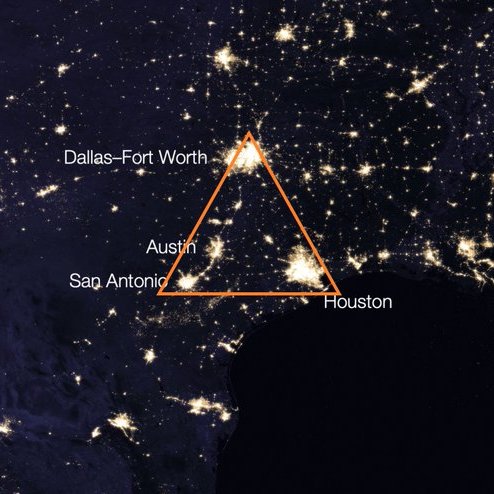
Creating investor returns & revitalizing Opportunity Zones | Co-Founder @ SavoyEquity | $240M+ transforming TX neighborhoods | Proven tax-advantaged model
1kfollowing81kfollowers
The Entrepreneur
A deal-making founder who turns tax code incentives and neglected properties into investor returns and revitalized Texas neighborhoods. Co‑founder of SavoyEquity, he’s built a $240M+ portfolio with a repeatable, tax-advantaged model while calling out fraud and pushing for policy fixes. He pairs hard-nosed investing with practical, often viral, on‑platform advice for owners and operators.
Barrett warns you about title fraud so often you’d think his hobby is filing lawsuits, either that or he sleeps with a county clerk’s phone on airplane mode.
Built and deployed a $240M+ portfolio revitalizing Texas neighborhoods through SavoyEquity while developing a proven, tax‑advantaged investment model, and turning that operating experience into widely followed, practical guidance on protecting property owners.
To create durable investor returns while revitalizing underserved neighborhoods, using capital, smart tax strategies, and public advocacy to protect assets and uplift communities. He aims to close gaps between policy, practice, and protection so owners can build wealth without getting blindsided by fraud or broken systems.
Property stewardship matters; practical systems beat platitudes; rules and records should protect, not expose, owners; education and processes reduce risk; bold capital deployment can be a force for neighborhood revitalization. He believes technology is a tool, not an excuse for sloppiness, and that markets and policy must evolve together.
Hard-won credibility: operator experience, courtroom and boardroom chops, clear playbooks for risk mitigation, and the ability to turn complex legal and tax concepts into actionable threads that resonate widely. He combines storytelling with tactical checklists that drive behavior change.
Tends toward alarmism when calling out risks, which can fatigue followers; highly technical/regulatory content sometimes limits mainstream shareability. Also, prolific posting can dilute high-signal moments.
Run recurring, easy-to-find content series (e.g., "Title Fraud Tuesdays" or "5-Minute Owner Protections") to convert followers into subscribers; pin a step-by-step checklist thread for property owners and promote it with short video clips explaining each step. Host regular X Spaces/Q&As with title attorneys and county officials to build trust and press for policy fixes. Use concise visuals/infographics for high-shareability, and test paid boosts for threads that include a clear CTA (email signup, checklist download, or event registration).
Fun fact: Barrett has tweeted 28,146 times and one of his posts reached 2,533,807 views and 24,561 likes. He’s the co‑founder of SavoyEquity and has directed $240M+ toward transforming Texas neighborhoods. He uses real-world stories (from $6M deed fraud to a $50K invoice nearly lost) to teach practical risk management.
{"data":{"__meta":{"device":false,"path":"/creators/DallasAptGP"},"/creators/DallasAptGP":{"data":{"user":{"id":"314021734","name":"Barrett Linburg","description":"Creating investor returns & revitalizing Opportunity Zones | Co-Founder @ SavoyEquity | $240M+ transforming TX neighborhoods | Proven tax-advantaged model","followers_count":81552,"friends_count":1183,"statuses_count":28146,"profile_image_url_https":"https://pbs.twimg.com/profile_images/2008390072689709056/7XihK8j0_normal.jpg","screen_name":"DallasAptGP","location":"Dallas, TX","entities":{"description":{"urls":[]},"url":{"urls":[{"display_url":"linktr.ee/barrettsavoy","expanded_url":"https://linktr.ee/barrettsavoy","indices":[0,23],"url":"https://t.co/MVnGBMDpZ6"}]}}},"details":{"type":"The Entrepreneur","description":"A deal-making founder who turns tax code incentives and neglected properties into investor returns and revitalized Texas neighborhoods. Co‑founder of SavoyEquity, he’s built a $240M+ portfolio with a repeatable, tax-advantaged model while calling out fraud and pushing for policy fixes. He pairs hard-nosed investing with practical, often viral, on‑platform advice for owners and operators.","purpose":"To create durable investor returns while revitalizing underserved neighborhoods — using capital, smart tax strategies, and public advocacy to protect assets and uplift communities. He aims to close gaps between policy, practice, and protection so owners can build wealth without getting blindsided by fraud or broken systems.","beliefs":"Property stewardship matters; practical systems beat platitudes; rules and records should protect, not expose, owners; education and processes reduce risk; bold capital deployment can be a force for neighborhood revitalization. He believes technology is a tool, not an excuse for sloppiness, and that markets and policy must evolve together.","facts":"Fun fact: Barrett has tweeted 28,146 times and one of his posts reached 2,533,807 views and 24,561 likes. He’s the co‑founder of SavoyEquity and has directed $240M+ toward transforming Texas neighborhoods. He uses real-world stories (from $6M deed fraud to a $50K invoice nearly lost) to teach practical risk management.","strength":"Hard-won credibility: operator experience, courtroom and boardroom chops, clear playbooks for risk mitigation, and the ability to turn complex legal and tax concepts into actionable threads that resonate widely. He combines storytelling with tactical checklists that drive behavior change.","weakness":"Tends toward alarmism when calling out risks, which can fatigue followers; highly technical/regulatory content sometimes limits mainstream shareability. Also, prolific posting can dilute high-signal moments.","roast":"Barrett warns you about title fraud so often you’d think his hobby is filing lawsuits — either that or he sleeps with a county clerk’s phone on airplane mode.","win":"Built and deployed a $240M+ portfolio revitalizing Texas neighborhoods through SavoyEquity while developing a proven, tax‑advantaged investment model — and turning that operating experience into widely followed, practical guidance on protecting property owners.","recommendation":"Run recurring, easy-to-find content series (e.g., \"Title Fraud Tuesdays\" or \"5-Minute Owner Protections\") to convert followers into subscribers; pin a step-by-step checklist thread for property owners and promote it with short video clips explaining each step. Host regular X Spaces/Q&As with title attorneys and county officials to build trust and press for policy fixes. Use concise visuals/infographics for high-shareability, and test paid boosts for threads that include a clear CTA (email signup, checklist download, or event registration)."},"tweets":[{"entities":{"hashtags":[],"media":[{"allow_download_status":{"allow_download":true},"display_url":"pic.x.com/mvlI28tnT0","expanded_url":"https://x.com/DallasAptGP/status/2022021609100644413/photo/1","ext_media_availability":{"status":"Available"},"features":{"large":{"faces":[]},"medium":{"faces":[]},"orig":{"faces":[]},"small":{"faces":[]}},"id_str":"2022021579098513408","indices":[27,50],"media_key":"3_2022021579098513408","media_results":{"result":{"media_key":"3_2022021579098513408"}},"media_url_https":"https://pbs.twimg.com/media/HA-p6b5XYAAtvne.png","original_info":{"focus_rects":[{"h":158,"w":283,"x":0,"y":0},{"h":181,"w":181,"x":1,"y":0},{"h":181,"w":159,"x":12,"y":0},{"h":181,"w":91,"x":46,"y":0},{"h":181,"w":283,"x":0,"y":0}],"height":181,"width":283},"sizes":{"large":{"h":181,"resize":"fit","w":283},"medium":{"h":181,"resize":"fit","w":283},"small":{"h":181,"resize":"fit","w":283},"thumb":{"h":150,"resize":"crop","w":150}},"type":"photo","url":"https://t.co/mvlI28tnT0"}],"symbols":[],"timestamps":[],"urls":[],"user_mentions":[]},"extended_entities":{"media":[{"allow_download_status":{"allow_download":true},"display_url":"pic.x.com/mvlI28tnT0","expanded_url":"https://x.com/DallasAptGP/status/2022021609100644413/photo/1","ext_media_availability":{"status":"Available"},"features":{"large":{"faces":[]},"medium":{"faces":[]},"orig":{"faces":[]},"small":{"faces":[]}},"id_str":"2022021579098513408","indices":[27,50],"media_key":"3_2022021579098513408","media_results":{"result":{"media_key":"3_2022021579098513408"}},"media_url_https":"https://pbs.twimg.com/media/HA-p6b5XYAAtvne.png","original_info":{"focus_rects":[{"h":158,"w":283,"x":0,"y":0},{"h":181,"w":181,"x":1,"y":0},{"h":181,"w":159,"x":12,"y":0},{"h":181,"w":91,"x":46,"y":0},{"h":181,"w":283,"x":0,"y":0}],"height":181,"width":283},"sizes":{"large":{"h":181,"resize":"fit","w":283},"medium":{"h":181,"resize":"fit","w":283},"small":{"h":181,"resize":"fit","w":283},"thumb":{"h":150,"resize":"crop","w":150}},"type":"photo","url":"https://t.co/mvlI28tnT0"}]},"display_text_range":[0,26],"lang":"en","possibly_sensitive":false,"fact_check":null,"id":"2022021609100644413","view_count":2533807,"bookmark_count":1518,"created_at":1770922493000,"favorite_count":24561,"quote_count":199,"reply_count":759,"retweet_count":889,"user_id_str":"314021734","conversation_id_str":"2022021609100644413","full_text":"This just exploded my head https://t.co/mvlI28tnT0","in_reply_to_user_id_str":null,"in_reply_to_status_id_str":null,"is_quote_status":0,"is_ai":null,"ai_score":null,"source":"rapidapi","fetched_at":1772285886656,"edit_history_tweet_ids":null,"poll_10min_at":null,"poll_3day_at":1771182039679,"poll_count":1,"poll_complete":1},{"bookmarked":false,"display_text_range":[0,233],"entities":{"hashtags":[],"symbols":[],"timestamps":[],"urls":[],"user_mentions":[]},"favorited":false,"lang":"en","retweeted":true,"fact_check":null,"id":"1898428521325752827","view_count":753629,"bookmark_count":604,"created_at":1741455605000,"favorite_count":7518,"quote_count":43,"reply_count":337,"retweet_count":211,"user_id_str":"314021734","conversation_id_str":"1898428521325752827","full_text":"Heard about a Dallas family of 4 that wanted to go skiing for a week over spring break \n\nThey priced out Vail and it seemed very pricey so they decided to also look at Zermatt\n\nThey left today for Europe because it was $1,200 cheaper","in_reply_to_user_id_str":null,"in_reply_to_status_id_str":null,"is_quote_status":0,"is_ai":null,"ai_score":null,"source":"scraping","fetched_at":null,"edit_history_tweet_ids":null,"poll_10min_at":null,"poll_3day_at":null,"poll_count":0,"poll_complete":0},{"entities":{"hashtags":[],"symbols":[],"timestamps":[],"urls":[],"user_mentions":[]},"display_text_range":[0,275],"lang":"en","fact_check":null,"id":"2022420253221831117","view_count":435695,"bookmark_count":3214,"created_at":1771017537000,"favorite_count":6980,"quote_count":165,"reply_count":370,"retweet_count":1615,"user_id_str":"314021734","conversation_id_str":"2022420253221831117","full_text":"In Texas, a criminal can steal your $6,000,000 building for $30 in cash.\n\nNo ID required. No background check. Just a forged signature and a trip to the county clerk.\n\nIn 2022, this happened to two of our buildings. If you own real estate, you are a target.\n\nThe Texas county recording system runs on a \"notice\" basis. The clerk’s job is to record documents. Not verify them.\n\nA criminal created a fake deed for two of our assets. They used a cut-and-paste notary stamp pulled from a different public record. They used a courier to send the documents into the clerk’s office. The courier handed over the forged paper and paid $30 in cash.\n\nThe clerk accepted the document. No driver's license. No signature check.\n\nThe public record showed a Delaware LLC owned my property. $6 million in equity vanished from the legal chain of title in seconds.\n\nOnce a criminal controls the deed, they have two moves. They sell the property to an unsuspecting buyer and disappear with the cash. Or they get a hard money loan against it, collect the proceeds, and vanish. Either way, they try to be long gone before you find out.\n\nI found out during a refinance. My title company called with a question: \"Why did you quitclaim these buildings to a new entity?\"\n\nI hadn't.\n\nI contacted the Dallas Police Department, the FBI, and the Texas Secretary of State. Every agency gave the same answer: they are overwhelmed with this type of fraud and didn't have the time or resources to pursue it.\n\nThe criminals hide behind Delaware shells and registered agents. The county takes cash, so there is no bank trail. There is no ID requirement, so there is no face for the cameras.\n\nMost investors assume their title policy covers this. It does not.\n\nStandard title insurance covers defects that existed before you closed. It guarantees you received a clean deed at purchase.\n\nIt does nothing for crimes committed after.\n\nThis is a gap in your risk management you did not know you had.\n\nIt took 90 days of legal work to fix.\n\nThe \"new owner\" was a ghost. I had to file a lawsuit to quiet the title. I spent $20,000 in legal fees and secured a default judgment because the criminals never showed up to court (obviously).\n\nI won. But I am out $20,000 and three months of sleep.\n\nCriminals hunt three targets: raw land, free-and-clear buildings, and estate properties.\n\nA mortgage acts as a tripwire because banks flag transfers. If you own your assets outright, you are defenseless.\n\nHere is what I did after this happened to me:\n\nProperty alerts. Most counties offer a free service that emails you when a document is recorded against your parcel number. Sign up for every asset you own. This costs nothing.\n\nEntity audits. Make sure your Secretary of State filings are current. Criminals look for lapsed registrations and \"zombie\" entities to find their next target.\n\nPush for policy change. State legislatures are starting to act. The law must require a government-issued ID to record a transfer of real property. It is insane that it does not.","in_reply_to_user_id_str":null,"in_reply_to_status_id_str":null,"is_quote_status":0,"is_ai":null,"ai_score":null,"source":"rapidapi","fetched_at":1772372238185,"edit_history_tweet_ids":null,"poll_10min_at":null,"poll_3day_at":1771279213384,"poll_count":1,"poll_complete":1},{"entities":{"hashtags":[],"symbols":[],"timestamps":[],"urls":[],"user_mentions":[]},"display_text_range":[0,272],"lang":"en","fact_check":null,"id":"2022407532895990138","view_count":713163,"bookmark_count":1869,"created_at":1771014505000,"favorite_count":6933,"quote_count":144,"reply_count":359,"retweet_count":1925,"user_id_str":"314021734","conversation_id_str":"2022407532895990138","full_text":"A vendor just emailed us an invoice.\n\nRight logo. Right project. Right invoice number. New bank account.\n\nIf we had paid it, $50K is gone. No recovery. No insurance. Just gone.\n\nWe got an email a few days later that the vendors email had been hacked.\n\nThis is happening to businesses every single day. And it's about to get much worse.\n\nAI is an incredible tool when it's used for good. But it is also a weapon. The same technology helping us underwrite deals and manage portfolios is helping criminals build perfect fraud at zero cost and infinite scale.\n\nThe \"Nigerian Prince\" is dead. He's been replaced by AI that sits inside your vendor's email for months. It watches your payment cycles. It learns your controller's name. It waits for the perfect moment to swap banking info on a real invoice.\n\nIt requires vigilance and good processes to not get fooled.\n\nHere are a few basic things we do:\n\n1. Banking info changes = full stop. No exceptions. We stop and we call.\n\n2. Never call the number on the new email. That's the hacker's number. We dig up the old contact info and call someone we already know.\n\n3. Hold payment if there is a bank change. Every updated account gets a mandatory hold and a voice callback to the vendor.\n\nTwo-minute phone call costs you nothing. One bad ACH is an expensive mistake.\n\nWhat else should we be doing?","in_reply_to_user_id_str":null,"in_reply_to_status_id_str":null,"is_quote_status":0,"is_ai":null,"ai_score":null,"source":"rapidapi","fetched_at":1772300233372,"edit_history_tweet_ids":null,"poll_10min_at":null,"poll_3day_at":1771275614842,"poll_count":1,"poll_complete":1},{"bookmarked":false,"display_text_range":[0,175],"entities":{"hashtags":[],"media":[{"display_url":"pic.x.com/J0sIoZcAWY","expanded_url":"https://x.com/DallasAptGP/status/1873399562976854414/photo/1","id_str":"1873399559071703040","indices":[176,199],"media_key":"3_1873399559071703040","media_url_https":"https://pbs.twimg.com/media/Gf-m-SjXoAAL9ii.jpg","type":"photo","url":"https://t.co/J0sIoZcAWY","ext_media_availability":{"status":"Available"},"features":{"large":{"faces":[{"x":59,"y":59,"h":81,"w":81}]},"medium":{"faces":[{"x":59,"y":59,"h":81,"w":81}]},"small":{"faces":[{"x":34,"y":34,"h":46,"w":46}]},"orig":{"faces":[{"x":59,"y":59,"h":81,"w":81}]}},"sizes":{"large":{"h":1142,"w":1179,"resize":"fit"},"medium":{"h":1142,"w":1179,"resize":"fit"},"small":{"h":659,"w":680,"resize":"fit"},"thumb":{"h":150,"w":150,"resize":"crop"}},"original_info":{"height":1142,"width":1179,"focus_rects":[{"x":0,"y":0,"w":1179,"h":660},{"x":0,"y":0,"w":1142,"h":1142},{"x":0,"y":0,"w":1002,"h":1142},{"x":39,"y":0,"w":571,"h":1142},{"x":0,"y":0,"w":1179,"h":1142}]},"allow_download_status":{"allow_download":true},"media_results":{"result":{"media_key":"3_1873399559071703040"}}}],"symbols":[],"timestamps":[],"urls":[],"user_mentions":[]},"extended_entities":{"media":[{"display_url":"pic.x.com/J0sIoZcAWY","expanded_url":"https://x.com/DallasAptGP/status/1873399562976854414/photo/1","id_str":"1873399559071703040","indices":[176,199],"media_key":"3_1873399559071703040","media_url_https":"https://pbs.twimg.com/media/Gf-m-SjXoAAL9ii.jpg","type":"photo","url":"https://t.co/J0sIoZcAWY","ext_media_availability":{"status":"Available"},"features":{"large":{"faces":[{"x":59,"y":59,"h":81,"w":81}]},"medium":{"faces":[{"x":59,"y":59,"h":81,"w":81}]},"small":{"faces":[{"x":34,"y":34,"h":46,"w":46}]},"orig":{"faces":[{"x":59,"y":59,"h":81,"w":81}]}},"sizes":{"large":{"h":1142,"w":1179,"resize":"fit"},"medium":{"h":1142,"w":1179,"resize":"fit"},"small":{"h":659,"w":680,"resize":"fit"},"thumb":{"h":150,"w":150,"resize":"crop"}},"original_info":{"height":1142,"width":1179,"focus_rects":[{"x":0,"y":0,"w":1179,"h":660},{"x":0,"y":0,"w":1142,"h":1142},{"x":0,"y":0,"w":1002,"h":1142},{"x":39,"y":0,"w":571,"h":1142},{"x":0,"y":0,"w":1179,"h":1142}]},"allow_download_status":{"allow_download":true},"media_results":{"result":{"media_key":"3_1873399559071703040"}}}]},"favorited":false,"lang":"en","possibly_sensitive":false,"possibly_sensitive_editable":true,"retweeted":false,"fact_check":null,"id":"1873399562976854414","view_count":165338,"bookmark_count":51,"created_at":1735488236000,"favorite_count":5953,"quote_count":11,"reply_count":187,"retweet_count":238,"user_id_str":"314021734","conversation_id_str":"1873399562976854414","full_text":"Don’t know how big Tesla’s marketing department is but can confirm that having the CEO personally reach out to buyers the day after a sale is a good way to build brand loyalty https://t.co/J0sIoZcAWY","in_reply_to_user_id_str":null,"in_reply_to_status_id_str":null,"is_quote_status":0,"is_ai":null,"ai_score":null,"source":"scraping","fetched_at":null,"edit_history_tweet_ids":null,"poll_10min_at":null,"poll_3day_at":null,"poll_count":0,"poll_complete":0},{"bookmarked":false,"display_text_range":[0,250],"entities":{"hashtags":[],"symbols":[],"timestamps":[],"urls":[],"user_mentions":[]},"favorited":false,"lang":"en","retweeted":false,"fact_check":null,"id":"1993141633223938454","view_count":119892,"bookmark_count":273,"created_at":1764036970000,"favorite_count":4873,"quote_count":6,"reply_count":35,"retweet_count":64,"user_id_str":"314021734","conversation_id_str":"1993141633223938454","full_text":"Dad's been gone for 5 years. But I'll share his best travel hack:\n\nIf you ever have a cancelled flight just go to the desk and get routed thru Vegas\n\nThere is almost always a late flight to Vegas\n\nYou can always get flight home from Vegas\n\nVegas Baby","in_reply_to_user_id_str":null,"in_reply_to_status_id_str":null,"is_quote_status":0,"is_ai":null,"ai_score":null,"source":"scraping","fetched_at":null,"edit_history_tweet_ids":null,"poll_10min_at":null,"poll_3day_at":null,"poll_count":0,"poll_complete":0},{"bookmarked":false,"display_text_range":[0,279],"entities":{"hashtags":[],"symbols":[],"timestamps":[],"urls":[],"user_mentions":[]},"favorited":false,"lang":"en","retweeted":false,"fact_check":null,"id":"1990510135085518978","view_count":297682,"bookmark_count":328,"created_at":1763409572000,"favorite_count":3785,"quote_count":3,"reply_count":70,"retweet_count":116,"user_id_str":"314021734","conversation_id_str":"1990510135085518978","full_text":"At a steakhouse last night\n\nNoticed a mom had propped an iPad in front of her 5-year old\n\nDisgusting parenting\n\nI marched over to lecture her about screen time ruining children\n\nBut then I noticed\n\nThe kid wasn't watching Bluey\n\nHe was reviewing census tract data for Opportunity Zone designation, cross-referencing poverty rates with median family income ratios, and building a 10-year hold model with stepped-up basis calculations\n\nHis crayons? Actually color-coded for different IRR scenarios\n\nI asked what he was working on\n\n\"Syndicating my first 200-unit development in South Dallas. Already have $2M in soft commits from RIAs. The promote doesn't kick in until we send back all capital and the 15% pref but my waterfall shows 38% IRR to LPs\"\n\nI asked him to be our next summer intern and he threw his lemonade in my face.","in_reply_to_user_id_str":null,"in_reply_to_status_id_str":null,"is_quote_status":0,"is_ai":null,"ai_score":null,"source":"scraping","fetched_at":null,"edit_history_tweet_ids":null,"poll_10min_at":null,"poll_3day_at":null,"poll_count":0,"poll_complete":0},{"bookmarked":true,"display_text_range":[0,275],"entities":{"hashtags":[],"media":[{"display_url":"pic.x.com/jH1DNyFIx0","expanded_url":"https://x.com/DallasAptGP/status/1987692410529317208/photo/1","id_str":"1987692395064934400","indices":[276,299],"media_key":"3_1987692395064934400","media_url_https":"https://pbs.twimg.com/media/G5Wzs7qXQAAAcVU.png","type":"photo","url":"https://t.co/jH1DNyFIx0","ext_media_availability":{"status":"Available"},"features":{"large":{"faces":[]},"medium":{"faces":[]},"small":{"faces":[]},"orig":{"faces":[]}},"sizes":{"large":{"h":573,"w":800,"resize":"fit"},"medium":{"h":573,"w":800,"resize":"fit"},"small":{"h":487,"w":680,"resize":"fit"},"thumb":{"h":150,"w":150,"resize":"crop"}},"original_info":{"height":573,"width":800,"focus_rects":[{"x":0,"y":0,"w":800,"h":448},{"x":114,"y":0,"w":573,"h":573},{"x":149,"y":0,"w":503,"h":573},{"x":257,"y":0,"w":287,"h":573},{"x":0,"y":0,"w":800,"h":573}]},"allow_download_status":{"allow_download":true},"media_results":{"result":{"media_key":"3_1987692395064934400"}}}],"symbols":[],"timestamps":[],"urls":[],"user_mentions":[]},"extended_entities":{"media":[{"display_url":"pic.x.com/jH1DNyFIx0","expanded_url":"https://x.com/DallasAptGP/status/1987692410529317208/photo/1","id_str":"1987692395064934400","indices":[276,299],"media_key":"3_1987692395064934400","media_url_https":"https://pbs.twimg.com/media/G5Wzs7qXQAAAcVU.png","type":"photo","url":"https://t.co/jH1DNyFIx0","ext_media_availability":{"status":"Available"},"features":{"large":{"faces":[]},"medium":{"faces":[]},"small":{"faces":[]},"orig":{"faces":[]}},"sizes":{"large":{"h":573,"w":800,"resize":"fit"},"medium":{"h":573,"w":800,"resize":"fit"},"small":{"h":487,"w":680,"resize":"fit"},"thumb":{"h":150,"w":150,"resize":"crop"}},"original_info":{"height":573,"width":800,"focus_rects":[{"x":0,"y":0,"w":800,"h":448},{"x":114,"y":0,"w":573,"h":573},{"x":149,"y":0,"w":503,"h":573},{"x":257,"y":0,"w":287,"h":573},{"x":0,"y":0,"w":800,"h":573}]},"allow_download_status":{"allow_download":true},"media_results":{"result":{"media_key":"3_1987692395064934400"}}}]},"favorited":true,"lang":"en","possibly_sensitive":false,"possibly_sensitive_editable":true,"retweeted":false,"fact_check":null,"id":"1987692410529317208","view_count":2492046,"bookmark_count":1576,"created_at":1762737774000,"favorite_count":3756,"quote_count":309,"reply_count":233,"retweet_count":614,"user_id_str":"314021734","conversation_id_str":"1987692410529317208","full_text":"Here's something fascinating happening in the apartment market right now.\n\nThe cheapest, oldest apartments (Class C) are getting crushed right now.\n\nBut ONLY in cities that just delivered tons of new apartments.\n\nLet me show you the numbers:\n\nDenver: Class C rents down 13.9% \nNaples: Class C rents down 13.5% \nAustin: Class C rents down 13.3% \nPhoenix: Class C rents down 10.5% \nSan Antonio: Class C rents down 7.2% \nDallas: Class C rents down 6.5%\n\nWhat do all these cities have in common?\n\nThey just absorbed a massive wave of new apartments.\nBut here's the twist...\n\nIn cities that DIDN'T get a big supply wave?\nClass C rents are actually RISING.\n\n20 cities saw Class C rents go UP more than 3%.\n\n19 of those 20 cities had supply BELOW the national average.\n\nSo what's going on?\n\nIt's basically musical chairs.\n\nWhen a brand new luxury apartment opens up, where do those renters come from?\n\nThey don't appear out of thin air.\n\nThey move from slightly older apartments.\n\nThose apartments now have vacancies. So they drop their rents to compete.\n\nThat pulls in renters from even older apartments.\n\nAnd down the chain it goes.\n\nEventually it hits the oldest, cheapest apartments at the bottom.\n\nAnd here's why they get hit the hardest:\n\nPeople living in Class C apartments are already spending a huge chunk of their paycheck on rent.\n\nTo fill empty units, landlords have to cut prices A LOT.\n\nSometimes enough to attract people who couldn't afford market-rate apartments before.\n\nIt's like a waterfall effect.\n\nThe water (new supply) at the top pushes everything down.\n\nBut here's the important part:\nThis proves that building new apartments - even \"luxury\" ones - reduces rents all the way down the spectrum.\n\nIf it was just an affordability crisis, you'd see Class C rents falling everywhere.\n\nIn high-supply cities AND low-supply cities.\n\nBut we're not seeing that.\n\nWe're seeing a perfect split:\n\nLots of new apartments = falling Class C rents\nFew new apartments = rising Class C rents\n\nNew supply at the top creates relief at the bottom.\n\nAlso: wages have been growing faster than rents for 3 straight years.\n\nMore people can afford apartments today than before.\n\nThe bottom line?\nThis is what happens when you actually build housing.\n\nSupply works.\n\n(Chart and analysis from Jay Parsons - one of the sharpest real estate economists out there)","in_reply_to_user_id_str":null,"in_reply_to_status_id_str":null,"is_quote_status":0,"is_ai":null,"ai_score":null,"source":"scraping","fetched_at":null,"edit_history_tweet_ids":null,"poll_10min_at":null,"poll_3day_at":null,"poll_count":0,"poll_complete":0},{"bookmarked":false,"display_text_range":[0,57],"entities":{"hashtags":[],"symbols":[],"timestamps":[],"urls":[],"user_mentions":[]},"favorited":false,"lang":"en","retweeted":false,"fact_check":null,"id":"1873172819703677418","view_count":372920,"bookmark_count":30,"created_at":1735434176000,"favorite_count":3736,"quote_count":13,"reply_count":217,"retweet_count":121,"user_id_str":"314021734","conversation_id_str":"1873172819703677418","full_text":"Picked up the new Tesla Model Y today\n\nIt drove us home 🤯","in_reply_to_user_id_str":null,"in_reply_to_status_id_str":null,"is_quote_status":0,"is_ai":null,"ai_score":null,"source":"scraping","fetched_at":null,"edit_history_tweet_ids":null,"poll_10min_at":null,"poll_3day_at":null,"poll_count":0,"poll_complete":0},{"bookmarked":false,"display_text_range":[0,276],"entities":{"hashtags":[],"symbols":[],"timestamps":[],"urls":[],"user_mentions":[]},"favorited":false,"lang":"en","retweeted":false,"fact_check":null,"id":"1995525204718612693","view_count":254018,"bookmark_count":862,"created_at":1764605258000,"favorite_count":3534,"quote_count":83,"reply_count":348,"retweet_count":656,"user_id_str":"314021734","conversation_id_str":"1995525204718612693","full_text":"Texas politicians are promising to \"eliminate property taxes.\"\n\nIt polls at 80%. It wins elections.\n\nAnd it is a mathematical lie.\n\nTexas runs on a two-legged stool.\n\nMost states have three revenue sources: Income Tax, Sales Tax, Property Tax.\n\nWe banned income tax. We banned wealth tax. Both written into the constitution.\n\nThat leaves us balancing the 8th-largest economy on Earth on two legs.\n\nProperty taxes generate $81 billion a year. Schools. Police. Fire. Roads.\n\nYou can't delete $81 billion. You have to replace it.\n\nThe only lever left is sales tax.\n\nTo replace property tax revenue, we'd need a state sales tax above 20%.\n\nA $40,000 truck costs $8,000 in tax at the dealership.\nEvery shirt. Every appliance. Every taco. Plus 20%.\n\"But Florida doesn't have this problem!\"\n\nFlorida exports its tax burden to 135 million tourists a year. Families from Ohio fund Florida schools every time they visit Disney World.\n\nTexas doesn't have Disney World.\n\n\"What about Tennessee?\"\n\nTennessee has the highest combined sales tax in America. And they tax groceries.\n\nTexas exempts groceries.\n\nTo copy Tennessee, you'd pay tax on bread, milk, and eggs.\n\nHere's what nobody talks about.\n\nProperty taxes are local. Your school board levies them. Your city council controls them.\n\nIf the state eliminates property tax, the state becomes the sole funder of every school district.\n\nYou know the golden rule? \"He who has the gold, makes the rules.\"\n\nState pays 100% of the bills. State makes 100% of the decisions.\n\n\"Elimination\" sounds like freedom. It's centralization.\n\nNow the math gets ugly.\n\nProperty taxes hit wealthy homeowners and commercial investors the hardest.\nElimination benefits them most.\n\nSales taxes hit the poor.\nA 20+% sales tax crushes low-income families who spend every dollar they earn.\n\nRenters make up 38% of Texas. Landlords won't lower rent because taxes vanish. Markets don't work that way. But renters pay 20+% more for every good they buy.\n\n\"Elimination\" is a tax cut for landlords and a tax hike for working families.\n\nSo what's the real solution?\n\nIt's boring. It's happening now. It works.\n\nTax Rate Compression.\n\nWhen oil and gas booms, Texas fills the Rainy Day Fund.\n\nThe state uses that surplus to pay school districts direct. Districts lower their tax rates.\n\nYour mill rate is lower today than five years ago, even if your home value is up.\n\nThe state raised the Homestead Exemption to $100,000. That wipes out taxes on a huge chunk of your home's value.\n\nNot a headline. A managed reduction. Local control intact.\n\nAnd here’s the part that matters for investors:\n\nTexas is one of the fastest-growing economies in America.\n\nPopulation up. Jobs up. Consumption up.\n\nThat growth keeps generating surpluses, which the state uses to compress school taxes again and again.\n\nFor homeowners and commercial owners, that means one thing:\n\nMill rates will likely keep drifting down over time, even as values rise.\n\nYou don’t need a fake promise of “elimination” to win.\n\nYou need a strong economy and steady compression.\n\nNext time a politician promises to \"end\" property taxes, check the math.\n\nThey aren't offering a free lunch.\n\nThey're offering a different bill.","in_reply_to_user_id_str":null,"in_reply_to_status_id_str":null,"is_quote_status":0,"is_ai":null,"ai_score":null,"source":"scraping","fetched_at":null,"edit_history_tweet_ids":null,"poll_10min_at":null,"poll_3day_at":null,"poll_count":0,"poll_complete":0},{"bookmarked":false,"display_text_range":[0,264],"entities":{"hashtags":[],"symbols":[],"timestamps":[],"urls":[],"user_mentions":[]},"favorited":false,"lang":"en","retweeted":false,"fact_check":null,"id":"1721664682044342576","view_count":1063139,"bookmark_count":394,"created_at":1699311821000,"favorite_count":3179,"quote_count":106,"reply_count":235,"retweet_count":414,"user_id_str":"314021734","conversation_id_str":"1721664682044342576","full_text":"Heard through the grapevine\n\nOne of the largest commercial mortgage brokers in the country was raided over the weekend\n\nFraud was found in loans they'd sent to Fannie Mae\n\nThis could now trigger a chain reaction of buybacks and less liquidity among Fannie lenders","in_reply_to_user_id_str":null,"in_reply_to_status_id_str":null,"is_quote_status":0,"is_ai":null,"ai_score":null,"source":"scraping","fetched_at":null,"edit_history_tweet_ids":null,"poll_10min_at":null,"poll_3day_at":null,"poll_count":0,"poll_complete":0},{"entities":{"hashtags":[],"symbols":[],"timestamps":[],"urls":[],"user_mentions":[]},"display_text_range":[0,279],"lang":"en","fact_check":null,"id":"2020140582690074781","view_count":427040,"bookmark_count":6985,"created_at":1770474021000,"favorite_count":3166,"quote_count":11,"reply_count":102,"retweet_count":215,"user_id_str":"314021734","conversation_id_str":"2020140582690074781","full_text":"If you pay for Claude (the $20, $100, or $200/month plan) there is now an Excel add-in that puts AI directly inside your spreadsheets. \n\nYou can install it from the Microsoft Office Add-ins store in about 60 seconds.\n\nPlay with it today. Have your mind blown. Then use it to save real time and money on Monday.\n\nHere are six simple steps to see what it can do.\n\nStep 1: Pick a real file. Open a spreadsheet you actually use, like a budget, a proforma, a deal analyzer. Something with real formulas.\n\nStep 2: Let the AI audit it. Don’t ask it to fix anything. Paste this prompt into the add-in:\n\n“Do not change anything in this spreadsheet. Audit what you see and give me a detailed breakdown of: (1) the overall purpose and structure, (2) every formula and how it works, (3) the formatting and layout, (4) any errors, inefficiencies, or broken logic, and (5) how this could be rebuilt better from scratch. Be detailed and specific.”\n\nYou will be surprised what it catches.\n\nStep 3: Use your judgment. Read the audit. You know your business better than the AI. Identify the three or four suggestions that would actually matter. Copy them.\n\nStep 4: Take it to Claude Chat. \n\nPaste the audit and say:\n\n“Based on these recommendations, write me a detailed prompt I can paste back into Claude in Excel to build a new spreadsheet from scratch. It must be specific enough to execute without follow-up questions. Include structure, formulas, and formatting.”\n\nLet Claude write the blueprint. That’s what it’s best at.\n\nStep 5: Build. Open a blank sheet. Paste the prompt. Hit enter. Watch it work.🤯\n\nUse the tools to analyze a template that you use all the time and how to make it better. Claude Chat will tell you how to make it better. Claude in Excel executes it.\n\nIf you follow this, I think you’ll become a raving fan of Claude in Excel. \n\nReport back.","in_reply_to_user_id_str":null,"in_reply_to_status_id_str":null,"is_quote_status":0,"is_ai":null,"ai_score":null,"source":"rapidapi","fetched_at":1771980841927,"edit_history_tweet_ids":null,"poll_10min_at":null,"poll_3day_at":1770735614192,"poll_count":1,"poll_complete":1},{"bookmarked":false,"display_text_range":[0,277],"entities":{"hashtags":[],"symbols":[],"timestamps":[],"urls":[],"user_mentions":[]},"favorited":false,"lang":"en","retweeted":false,"fact_check":null,"id":"1956446593806475719","view_count":309290,"bookmark_count":287,"created_at":1755288191000,"favorite_count":3128,"quote_count":24,"reply_count":123,"retweet_count":298,"user_id_str":"314021734","conversation_id_str":"1956446593806475719","full_text":"In Texas, someone can steal your building for $30 cash\n\nNo ID required to file the deed in person \n\nIn 2022, 2 of our buildings worth over $6M were “sold” to a Delaware LLC using a fake notarized signature.\n\nThe county recording system accepted the forged deed without checking ID, just took the $30 fee.\n\nDPD, FBI, and TX SOS were overwhelmed. It took us 90 days, $20k in legal fees, and a lawsuit to get the title back.\n\nGlad to see Governor Abbott add deed fraud to the special session. The law needs to catch up with the criminals.","in_reply_to_user_id_str":null,"in_reply_to_status_id_str":null,"is_quote_status":0,"is_ai":null,"ai_score":null,"source":"scraping","fetched_at":null,"edit_history_tweet_ids":null,"poll_10min_at":null,"poll_3day_at":null,"poll_count":0,"poll_complete":0},{"entities":{"hashtags":[],"media":[{"display_url":"pic.x.com/hI66ZT4XUS","expanded_url":"https://x.com/DallasAptGP/status/2004083510248616339/photo/1","id_str":"2004083505173590016","indices":[253,276],"media_key":"3_2004083505173590016","media_url_https":"https://pbs.twimg.com/media/G8_vVHIXcAANkGy.jpg","type":"photo","url":"https://t.co/hI66ZT4XUS","ext_media_availability":{"status":"Available"},"features":{"large":{"faces":[{"x":256,"y":730,"h":88,"w":88}]},"medium":{"faces":[{"x":150,"y":427,"h":51,"w":51}]},"small":{"faces":[{"x":85,"y":242,"h":29,"w":29}]},"orig":{"faces":[{"x":256,"y":730,"h":88,"w":88}]}},"sizes":{"large":{"h":2048,"w":1536,"resize":"fit"},"medium":{"h":1200,"w":900,"resize":"fit"},"small":{"h":680,"w":510,"resize":"fit"},"thumb":{"h":150,"w":150,"resize":"crop"}},"original_info":{"height":2048,"width":1536,"focus_rects":[{"x":0,"y":850,"w":1536,"h":860},{"x":0,"y":512,"w":1536,"h":1536},{"x":0,"y":297,"w":1536,"h":1751},{"x":0,"y":0,"w":1024,"h":2048},{"x":0,"y":0,"w":1536,"h":2048}]},"media_results":{"result":{"media_key":"3_2004083505173590016"}}}],"symbols":[],"timestamps":[],"urls":[],"user_mentions":[]},"extended_entities":{"media":[{"display_url":"pic.x.com/hI66ZT4XUS","expanded_url":"https://x.com/DallasAptGP/status/2004083510248616339/photo/1","id_str":"2004083505173590016","indices":[253,276],"media_key":"3_2004083505173590016","media_url_https":"https://pbs.twimg.com/media/G8_vVHIXcAANkGy.jpg","type":"photo","url":"https://t.co/hI66ZT4XUS","ext_media_availability":{"status":"Available"},"features":{"large":{"faces":[{"x":256,"y":730,"h":88,"w":88}]},"medium":{"faces":[{"x":150,"y":427,"h":51,"w":51}]},"small":{"faces":[{"x":85,"y":242,"h":29,"w":29}]},"orig":{"faces":[{"x":256,"y":730,"h":88,"w":88}]}},"sizes":{"large":{"h":2048,"w":1536,"resize":"fit"},"medium":{"h":1200,"w":900,"resize":"fit"},"small":{"h":680,"w":510,"resize":"fit"},"thumb":{"h":150,"w":150,"resize":"crop"}},"original_info":{"height":2048,"width":1536,"focus_rects":[{"x":0,"y":850,"w":1536,"h":860},{"x":0,"y":512,"w":1536,"h":1536},{"x":0,"y":297,"w":1536,"h":1751},{"x":0,"y":0,"w":1024,"h":2048},{"x":0,"y":0,"w":1536,"h":2048}]},"media_results":{"result":{"media_key":"3_2004083505173590016"}}}]},"display_text_range":[0,252],"lang":"en","possibly_sensitive":false,"fact_check":null,"id":"2004083510248616339","view_count":145579,"bookmark_count":468,"created_at":1766645717000,"favorite_count":3079,"quote_count":4,"reply_count":47,"retweet_count":51,"user_id_str":"314021734","conversation_id_str":"2004083510248616339","full_text":"One of my favorite Christmas traditions that I’ve carried on from my childhood \n\nSanta seals off the living room with wrapping paper so no one can go in until morning \n\nMakes for great videos of kids breaking through the paper to see what Santa brought https://t.co/hI66ZT4XUS","in_reply_to_user_id_str":null,"in_reply_to_status_id_str":null,"is_quote_status":0,"is_ai":null,"ai_score":null,"source":"rapidapi","fetched_at":1766767795278,"edit_history_tweet_ids":null,"poll_10min_at":null,"poll_3day_at":null,"poll_count":0,"poll_complete":0},{"entities":{"hashtags":[],"media":[{"display_url":"pic.x.com/UVT7UY87xF","expanded_url":"https://x.com/DallasAptGP/status/2014186552750993599/photo/1","id_str":"2014186549194178560","indices":[281,304],"media_key":"3_2014186549194178560","media_url_https":"https://pbs.twimg.com/media/G_PT_rAWwAADwDN.jpg","type":"photo","url":"https://t.co/UVT7UY87xF","ext_media_availability":{"status":"Available"},"features":{"large":{"faces":[]},"medium":{"faces":[]},"small":{"faces":[]},"orig":{"faces":[]}},"sizes":{"large":{"h":618,"w":810,"resize":"fit"},"medium":{"h":618,"w":810,"resize":"fit"},"small":{"h":519,"w":680,"resize":"fit"},"thumb":{"h":150,"w":150,"resize":"crop"}},"original_info":{"height":618,"width":810,"focus_rects":[{"x":0,"y":36,"w":810,"h":454},{"x":192,"y":0,"w":618,"h":618},{"x":268,"y":0,"w":542,"h":618},{"x":501,"y":0,"w":309,"h":618},{"x":0,"y":0,"w":810,"h":618}]},"media_results":{"result":{"media_key":"3_2014186549194178560"}}}],"symbols":[],"timestamps":[],"urls":[],"user_mentions":[]},"extended_entities":{"media":[{"display_url":"pic.x.com/UVT7UY87xF","expanded_url":"https://x.com/DallasAptGP/status/2014186552750993599/photo/1","id_str":"2014186549194178560","indices":[281,304],"media_key":"3_2014186549194178560","media_url_https":"https://pbs.twimg.com/media/G_PT_rAWwAADwDN.jpg","type":"photo","url":"https://t.co/UVT7UY87xF","ext_media_availability":{"status":"Available"},"features":{"large":{"faces":[]},"medium":{"faces":[]},"small":{"faces":[]},"orig":{"faces":[]}},"sizes":{"large":{"h":618,"w":810,"resize":"fit"},"medium":{"h":618,"w":810,"resize":"fit"},"small":{"h":519,"w":680,"resize":"fit"},"thumb":{"h":150,"w":150,"resize":"crop"}},"original_info":{"height":618,"width":810,"focus_rects":[{"x":0,"y":36,"w":810,"h":454},{"x":192,"y":0,"w":618,"h":618},{"x":268,"y":0,"w":542,"h":618},{"x":501,"y":0,"w":309,"h":618},{"x":0,"y":0,"w":810,"h":618}]},"media_results":{"result":{"media_key":"3_2014186549194178560"}}}]},"display_text_range":[0,280],"lang":"en","possibly_sensitive":false,"fact_check":null,"id":"2014186552750993599","view_count":289811,"bookmark_count":3206,"created_at":1769054470000,"favorite_count":2525,"quote_count":21,"reply_count":159,"retweet_count":258,"user_id_str":"314021734","conversation_id_str":"2014186552750993599","full_text":"We just built an $18.5M apartment complex in Dallas.\n\nIn 10 years, we will sell it.\n\nThe federal tax bill will be $0.\n\nEven better: The IRS will permanently forgive $5M in tax deductions we took along the way.\n\nThis is the single most powerful deal the IRS can offer a real estate investor without dying.\n\nHere is how we did it.\n\nThe strategy is called Opportunity Zone investing.\n\nIt sounds complex. It is not.\n\nYou follow three steps:\n\n• Take a capital gain (from stocks, a business sale, or crypto).\n\n• Invest that gain into a designated “Opportunity Zone.”\n\n• Improve the property.\n\nIf you follow the rules and hold for 10 years, the federal government grants you tax immunity on the backend.\n\nBut the real magic happens when you combine this with a Cost Segregation Study.\n\nThis is the “Super Move.”\n\nLet’s look at the numbers on our Dallas project.\n\nWe raised $8M from investors.\n\nWe borrowed $10.5M from a local bank.\n\nWe built 75 units.\n\nTotal cost: $18.5M.\n\nNow we depreciate the asset.\n\nIn a standard deal, you depreciate the building over 27.5 years. \n\nYou get a small tax deduction every year. It is slow. It is boring.\n\nWe don’t do slow.\n\nWe hire an engineering firm to perform a Cost Segregation Study.\n\nThey walk the building. They identify components that do not last 27.5 years.\n\nFlooring.\nLighting.\nCabinets.\nLandscaping.\n\nThe tax code allows us to write these items off immediately.\n\nOn this project, the engineering study unlocks about $5M in “bonus depreciation.”\n\nThat is a $5M paper loss this year. \n\nOur investors use this loss to offset other passive income. It crushes their tax bill today.\n\nIn a normal real estate deal, this comes back to bite you.\n\nIt is called “Depreciation Recapture.”\n\nWhen you sell a standard building, the IRS looks at all those deductions you took. They say, “You wrote this off, but you made money.”\n\nThey tax that $5M at up to 25%.\nUnless you are in an Opportunity Zone.\n\nThe OZ rules change the math.\n\nIf you hold an OZ asset for 10 years, your cost basis steps up to fair market value when you sell.\n\nThat means two things:\n\n• You pay $0 Capital Gains Tax on the profit.\n\n• You pay $0 Depreciation Recapture tax.\n\nThat $5M in deductions? It was a gift. You never pay it back.\n\nYou got the tax break upfront. You kept the cash flow in the middle. You keep all the profit at the end.\n\nThis is not a loophole.\n\nIt is a congressional incentive.\n\nThe government wants housing built in these zones. They offer tax-free profits to get it.\n\nWe take the deal every time.","in_reply_to_user_id_str":null,"in_reply_to_status_id_str":null,"is_quote_status":0,"is_ai":null,"ai_score":null,"source":"rapidapi","fetched_at":1769783815456,"edit_history_tweet_ids":null,"poll_10min_at":null,"poll_3day_at":1769315660991,"poll_count":1,"poll_complete":1},{"bookmarked":false,"display_text_range":[0,154],"entities":{"hashtags":[],"media":[{"display_url":"pic.x.com/MWD8Yktxjg","expanded_url":"https://x.com/DallasAptGP/status/1857984403307123177/photo/1","id_str":"1857984400555651072","indices":[155,178],"media_key":"3_1857984400555651072","media_url_https":"https://pbs.twimg.com/media/Gcji9-FWMAA9GxB.jpg","type":"photo","url":"https://t.co/MWD8Yktxjg","ext_media_availability":{"status":"Available"},"features":{"large":{"faces":[]},"medium":{"faces":[]},"small":{"faces":[]},"orig":{"faces":[]}},"sizes":{"large":{"h":1103,"w":1179,"resize":"fit"},"medium":{"h":1103,"w":1179,"resize":"fit"},"small":{"h":636,"w":680,"resize":"fit"},"thumb":{"h":150,"w":150,"resize":"crop"}},"original_info":{"height":1103,"width":1179,"focus_rects":[{"x":0,"y":443,"w":1179,"h":660},{"x":0,"y":0,"w":1103,"h":1103},{"x":0,"y":0,"w":968,"h":1103},{"x":0,"y":0,"w":552,"h":1103},{"x":0,"y":0,"w":1179,"h":1103}]},"media_results":{"result":{"media_key":"3_1857984400555651072"}}}],"symbols":[],"timestamps":[],"urls":[],"user_mentions":[]},"extended_entities":{"media":[{"display_url":"pic.x.com/MWD8Yktxjg","expanded_url":"https://x.com/DallasAptGP/status/1857984403307123177/photo/1","id_str":"1857984400555651072","indices":[155,178],"media_key":"3_1857984400555651072","media_url_https":"https://pbs.twimg.com/media/Gcji9-FWMAA9GxB.jpg","type":"photo","url":"https://t.co/MWD8Yktxjg","ext_media_availability":{"status":"Available"},"features":{"large":{"faces":[]},"medium":{"faces":[]},"small":{"faces":[]},"orig":{"faces":[]}},"sizes":{"large":{"h":1103,"w":1179,"resize":"fit"},"medium":{"h":1103,"w":1179,"resize":"fit"},"small":{"h":636,"w":680,"resize":"fit"},"thumb":{"h":150,"w":150,"resize":"crop"}},"original_info":{"height":1103,"width":1179,"focus_rects":[{"x":0,"y":443,"w":1179,"h":660},{"x":0,"y":0,"w":1103,"h":1103},{"x":0,"y":0,"w":968,"h":1103},{"x":0,"y":0,"w":552,"h":1103},{"x":0,"y":0,"w":1179,"h":1103}]},"media_results":{"result":{"media_key":"3_1857984400555651072"}}}]},"favorited":false,"lang":"en","possibly_sensitive":false,"possibly_sensitive_editable":true,"retweeted":false,"fact_check":null,"id":"1857984403307123177","view_count":795152,"bookmark_count":882,"created_at":1731812976000,"favorite_count":2466,"quote_count":30,"reply_count":263,"retweet_count":41,"user_id_str":"314021734","conversation_id_str":"1857984403307123177","full_text":"What’s the least expensive car (new or used) that you could buy today that gets you treated like royalty at a nice restaurant valet?\n\nHere’s my submission https://t.co/MWD8Yktxjg","in_reply_to_user_id_str":null,"in_reply_to_status_id_str":null,"is_quote_status":0,"is_ai":null,"ai_score":null,"source":"scraping","fetched_at":null,"edit_history_tweet_ids":null,"poll_10min_at":null,"poll_3day_at":null,"poll_count":0,"poll_complete":0}],"ctweets":[{"bookmarked":false,"display_text_range":[0,227],"entities":{"hashtags":[],"media":[{"display_url":"pic.x.com/cYu81s2xSQ","expanded_url":"https://x.com/DallasAptGP/status/1988622561807049140/photo/1","id_str":"1988622462683107328","indices":[228,251],"media_key":"3_1988622462683107328","media_url_https":"https://pbs.twimg.com/media/G5kBl_iW0AAUSJX.png","type":"photo","url":"https://t.co/cYu81s2xSQ","ext_media_availability":{"status":"Available"},"features":{"large":{"faces":[]},"medium":{"faces":[]},"small":{"faces":[]},"orig":{"faces":[]}},"sizes":{"large":{"h":494,"w":494,"resize":"fit"},"medium":{"h":494,"w":494,"resize":"fit"},"small":{"h":494,"w":494,"resize":"fit"},"thumb":{"h":150,"w":150,"resize":"crop"}},"original_info":{"height":494,"width":494,"focus_rects":[{"x":0,"y":146,"w":494,"h":277},{"x":0,"y":0,"w":494,"h":494},{"x":0,"y":0,"w":433,"h":494},{"x":12,"y":0,"w":247,"h":494},{"x":0,"y":0,"w":494,"h":494}]},"allow_download_status":{"allow_download":true},"media_results":{"result":{"media_key":"3_1988622462683107328"}}}],"symbols":[],"timestamps":[],"urls":[],"user_mentions":[]},"extended_entities":{"media":[{"display_url":"pic.x.com/cYu81s2xSQ","expanded_url":"https://x.com/DallasAptGP/status/1988622561807049140/photo/1","id_str":"1988622462683107328","indices":[228,251],"media_key":"3_1988622462683107328","media_url_https":"https://pbs.twimg.com/media/G5kBl_iW0AAUSJX.png","type":"photo","url":"https://t.co/cYu81s2xSQ","ext_media_availability":{"status":"Available"},"features":{"large":{"faces":[]},"medium":{"faces":[]},"small":{"faces":[]},"orig":{"faces":[]}},"sizes":{"large":{"h":494,"w":494,"resize":"fit"},"medium":{"h":494,"w":494,"resize":"fit"},"small":{"h":494,"w":494,"resize":"fit"},"thumb":{"h":150,"w":150,"resize":"crop"}},"original_info":{"height":494,"width":494,"focus_rects":[{"x":0,"y":146,"w":494,"h":277},{"x":0,"y":0,"w":494,"h":494},{"x":0,"y":0,"w":433,"h":494},{"x":12,"y":0,"w":247,"h":494},{"x":0,"y":0,"w":494,"h":494}]},"allow_download_status":{"allow_download":true},"media_results":{"result":{"media_key":"3_1988622462683107328"}}}]},"favorited":false,"lang":"en","possibly_sensitive":false,"possibly_sensitive_editable":true,"retweeted":false,"fact_check":null,"id":"1988622561807049140","view_count":1926715,"bookmark_count":481,"created_at":1762959540000,"favorite_count":2130,"quote_count":199,"reply_count":1395,"retweet_count":228,"user_id_str":"314021734","conversation_id_str":"1988622561807049140","full_text":"The Texas Triangle\n\nDFW, Houston, Austin, San Antonio - cheap land, low cost of living, no state income tax, business friendly\n\nName another region offering this much economic opportunity...\n\nWhat's holding you back from Texas? https://t.co/cYu81s2xSQ","in_reply_to_user_id_str":null,"in_reply_to_status_id_str":null,"is_quote_status":0,"is_ai":null,"ai_score":null,"source":"scraping","fetched_at":null,"edit_history_tweet_ids":null,"poll_10min_at":null,"poll_3day_at":null,"poll_count":0,"poll_complete":0},{"bookmarked":false,"display_text_range":[0,280],"entities":{"hashtags":[],"media":[{"display_url":"pic.x.com/rHtPaSNHhY","expanded_url":"https://x.com/DallasAptGP/status/1993062796863701398/photo/1","id_str":"1993062117285466112","indices":[281,304],"media_key":"3_1993062117285466112","media_url_https":"https://pbs.twimg.com/media/G6jHb5wWkAA4Dms.png","type":"photo","url":"https://t.co/rHtPaSNHhY","ext_media_availability":{"status":"Available"},"features":{"large":{"faces":[]},"medium":{"faces":[]},"small":{"faces":[]},"orig":{"faces":[]}},"sizes":{"large":{"h":564,"w":528,"resize":"fit"},"medium":{"h":564,"w":528,"resize":"fit"},"small":{"h":564,"w":528,"resize":"fit"},"thumb":{"h":150,"w":150,"resize":"crop"}},"original_info":{"height":564,"width":528,"focus_rects":[{"x":0,"y":268,"w":528,"h":296},{"x":0,"y":36,"w":528,"h":528},{"x":0,"y":0,"w":495,"h":564},{"x":0,"y":0,"w":282,"h":564},{"x":0,"y":0,"w":528,"h":564}]},"allow_download_status":{"allow_download":true},"media_results":{"result":{"media_key":"3_1993062117285466112"}}}],"symbols":[],"timestamps":[],"urls":[],"user_mentions":[]},"extended_entities":{"media":[{"display_url":"pic.x.com/rHtPaSNHhY","expanded_url":"https://x.com/DallasAptGP/status/1993062796863701398/photo/1","id_str":"1993062117285466112","indices":[281,304],"media_key":"3_1993062117285466112","media_url_https":"https://pbs.twimg.com/media/G6jHb5wWkAA4Dms.png","type":"photo","url":"https://t.co/rHtPaSNHhY","ext_media_availability":{"status":"Available"},"features":{"large":{"faces":[]},"medium":{"faces":[]},"small":{"faces":[]},"orig":{"faces":[]}},"sizes":{"large":{"h":564,"w":528,"resize":"fit"},"medium":{"h":564,"w":528,"resize":"fit"},"small":{"h":564,"w":528,"resize":"fit"},"thumb":{"h":150,"w":150,"resize":"crop"}},"original_info":{"height":564,"width":528,"focus_rects":[{"x":0,"y":268,"w":528,"h":296},{"x":0,"y":36,"w":528,"h":528},{"x":0,"y":0,"w":495,"h":564},{"x":0,"y":0,"w":282,"h":564},{"x":0,"y":0,"w":528,"h":564}]},"allow_download_status":{"allow_download":true},"media_results":{"result":{"media_key":"3_1993062117285466112"}}}]},"favorited":false,"lang":"en","possibly_sensitive":false,"possibly_sensitive_editable":true,"retweeted":false,"fact_check":null,"id":"1993062796863701398","view_count":235175,"bookmark_count":248,"created_at":1764018174000,"favorite_count":2211,"quote_count":38,"reply_count":1259,"retweet_count":104,"user_id_str":"314021734","conversation_id_str":"1993062796863701398","full_text":"My 10-year-old daughter is entering her Shark Tank era.\n\nShe wants your feedback.\n\nShe binge-watched the show. Like any good entrepreneur, she found a problem in her own backyard (literally) and built a solution.\n\nShe wants a market check. Be honest. But remember... she's 10.\n\nIf you own an oak tree, you know. Her Grandmother's 100-year-old oak drops thousands of acorns every fall.\n\nThey roll under your feet like tiny wheels. Twisted ankles waiting to happen.\n\nThey turn into oily, gritty sludge when cars drive over them.\nThey're toxic to dogs.\nThey're a nightmare to rake.\n\nHer Solution She wants to build a product to solve this \"Acorn Anarchy.\" Here's the concept:\n\nMaterial: Industrial-grade stainless steel mesh. Not a cheap tarp.\n\nDesign: Custom-fit to your tree's canopy. Up to 80 feet of coverage. Suspended off the ground.\n\nFunction: A drawstring funnel at the bottom. Pull it, and the acorns dump out. No raking.\n\nLook: Clean and architectural. Not an eyesore.\n\nThe Price Because she insists on quality materials, the price is steep. Around $430 for a large custom unit.\n\nThe Pitch I told her $430 was too expensive for a net. She told me I didn't understand the \"Acorn Economy.\"\n\nShe researched it. Acorns aren't trash. They're a product people buy. Hunters use them for deer bait. Collectors buy them for replanting. They sell for up to $6 per pound.\n\nHer pitch: \"Dad, it's not a net. It pays you back. It covers its cost in two seasons. And you never have to rake again.\"\n\nI fact-checked her. She's right.\n\nThe Ask: Homeowners, we need to know if this market exists before we start welding in the garage. Would you buy this?\n\nYES - Take my money. The acorns are ruining my yard.\nYES - But only if it's cheaper. I don't care about steel vs. nylon.\nNO - I'll stick to raking.\nNO - But I'm impressed she did the math on acorn resale.\n\nLet her know. We'll read the comments at dinner tonight.","in_reply_to_user_id_str":null,"in_reply_to_status_id_str":null,"is_quote_status":0,"is_ai":null,"ai_score":null,"source":"scraping","fetched_at":null,"edit_history_tweet_ids":null,"poll_10min_at":null,"poll_3day_at":null,"poll_count":0,"poll_complete":0},{"entities":{"hashtags":[],"media":[{"allow_download_status":{"allow_download":true},"display_url":"pic.x.com/mvlI28tnT0","expanded_url":"https://x.com/DallasAptGP/status/2022021609100644413/photo/1","ext_media_availability":{"status":"Available"},"features":{"large":{"faces":[]},"medium":{"faces":[]},"orig":{"faces":[]},"small":{"faces":[]}},"id_str":"2022021579098513408","indices":[27,50],"media_key":"3_2022021579098513408","media_results":{"result":{"media_key":"3_2022021579098513408"}},"media_url_https":"https://pbs.twimg.com/media/HA-p6b5XYAAtvne.png","original_info":{"focus_rects":[{"h":158,"w":283,"x":0,"y":0},{"h":181,"w":181,"x":1,"y":0},{"h":181,"w":159,"x":12,"y":0},{"h":181,"w":91,"x":46,"y":0},{"h":181,"w":283,"x":0,"y":0}],"height":181,"width":283},"sizes":{"large":{"h":181,"resize":"fit","w":283},"medium":{"h":181,"resize":"fit","w":283},"small":{"h":181,"resize":"fit","w":283},"thumb":{"h":150,"resize":"crop","w":150}},"type":"photo","url":"https://t.co/mvlI28tnT0"}],"symbols":[],"timestamps":[],"urls":[],"user_mentions":[]},"extended_entities":{"media":[{"allow_download_status":{"allow_download":true},"display_url":"pic.x.com/mvlI28tnT0","expanded_url":"https://x.com/DallasAptGP/status/2022021609100644413/photo/1","ext_media_availability":{"status":"Available"},"features":{"large":{"faces":[]},"medium":{"faces":[]},"orig":{"faces":[]},"small":{"faces":[]}},"id_str":"2022021579098513408","indices":[27,50],"media_key":"3_2022021579098513408","media_results":{"result":{"media_key":"3_2022021579098513408"}},"media_url_https":"https://pbs.twimg.com/media/HA-p6b5XYAAtvne.png","original_info":{"focus_rects":[{"h":158,"w":283,"x":0,"y":0},{"h":181,"w":181,"x":1,"y":0},{"h":181,"w":159,"x":12,"y":0},{"h":181,"w":91,"x":46,"y":0},{"h":181,"w":283,"x":0,"y":0}],"height":181,"width":283},"sizes":{"large":{"h":181,"resize":"fit","w":283},"medium":{"h":181,"resize":"fit","w":283},"small":{"h":181,"resize":"fit","w":283},"thumb":{"h":150,"resize":"crop","w":150}},"type":"photo","url":"https://t.co/mvlI28tnT0"}]},"display_text_range":[0,26],"lang":"en","possibly_sensitive":false,"fact_check":null,"id":"2022021609100644413","view_count":2533807,"bookmark_count":1518,"created_at":1770922493000,"favorite_count":24561,"quote_count":199,"reply_count":759,"retweet_count":889,"user_id_str":"314021734","conversation_id_str":"2022021609100644413","full_text":"This just exploded my head https://t.co/mvlI28tnT0","in_reply_to_user_id_str":null,"in_reply_to_status_id_str":null,"is_quote_status":0,"is_ai":null,"ai_score":null,"source":"rapidapi","fetched_at":1772285886656,"edit_history_tweet_ids":null,"poll_10min_at":null,"poll_3day_at":1771182039679,"poll_count":1,"poll_complete":1},{"bookmarked":false,"display_text_range":[0,242],"entities":{"hashtags":[],"media":[{"display_url":"pic.x.com/GJJiUEZppF","expanded_url":"https://x.com/DallasAptGP/status/1874500843388416409/photo/1","id_str":"1874214122557956097","indices":[243,266],"media_key":"3_1874214122557956097","media_url_https":"https://pbs.twimg.com/media/GgKL0IAWYAEKX61.jpg","type":"photo","url":"https://t.co/GJJiUEZppF","ext_media_availability":{"status":"Available"},"features":{"large":{"faces":[]},"medium":{"faces":[]},"small":{"faces":[]},"orig":{"faces":[]}},"sizes":{"large":{"h":494,"w":494,"resize":"fit"},"medium":{"h":494,"w":494,"resize":"fit"},"small":{"h":494,"w":494,"resize":"fit"},"thumb":{"h":150,"w":150,"resize":"crop"}},"original_info":{"height":494,"width":494,"focus_rects":[{"x":0,"y":146,"w":494,"h":277},{"x":0,"y":0,"w":494,"h":494},{"x":0,"y":0,"w":433,"h":494},{"x":12,"y":0,"w":247,"h":494},{"x":0,"y":0,"w":494,"h":494}]},"allow_download_status":{"allow_download":true},"media_results":{"result":{"media_key":"3_1874214122557956097"}}}],"symbols":[],"timestamps":[],"urls":[],"user_mentions":[]},"extended_entities":{"media":[{"display_url":"pic.x.com/GJJiUEZppF","expanded_url":"https://x.com/DallasAptGP/status/1874500843388416409/photo/1","id_str":"1874214122557956097","indices":[243,266],"media_key":"3_1874214122557956097","media_url_https":"https://pbs.twimg.com/media/GgKL0IAWYAEKX61.jpg","type":"photo","url":"https://t.co/GJJiUEZppF","ext_media_availability":{"status":"Available"},"features":{"large":{"faces":[]},"medium":{"faces":[]},"small":{"faces":[]},"orig":{"faces":[]}},"sizes":{"large":{"h":494,"w":494,"resize":"fit"},"medium":{"h":494,"w":494,"resize":"fit"},"small":{"h":494,"w":494,"resize":"fit"},"thumb":{"h":150,"w":150,"resize":"crop"}},"original_info":{"height":494,"width":494,"focus_rects":[{"x":0,"y":146,"w":494,"h":277},{"x":0,"y":0,"w":494,"h":494},{"x":0,"y":0,"w":433,"h":494},{"x":12,"y":0,"w":247,"h":494},{"x":0,"y":0,"w":494,"h":494}]},"allow_download_status":{"allow_download":true},"media_results":{"result":{"media_key":"3_1874214122557956097"}}}]},"favorited":false,"lang":"en","possibly_sensitive":false,"possibly_sensitive_editable":true,"retweeted":false,"fact_check":null,"id":"1874500843388416409","view_count":470238,"bookmark_count":225,"created_at":1735750802000,"favorite_count":915,"quote_count":90,"reply_count":629,"retweet_count":48,"user_id_str":"314021734","conversation_id_str":"1874500843388416409","full_text":"The Texas Triangle hits different\n\nDFW, Houston, Austin, San Antonio - cheap land, low cost of living, no state income tax, business friendly\n\nName another region offering this much economic opportunity...\n\nWhat's holding you back from Texas? https://t.co/GJJiUEZppF","in_reply_to_user_id_str":null,"in_reply_to_status_id_str":null,"is_quote_status":0,"is_ai":null,"ai_score":null,"source":"scraping","fetched_at":null,"edit_history_tweet_ids":null,"poll_10min_at":null,"poll_3day_at":null,"poll_count":0,"poll_complete":0},{"bookmarked":false,"display_text_range":[0,172],"entities":{"hashtags":[],"media":[{"display_url":"pic.x.com/KvmL6yhasn","expanded_url":"https://x.com/DallasAptGP/status/1853100419519500650/video/1","id_str":"1853100356768800768","indices":[173,196],"media_key":"13_1853100356768800768","media_url_https":"https://pbs.twimg.com/amplify_video_thumb/1853100356768800768/img/TZAaSOrhOmqRTMYT.jpg","type":"video","url":"https://t.co/KvmL6yhasn","additional_media_info":{"monetizable":false},"ext_media_availability":{"status":"Available"},"sizes":{"large":{"h":1920,"w":1080,"resize":"fit"},"medium":{"h":1200,"w":675,"resize":"fit"},"small":{"h":680,"w":383,"resize":"fit"},"thumb":{"h":150,"w":150,"resize":"crop"}},"original_info":{"height":1920,"width":1080,"focus_rects":[]},"allow_download_status":{"allow_download":true},"video_info":{"aspect_ratio":[9,16],"duration_millis":3566,"variants":[{"content_type":"application/x-mpegURL","url":"https://video.twimg.com/amplify_video/1853100356768800768/pl/BzBOWxL2Tbpag5Kp.m3u8?tag=16"},{"bitrate":632000,"content_type":"video/mp4","url":"https://video.twimg.com/amplify_video/1853100356768800768/vid/avc1/320x568/EdrUNvFqDJrPVKQO.mp4?tag=16"},{"bitrate":950000,"content_type":"video/mp4","url":"https://video.twimg.com/amplify_video/1853100356768800768/vid/avc1/480x852/obmUzQSb-vqdjBp2.mp4?tag=16"},{"bitrate":2176000,"content_type":"video/mp4","url":"https://video.twimg.com/amplify_video/1853100356768800768/vid/avc1/720x1280/8xn_9xGwfdZWsfxU.mp4?tag=16"},{"bitrate":10368000,"content_type":"video/mp4","url":"https://video.twimg.com/amplify_video/1853100356768800768/vid/avc1/1080x1920/_oy96n6JlJu0K8hs.mp4?tag=16"}]},"media_results":{"result":{"media_key":"13_1853100356768800768"}}}],"symbols":[],"timestamps":[],"urls":[],"user_mentions":[]},"extended_entities":{"media":[{"display_url":"pic.x.com/KvmL6yhasn","expanded_url":"https://x.com/DallasAptGP/status/1853100419519500650/video/1","id_str":"1853100356768800768","indices":[173,196],"media_key":"13_1853100356768800768","media_url_https":"https://pbs.twimg.com/amplify_video_thumb/1853100356768800768/img/TZAaSOrhOmqRTMYT.jpg","type":"video","url":"https://t.co/KvmL6yhasn","additional_media_info":{"monetizable":false},"ext_media_availability":{"status":"Available"},"sizes":{"large":{"h":1920,"w":1080,"resize":"fit"},"medium":{"h":1200,"w":675,"resize":"fit"},"small":{"h":680,"w":383,"resize":"fit"},"thumb":{"h":150,"w":150,"resize":"crop"}},"original_info":{"height":1920,"width":1080,"focus_rects":[]},"allow_download_status":{"allow_download":true},"video_info":{"aspect_ratio":[9,16],"duration_millis":3566,"variants":[{"content_type":"application/x-mpegURL","url":"https://video.twimg.com/amplify_video/1853100356768800768/pl/BzBOWxL2Tbpag5Kp.m3u8?tag=16"},{"bitrate":632000,"content_type":"video/mp4","url":"https://video.twimg.com/amplify_video/1853100356768800768/vid/avc1/320x568/EdrUNvFqDJrPVKQO.mp4?tag=16"},{"bitrate":950000,"content_type":"video/mp4","url":"https://video.twimg.com/amplify_video/1853100356768800768/vid/avc1/480x852/obmUzQSb-vqdjBp2.mp4?tag=16"},{"bitrate":2176000,"content_type":"video/mp4","url":"https://video.twimg.com/amplify_video/1853100356768800768/vid/avc1/720x1280/8xn_9xGwfdZWsfxU.mp4?tag=16"},{"bitrate":10368000,"content_type":"video/mp4","url":"https://video.twimg.com/amplify_video/1853100356768800768/vid/avc1/1080x1920/_oy96n6JlJu0K8hs.mp4?tag=16"}]},"media_results":{"result":{"media_key":"13_1853100356768800768"}}}]},"favorited":false,"lang":"en","possibly_sensitive":false,"possibly_sensitive_editable":true,"retweeted":false,"fact_check":null,"id":"1853100419519500650","view_count":249483,"bookmark_count":104,"created_at":1730648543000,"favorite_count":1269,"quote_count":57,"reply_count":375,"retweet_count":28,"user_id_str":"314021734","conversation_id_str":"1853100419519500650","full_text":"Are we nearing the end of checked bags and rental cars for domestic travel?\n\nImagine packing your autonomous car and sending it to your destination the night before you fly https://t.co/KvmL6yhasn","in_reply_to_user_id_str":null,"in_reply_to_status_id_str":null,"is_quote_status":0,"is_ai":null,"ai_score":null,"source":"scraping","fetched_at":null,"edit_history_tweet_ids":null,"poll_10min_at":null,"poll_3day_at":null,"poll_count":0,"poll_complete":0},{"entities":{"hashtags":[],"symbols":[],"timestamps":[],"urls":[],"user_mentions":[]},"display_text_range":[0,275],"lang":"en","fact_check":null,"id":"2022420253221831117","view_count":435695,"bookmark_count":3214,"created_at":1771017537000,"favorite_count":6980,"quote_count":165,"reply_count":370,"retweet_count":1615,"user_id_str":"314021734","conversation_id_str":"2022420253221831117","full_text":"In Texas, a criminal can steal your $6,000,000 building for $30 in cash.\n\nNo ID required. No background check. Just a forged signature and a trip to the county clerk.\n\nIn 2022, this happened to two of our buildings. If you own real estate, you are a target.\n\nThe Texas county recording system runs on a \"notice\" basis. The clerk’s job is to record documents. Not verify them.\n\nA criminal created a fake deed for two of our assets. They used a cut-and-paste notary stamp pulled from a different public record. They used a courier to send the documents into the clerk’s office. The courier handed over the forged paper and paid $30 in cash.\n\nThe clerk accepted the document. No driver's license. No signature check.\n\nThe public record showed a Delaware LLC owned my property. $6 million in equity vanished from the legal chain of title in seconds.\n\nOnce a criminal controls the deed, they have two moves. They sell the property to an unsuspecting buyer and disappear with the cash. Or they get a hard money loan against it, collect the proceeds, and vanish. Either way, they try to be long gone before you find out.\n\nI found out during a refinance. My title company called with a question: \"Why did you quitclaim these buildings to a new entity?\"\n\nI hadn't.\n\nI contacted the Dallas Police Department, the FBI, and the Texas Secretary of State. Every agency gave the same answer: they are overwhelmed with this type of fraud and didn't have the time or resources to pursue it.\n\nThe criminals hide behind Delaware shells and registered agents. The county takes cash, so there is no bank trail. There is no ID requirement, so there is no face for the cameras.\n\nMost investors assume their title policy covers this. It does not.\n\nStandard title insurance covers defects that existed before you closed. It guarantees you received a clean deed at purchase.\n\nIt does nothing for crimes committed after.\n\nThis is a gap in your risk management you did not know you had.\n\nIt took 90 days of legal work to fix.\n\nThe \"new owner\" was a ghost. I had to file a lawsuit to quiet the title. I spent $20,000 in legal fees and secured a default judgment because the criminals never showed up to court (obviously).\n\nI won. But I am out $20,000 and three months of sleep.\n\nCriminals hunt three targets: raw land, free-and-clear buildings, and estate properties.\n\nA mortgage acts as a tripwire because banks flag transfers. If you own your assets outright, you are defenseless.\n\nHere is what I did after this happened to me:\n\nProperty alerts. Most counties offer a free service that emails you when a document is recorded against your parcel number. Sign up for every asset you own. This costs nothing.\n\nEntity audits. Make sure your Secretary of State filings are current. Criminals look for lapsed registrations and \"zombie\" entities to find their next target.\n\nPush for policy change. State legislatures are starting to act. The law must require a government-issued ID to record a transfer of real property. It is insane that it does not.","in_reply_to_user_id_str":null,"in_reply_to_status_id_str":null,"is_quote_status":0,"is_ai":null,"ai_score":null,"source":"rapidapi","fetched_at":1772372238185,"edit_history_tweet_ids":null,"poll_10min_at":null,"poll_3day_at":1771279213384,"poll_count":1,"poll_complete":1},{"entities":{"hashtags":[],"symbols":[],"timestamps":[],"urls":[],"user_mentions":[]},"display_text_range":[0,272],"lang":"en","fact_check":null,"id":"2022407532895990138","view_count":713163,"bookmark_count":1869,"created_at":1771014505000,"favorite_count":6933,"quote_count":144,"reply_count":359,"retweet_count":1925,"user_id_str":"314021734","conversation_id_str":"2022407532895990138","full_text":"A vendor just emailed us an invoice.\n\nRight logo. Right project. Right invoice number. New bank account.\n\nIf we had paid it, $50K is gone. No recovery. No insurance. Just gone.\n\nWe got an email a few days later that the vendors email had been hacked.\n\nThis is happening to businesses every single day. And it's about to get much worse.\n\nAI is an incredible tool when it's used for good. But it is also a weapon. The same technology helping us underwrite deals and manage portfolios is helping criminals build perfect fraud at zero cost and infinite scale.\n\nThe \"Nigerian Prince\" is dead. He's been replaced by AI that sits inside your vendor's email for months. It watches your payment cycles. It learns your controller's name. It waits for the perfect moment to swap banking info on a real invoice.\n\nIt requires vigilance and good processes to not get fooled.\n\nHere are a few basic things we do:\n\n1. Banking info changes = full stop. No exceptions. We stop and we call.\n\n2. Never call the number on the new email. That's the hacker's number. We dig up the old contact info and call someone we already know.\n\n3. Hold payment if there is a bank change. Every updated account gets a mandatory hold and a voice callback to the vendor.\n\nTwo-minute phone call costs you nothing. One bad ACH is an expensive mistake.\n\nWhat else should we be doing?","in_reply_to_user_id_str":null,"in_reply_to_status_id_str":null,"is_quote_status":0,"is_ai":null,"ai_score":null,"source":"rapidapi","fetched_at":1772300233372,"edit_history_tweet_ids":null,"poll_10min_at":null,"poll_3day_at":1771275614842,"poll_count":1,"poll_complete":1},{"bookmarked":false,"display_text_range":[0,276],"entities":{"hashtags":[],"symbols":[],"timestamps":[],"urls":[],"user_mentions":[]},"favorited":false,"lang":"en","retweeted":false,"fact_check":null,"id":"1995525204718612693","view_count":254018,"bookmark_count":862,"created_at":1764605258000,"favorite_count":3534,"quote_count":83,"reply_count":348,"retweet_count":656,"user_id_str":"314021734","conversation_id_str":"1995525204718612693","full_text":"Texas politicians are promising to \"eliminate property taxes.\"\n\nIt polls at 80%. It wins elections.\n\nAnd it is a mathematical lie.\n\nTexas runs on a two-legged stool.\n\nMost states have three revenue sources: Income Tax, Sales Tax, Property Tax.\n\nWe banned income tax. We banned wealth tax. Both written into the constitution.\n\nThat leaves us balancing the 8th-largest economy on Earth on two legs.\n\nProperty taxes generate $81 billion a year. Schools. Police. Fire. Roads.\n\nYou can't delete $81 billion. You have to replace it.\n\nThe only lever left is sales tax.\n\nTo replace property tax revenue, we'd need a state sales tax above 20%.\n\nA $40,000 truck costs $8,000 in tax at the dealership.\nEvery shirt. Every appliance. Every taco. Plus 20%.\n\"But Florida doesn't have this problem!\"\n\nFlorida exports its tax burden to 135 million tourists a year. Families from Ohio fund Florida schools every time they visit Disney World.\n\nTexas doesn't have Disney World.\n\n\"What about Tennessee?\"\n\nTennessee has the highest combined sales tax in America. And they tax groceries.\n\nTexas exempts groceries.\n\nTo copy Tennessee, you'd pay tax on bread, milk, and eggs.\n\nHere's what nobody talks about.\n\nProperty taxes are local. Your school board levies them. Your city council controls them.\n\nIf the state eliminates property tax, the state becomes the sole funder of every school district.\n\nYou know the golden rule? \"He who has the gold, makes the rules.\"\n\nState pays 100% of the bills. State makes 100% of the decisions.\n\n\"Elimination\" sounds like freedom. It's centralization.\n\nNow the math gets ugly.\n\nProperty taxes hit wealthy homeowners and commercial investors the hardest.\nElimination benefits them most.\n\nSales taxes hit the poor.\nA 20+% sales tax crushes low-income families who spend every dollar they earn.\n\nRenters make up 38% of Texas. Landlords won't lower rent because taxes vanish. Markets don't work that way. But renters pay 20+% more for every good they buy.\n\n\"Elimination\" is a tax cut for landlords and a tax hike for working families.\n\nSo what's the real solution?\n\nIt's boring. It's happening now. It works.\n\nTax Rate Compression.\n\nWhen oil and gas booms, Texas fills the Rainy Day Fund.\n\nThe state uses that surplus to pay school districts direct. Districts lower their tax rates.\n\nYour mill rate is lower today than five years ago, even if your home value is up.\n\nThe state raised the Homestead Exemption to $100,000. That wipes out taxes on a huge chunk of your home's value.\n\nNot a headline. A managed reduction. Local control intact.\n\nAnd here’s the part that matters for investors:\n\nTexas is one of the fastest-growing economies in America.\n\nPopulation up. Jobs up. Consumption up.\n\nThat growth keeps generating surpluses, which the state uses to compress school taxes again and again.\n\nFor homeowners and commercial owners, that means one thing:\n\nMill rates will likely keep drifting down over time, even as values rise.\n\nYou don’t need a fake promise of “elimination” to win.\n\nYou need a strong economy and steady compression.\n\nNext time a politician promises to \"end\" property taxes, check the math.\n\nThey aren't offering a free lunch.\n\nThey're offering a different bill.","in_reply_to_user_id_str":null,"in_reply_to_status_id_str":null,"is_quote_status":0,"is_ai":null,"ai_score":null,"source":"scraping","fetched_at":null,"edit_history_tweet_ids":null,"poll_10min_at":null,"poll_3day_at":null,"poll_count":0,"poll_complete":0},{"bookmarked":false,"display_text_range":[0,187],"entities":{"hashtags":[],"symbols":[],"timestamps":[],"urls":[],"user_mentions":[]},"favorited":false,"lang":"en","retweeted":false,"fact_check":null,"id":"1832519408377356598","view_count":219565,"bookmark_count":58,"created_at":1725741648000,"favorite_count":215,"quote_count":27,"reply_count":338,"retweet_count":1,"user_id_str":"314021734","conversation_id_str":"1832519408377356598","full_text":"The common answer used to be easy: Harvard, Stanford, Yale, MIT\n\nTimes have changed. What’s the answer now?\n\nIf your kid could get accepted anywhere, where do you hope they go to college?","in_reply_to_user_id_str":null,"in_reply_to_status_id_str":null,"is_quote_status":0,"is_ai":null,"ai_score":null,"source":"scraping","fetched_at":null,"edit_history_tweet_ids":null,"poll_10min_at":null,"poll_3day_at":null,"poll_count":0,"poll_complete":0},{"bookmarked":false,"display_text_range":[0,233],"entities":{"hashtags":[],"symbols":[],"timestamps":[],"urls":[],"user_mentions":[]},"favorited":false,"lang":"en","retweeted":true,"fact_check":null,"id":"1898428521325752827","view_count":753629,"bookmark_count":604,"created_at":1741455605000,"favorite_count":7518,"quote_count":43,"reply_count":337,"retweet_count":211,"user_id_str":"314021734","conversation_id_str":"1898428521325752827","full_text":"Heard about a Dallas family of 4 that wanted to go skiing for a week over spring break \n\nThey priced out Vail and it seemed very pricey so they decided to also look at Zermatt\n\nThey left today for Europe because it was $1,200 cheaper","in_reply_to_user_id_str":null,"in_reply_to_status_id_str":null,"is_quote_status":0,"is_ai":null,"ai_score":null,"source":"scraping","fetched_at":null,"edit_history_tweet_ids":null,"poll_10min_at":null,"poll_3day_at":null,"poll_count":0,"poll_complete":0},{"bookmarked":false,"display_text_range":[0,222],"entities":{"hashtags":[],"media":[{"display_url":"pic.x.com/vjasugrfpf","expanded_url":"https://twitter.com/DallasAptGP/status/1803488854441390095/photo/1","id_str":"1803487745181978624","indices":[223,246],"media_key":"3_1803487745181978624","media_url_https":"https://pbs.twimg.com/media/GQdGjIhXkAAuoB8.png","type":"photo","url":"https://t.co/vJAsUgrfPF","ext_media_availability":{"status":"Available"},"features":{"all":{"tags":[{"user_id":"1341814365889179649","name":"Zillow Gone Wild 🏡","screen_name":"zillowgonewild","type":"user"},{"user_id":"1341814365889179649","name":"Zillow Gone Wild 🏡","screen_name":"zillowgonewild","type":"user"},{"user_id":"1341814365889179649","name":"Zillow Gone Wild 🏡","screen_name":"zillowgonewild","type":"user"}]},"large":{"faces":[]},"medium":{"faces":[]},"small":{"faces":[]},"orig":{"faces":[]}},"sizes":{"large":{"h":288,"w":384,"resize":"fit"},"medium":{"h":288,"w":384,"resize":"fit"},"small":{"h":288,"w":384,"resize":"fit"},"thumb":{"h":150,"w":150,"resize":"crop"}},"original_info":{"height":288,"width":384,"focus_rects":[{"x":0,"y":73,"w":384,"h":215},{"x":76,"y":0,"w":288,"h":288},{"x":94,"y":0,"w":253,"h":288},{"x":148,"y":0,"w":144,"h":288},{"x":0,"y":0,"w":384,"h":288}]},"allow_download_status":{"allow_download":true},"media_results":{"result":{"media_key":"3_1803487745181978624"}}},{"display_url":"pic.x.com/vjasugrfpf","expanded_url":"https://twitter.com/DallasAptGP/status/1803488854441390095/photo/1","id_str":"1803488000870920193","indices":[223,246],"media_key":"3_1803488000870920193","media_url_https":"https://pbs.twimg.com/media/GQdGyBCXMAEvu4q.png","type":"photo","url":"https://t.co/vJAsUgrfPF","ext_media_availability":{"status":"Available"},"features":{"all":{"tags":[{"user_id":"1341814365889179649","name":"Zillow Gone Wild 🏡","screen_name":"zillowgonewild","type":"user"},{"user_id":"1341814365889179649","name":"Zillow Gone Wild 🏡","screen_name":"zillowgonewild","type":"user"},{"user_id":"1341814365889179649","name":"Zillow Gone Wild 🏡","screen_name":"zillowgonewild","type":"user"}]},"large":{"faces":[]},"medium":{"faces":[]},"small":{"faces":[]},"orig":{"faces":[]}},"sizes":{"large":{"h":576,"w":768,"resize":"fit"},"medium":{"h":576,"w":768,"resize":"fit"},"small":{"h":510,"w":680,"resize":"fit"},"thumb":{"h":150,"w":150,"resize":"crop"}},"original_info":{"height":576,"width":768,"focus_rects":[{"x":0,"y":146,"w":768,"h":430},{"x":153,"y":0,"w":576,"h":576},{"x":189,"y":0,"w":505,"h":576},{"x":297,"y":0,"w":288,"h":576},{"x":0,"y":0,"w":768,"h":576}]},"allow_download_status":{"allow_download":true},"media_results":{"result":{"media_key":"3_1803488000870920193"}}},{"display_url":"pic.x.com/vjasugrfpf","expanded_url":"https://twitter.com/DallasAptGP/status/1803488854441390095/photo/1","id_str":"1803488068130816000","indices":[223,246],"media_key":"3_1803488068130816000","media_url_https":"https://pbs.twimg.com/media/GQdG17mXwAA9Sh4.png","type":"photo","url":"https://t.co/vJAsUgrfPF","ext_media_availability":{"status":"Available"},"features":{"all":{"tags":[{"user_id":"1341814365889179649","name":"Zillow Gone Wild 🏡","screen_name":"zillowgonewild","type":"user"},{"user_id":"1341814365889179649","name":"Zillow Gone Wild 🏡","screen_name":"zillowgonewild","type":"user"},{"user_id":"1341814365889179649","name":"Zillow Gone Wild 🏡","screen_name":"zillowgonewild","type":"user"}]},"large":{"faces":[]},"medium":{"faces":[]},"small":{"faces":[]},"orig":{"faces":[]}},"sizes":{"large":{"h":288,"w":384,"resize":"fit"},"medium":{"h":288,"w":384,"resize":"fit"},"small":{"h":288,"w":384,"resize":"fit"},"thumb":{"h":150,"w":150,"resize":"crop"}},"original_info":{"height":288,"width":384,"focus_rects":[{"x":0,"y":73,"w":384,"h":215},{"x":96,"y":0,"w":288,"h":288},{"x":131,"y":0,"w":253,"h":288},{"x":240,"y":0,"w":144,"h":288},{"x":0,"y":0,"w":384,"h":288}]},"allow_download_status":{"allow_download":true},"media_results":{"result":{"media_key":"3_1803488068130816000"}}}],"symbols":[],"timestamps":[],"urls":[],"user_mentions":[]},"extended_entities":{"media":[{"display_url":"pic.x.com/vjasugrfpf","expanded_url":"https://twitter.com/DallasAptGP/status/1803488854441390095/photo/1","id_str":"1803487745181978624","indices":[223,246],"media_key":"3_1803487745181978624","media_url_https":"https://pbs.twimg.com/media/GQdGjIhXkAAuoB8.png","type":"photo","url":"https://t.co/vJAsUgrfPF","ext_media_availability":{"status":"Available"},"features":{"all":{"tags":[{"user_id":"1341814365889179649","name":"Zillow Gone Wild 🏡","screen_name":"zillowgonewild","type":"user"},{"user_id":"1341814365889179649","name":"Zillow Gone Wild 🏡","screen_name":"zillowgonewild","type":"user"},{"user_id":"1341814365889179649","name":"Zillow Gone Wild 🏡","screen_name":"zillowgonewild","type":"user"}]},"large":{"faces":[]},"medium":{"faces":[]},"small":{"faces":[]},"orig":{"faces":[]}},"sizes":{"large":{"h":288,"w":384,"resize":"fit"},"medium":{"h":288,"w":384,"resize":"fit"},"small":{"h":288,"w":384,"resize":"fit"},"thumb":{"h":150,"w":150,"resize":"crop"}},"original_info":{"height":288,"width":384,"focus_rects":[{"x":0,"y":73,"w":384,"h":215},{"x":76,"y":0,"w":288,"h":288},{"x":94,"y":0,"w":253,"h":288},{"x":148,"y":0,"w":144,"h":288},{"x":0,"y":0,"w":384,"h":288}]},"allow_download_status":{"allow_download":true},"media_results":{"result":{"media_key":"3_1803487745181978624"}}},{"display_url":"pic.x.com/vjasugrfpf","expanded_url":"https://twitter.com/DallasAptGP/status/1803488854441390095/photo/1","id_str":"1803488000870920193","indices":[223,246],"media_key":"3_1803488000870920193","media_url_https":"https://pbs.twimg.com/media/GQdGyBCXMAEvu4q.png","type":"photo","url":"https://t.co/vJAsUgrfPF","ext_media_availability":{"status":"Available"},"features":{"all":{"tags":[{"user_id":"1341814365889179649","name":"Zillow Gone Wild 🏡","screen_name":"zillowgonewild","type":"user"},{"user_id":"1341814365889179649","name":"Zillow Gone Wild 🏡","screen_name":"zillowgonewild","type":"user"},{"user_id":"1341814365889179649","name":"Zillow Gone Wild 🏡","screen_name":"zillowgonewild","type":"user"}]},"large":{"faces":[]},"medium":{"faces":[]},"small":{"faces":[]},"orig":{"faces":[]}},"sizes":{"large":{"h":576,"w":768,"resize":"fit"},"medium":{"h":576,"w":768,"resize":"fit"},"small":{"h":510,"w":680,"resize":"fit"},"thumb":{"h":150,"w":150,"resize":"crop"}},"original_info":{"height":576,"width":768,"focus_rects":[{"x":0,"y":146,"w":768,"h":430},{"x":153,"y":0,"w":576,"h":576},{"x":189,"y":0,"w":505,"h":576},{"x":297,"y":0,"w":288,"h":576},{"x":0,"y":0,"w":768,"h":576}]},"allow_download_status":{"allow_download":true},"media_results":{"result":{"media_key":"3_1803488000870920193"}}},{"display_url":"pic.x.com/vjasugrfpf","expanded_url":"https://twitter.com/DallasAptGP/status/1803488854441390095/photo/1","id_str":"1803488068130816000","indices":[223,246],"media_key":"3_1803488068130816000","media_url_https":"https://pbs.twimg.com/media/GQdG17mXwAA9Sh4.png","type":"photo","url":"https://t.co/vJAsUgrfPF","ext_media_availability":{"status":"Available"},"features":{"all":{"tags":[{"user_id":"1341814365889179649","name":"Zillow Gone Wild 🏡","screen_name":"zillowgonewild","type":"user"},{"user_id":"1341814365889179649","name":"Zillow Gone Wild 🏡","screen_name":"zillowgonewild","type":"user"},{"user_id":"1341814365889179649","name":"Zillow Gone Wild 🏡","screen_name":"zillowgonewild","type":"user"}]},"large":{"faces":[]},"medium":{"faces":[]},"small":{"faces":[]},"orig":{"faces":[]}},"sizes":{"large":{"h":288,"w":384,"resize":"fit"},"medium":{"h":288,"w":384,"resize":"fit"},"small":{"h":288,"w":384,"resize":"fit"},"thumb":{"h":150,"w":150,"resize":"crop"}},"original_info":{"height":288,"width":384,"focus_rects":[{"x":0,"y":73,"w":384,"h":215},{"x":96,"y":0,"w":288,"h":288},{"x":131,"y":0,"w":253,"h":288},{"x":240,"y":0,"w":144,"h":288},{"x":0,"y":0,"w":384,"h":288}]},"allow_download_status":{"allow_download":true},"media_results":{"result":{"media_key":"3_1803488068130816000"}}}]},"favorited":false,"lang":"en","possibly_sensitive":false,"possibly_sensitive_editable":true,"retweeted":false,"fact_check":null,"id":"1803488854441390095","view_count":293023,"bookmark_count":80,"created_at":1718820224000,"favorite_count":308,"quote_count":35,"reply_count":332,"retweet_count":15,"user_id_str":"314021734","conversation_id_str":"1803488854441390095","full_text":"Saw this posted on Zillow\n\n4 new construction townhomes in Dallas where some design decisions were made\n\nWhat do you think? Would you live in something like this?\n\n3 beds and 3 baths, 2,200sf, $700k, Sheetrock not included https://t.co/vJAsUgrfPF","in_reply_to_user_id_str":null,"in_reply_to_status_id_str":null,"is_quote_status":0,"is_ai":null,"ai_score":null,"source":"scraping","fetched_at":null,"edit_history_tweet_ids":null,"poll_10min_at":null,"poll_3day_at":null,"poll_count":0,"poll_complete":0},{"bookmarked":false,"display_text_range":[0,89],"entities":{"hashtags":[],"media":[{"display_url":"pic.x.com/GgqvkvrBhO","expanded_url":"https://x.com/DallasAptGP/status/1939506887445143767/photo/1","id_str":"1939506883427008512","indices":[90,113],"media_key":"3_1939506883427008512","media_url_https":"https://pbs.twimg.com/media/GuqDPAoXgAAqVxz.jpg","type":"photo","url":"https://t.co/GgqvkvrBhO","ext_media_availability":{"status":"Available"},"features":{"large":{"faces":[{"x":410,"y":730,"h":76,"w":76}]},"medium":{"faces":[{"x":240,"y":427,"h":44,"w":44}]},"small":{"faces":[{"x":136,"y":242,"h":25,"w":25}]},"orig":{"faces":[{"x":410,"y":730,"h":76,"w":76}]}},"sizes":{"large":{"h":2048,"w":1537,"resize":"fit"},"medium":{"h":1200,"w":901,"resize":"fit"},"small":{"h":680,"w":510,"resize":"fit"},"thumb":{"h":150,"w":150,"resize":"crop"}},"original_info":{"height":2048,"width":1537,"focus_rects":[{"x":0,"y":645,"w":1537,"h":861},{"x":0,"y":307,"w":1537,"h":1537},{"x":0,"y":199,"w":1537,"h":1752},{"x":0,"y":0,"w":1024,"h":2048},{"x":0,"y":0,"w":1537,"h":2048}]},"media_results":{"result":{"media_key":"3_1939506883427008512"}}}],"symbols":[],"timestamps":[],"urls":[],"user_mentions":[]},"extended_entities":{"media":[{"display_url":"pic.x.com/GgqvkvrBhO","expanded_url":"https://x.com/DallasAptGP/status/1939506887445143767/photo/1","id_str":"1939506883427008512","indices":[90,113],"media_key":"3_1939506883427008512","media_url_https":"https://pbs.twimg.com/media/GuqDPAoXgAAqVxz.jpg","type":"photo","url":"https://t.co/GgqvkvrBhO","ext_media_availability":{"status":"Available"},"features":{"large":{"faces":[{"x":410,"y":730,"h":76,"w":76}]},"medium":{"faces":[{"x":240,"y":427,"h":44,"w":44}]},"small":{"faces":[{"x":136,"y":242,"h":25,"w":25}]},"orig":{"faces":[{"x":410,"y":730,"h":76,"w":76}]}},"sizes":{"large":{"h":2048,"w":1537,"resize":"fit"},"medium":{"h":1200,"w":901,"resize":"fit"},"small":{"h":680,"w":510,"resize":"fit"},"thumb":{"h":150,"w":150,"resize":"crop"}},"original_info":{"height":2048,"width":1537,"focus_rects":[{"x":0,"y":645,"w":1537,"h":861},{"x":0,"y":307,"w":1537,"h":1537},{"x":0,"y":199,"w":1537,"h":1752},{"x":0,"y":0,"w":1024,"h":2048},{"x":0,"y":0,"w":1537,"h":2048}]},"media_results":{"result":{"media_key":"3_1939506883427008512"}}}]},"favorited":false,"lang":"en","possibly_sensitive":false,"possibly_sensitive_editable":true,"retweeted":false,"fact_check":null,"id":"1939506887445143767","view_count":94942,"bookmark_count":19,"created_at":1751249450000,"favorite_count":528,"quote_count":12,"reply_count":270,"retweet_count":11,"user_id_str":"314021734","conversation_id_str":"1939506887445143767","full_text":"Just one question \n\nIf no billionaires are allowed in NYC anymore, who gets to live here? https://t.co/GgqvkvrBhO","in_reply_to_user_id_str":null,"in_reply_to_status_id_str":null,"is_quote_status":0,"is_ai":null,"ai_score":null,"source":"scraping","fetched_at":null,"edit_history_tweet_ids":null,"poll_10min_at":null,"poll_3day_at":null,"poll_count":0,"poll_complete":0},{"bookmarked":false,"display_text_range":[0,154],"entities":{"hashtags":[],"media":[{"display_url":"pic.x.com/MWD8Yktxjg","expanded_url":"https://x.com/DallasAptGP/status/1857984403307123177/photo/1","id_str":"1857984400555651072","indices":[155,178],"media_key":"3_1857984400555651072","media_url_https":"https://pbs.twimg.com/media/Gcji9-FWMAA9GxB.jpg","type":"photo","url":"https://t.co/MWD8Yktxjg","ext_media_availability":{"status":"Available"},"features":{"large":{"faces":[]},"medium":{"faces":[]},"small":{"faces":[]},"orig":{"faces":[]}},"sizes":{"large":{"h":1103,"w":1179,"resize":"fit"},"medium":{"h":1103,"w":1179,"resize":"fit"},"small":{"h":636,"w":680,"resize":"fit"},"thumb":{"h":150,"w":150,"resize":"crop"}},"original_info":{"height":1103,"width":1179,"focus_rects":[{"x":0,"y":443,"w":1179,"h":660},{"x":0,"y":0,"w":1103,"h":1103},{"x":0,"y":0,"w":968,"h":1103},{"x":0,"y":0,"w":552,"h":1103},{"x":0,"y":0,"w":1179,"h":1103}]},"media_results":{"result":{"media_key":"3_1857984400555651072"}}}],"symbols":[],"timestamps":[],"urls":[],"user_mentions":[]},"extended_entities":{"media":[{"display_url":"pic.x.com/MWD8Yktxjg","expanded_url":"https://x.com/DallasAptGP/status/1857984403307123177/photo/1","id_str":"1857984400555651072","indices":[155,178],"media_key":"3_1857984400555651072","media_url_https":"https://pbs.twimg.com/media/Gcji9-FWMAA9GxB.jpg","type":"photo","url":"https://t.co/MWD8Yktxjg","ext_media_availability":{"status":"Available"},"features":{"large":{"faces":[]},"medium":{"faces":[]},"small":{"faces":[]},"orig":{"faces":[]}},"sizes":{"large":{"h":1103,"w":1179,"resize":"fit"},"medium":{"h":1103,"w":1179,"resize":"fit"},"small":{"h":636,"w":680,"resize":"fit"},"thumb":{"h":150,"w":150,"resize":"crop"}},"original_info":{"height":1103,"width":1179,"focus_rects":[{"x":0,"y":443,"w":1179,"h":660},{"x":0,"y":0,"w":1103,"h":1103},{"x":0,"y":0,"w":968,"h":1103},{"x":0,"y":0,"w":552,"h":1103},{"x":0,"y":0,"w":1179,"h":1103}]},"media_results":{"result":{"media_key":"3_1857984400555651072"}}}]},"favorited":false,"lang":"en","possibly_sensitive":false,"possibly_sensitive_editable":true,"retweeted":false,"fact_check":null,"id":"1857984403307123177","view_count":795152,"bookmark_count":882,"created_at":1731812976000,"favorite_count":2466,"quote_count":30,"reply_count":263,"retweet_count":41,"user_id_str":"314021734","conversation_id_str":"1857984403307123177","full_text":"What’s the least expensive car (new or used) that you could buy today that gets you treated like royalty at a nice restaurant valet?\n\nHere’s my submission https://t.co/MWD8Yktxjg","in_reply_to_user_id_str":null,"in_reply_to_status_id_str":null,"is_quote_status":0,"is_ai":null,"ai_score":null,"source":"scraping","fetched_at":null,"edit_history_tweet_ids":null,"poll_10min_at":null,"poll_3day_at":null,"poll_count":0,"poll_complete":0},{"bookmarked":false,"display_text_range":[0,212],"entities":{"hashtags":[],"media":[{"display_url":"pic.x.com/53E9utciJS","expanded_url":"https://x.com/DallasAptGP/status/1872440503561798102/photo/1","id_str":"1872440500482908160","indices":[213,236],"media_key":"3_1872440500482908160","media_url_https":"https://pbs.twimg.com/media/Gfw-tu5WoAACkC9.jpg","type":"photo","url":"https://t.co/53E9utciJS","ext_media_availability":{"status":"Available"},"features":{"large":{"faces":[]},"medium":{"faces":[]},"small":{"faces":[]},"orig":{"faces":[]}},"sizes":{"large":{"h":707,"w":1062,"resize":"fit"},"medium":{"h":707,"w":1062,"resize":"fit"},"small":{"h":453,"w":680,"resize":"fit"},"thumb":{"h":150,"w":150,"resize":"crop"}},"original_info":{"height":707,"width":1062,"focus_rects":[{"x":0,"y":112,"w":1062,"h":595},{"x":355,"y":0,"w":707,"h":707},{"x":442,"y":0,"w":620,"h":707},{"x":699,"y":0,"w":354,"h":707},{"x":0,"y":0,"w":1062,"h":707}]},"allow_download_status":{"allow_download":true},"media_results":{"result":{"media_key":"3_1872440500482908160"}}}],"symbols":[],"timestamps":[],"urls":[],"user_mentions":[]},"extended_entities":{"media":[{"display_url":"pic.x.com/53E9utciJS","expanded_url":"https://x.com/DallasAptGP/status/1872440503561798102/photo/1","id_str":"1872440500482908160","indices":[213,236],"media_key":"3_1872440500482908160","media_url_https":"https://pbs.twimg.com/media/Gfw-tu5WoAACkC9.jpg","type":"photo","url":"https://t.co/53E9utciJS","ext_media_availability":{"status":"Available"},"features":{"large":{"faces":[]},"medium":{"faces":[]},"small":{"faces":[]},"orig":{"faces":[]}},"sizes":{"large":{"h":707,"w":1062,"resize":"fit"},"medium":{"h":707,"w":1062,"resize":"fit"},"small":{"h":453,"w":680,"resize":"fit"},"thumb":{"h":150,"w":150,"resize":"crop"}},"original_info":{"height":707,"width":1062,"focus_rects":[{"x":0,"y":112,"w":1062,"h":595},{"x":355,"y":0,"w":707,"h":707},{"x":442,"y":0,"w":620,"h":707},{"x":699,"y":0,"w":354,"h":707},{"x":0,"y":0,"w":1062,"h":707}]},"allow_download_status":{"allow_download":true},"media_results":{"result":{"media_key":"3_1872440500482908160"}}}]},"favorited":false,"lang":"en","possibly_sensitive":false,"possibly_sensitive_editable":true,"retweeted":false,"fact_check":null,"id":"1872440503561798102","view_count":296959,"bookmark_count":141,"created_at":1735259578000,"favorite_count":1228,"quote_count":5,"reply_count":263,"retweet_count":33,"user_id_str":"314021734","conversation_id_str":"1872440503561798102","full_text":"Getting our first new car that I can recall. We’ve always bought used but the year end lease deals on these were crazy low and I’m blown away by the self driving tech\n\nWhat do I need to know about owning a Tesla? https://t.co/53E9utciJS","in_reply_to_user_id_str":null,"in_reply_to_status_id_str":null,"is_quote_status":0,"is_ai":null,"ai_score":null,"source":"scraping","fetched_at":null,"edit_history_tweet_ids":null,"poll_10min_at":null,"poll_3day_at":null,"poll_count":0,"poll_complete":0},{"bookmarked":false,"display_text_range":[0,220],"entities":{"hashtags":[],"symbols":[],"timestamps":[],"urls":[],"user_mentions":[]},"favorited":false,"lang":"en","retweeted":false,"fact_check":null,"id":"1809256972237123596","view_count":125266,"bookmark_count":26,"created_at":1720195451000,"favorite_count":642,"quote_count":30,"reply_count":261,"retweet_count":15,"user_id_str":"314021734","conversation_id_str":"1809256972237123596","full_text":"Texas pride runs deep and my theory is that it starts in 7th grade\n\nTexas is the only state which dedicates a full year (7th grade) to their own state history. This happens in all public and most private school curricula","in_reply_to_user_id_str":null,"in_reply_to_status_id_str":null,"is_quote_status":0,"is_ai":null,"ai_score":null,"source":"scraping","fetched_at":null,"edit_history_tweet_ids":null,"poll_10min_at":null,"poll_3day_at":null,"poll_count":0,"poll_complete":0},{"bookmarked":false,"display_text_range":[0,264],"entities":{"hashtags":[],"symbols":[],"timestamps":[],"urls":[],"user_mentions":[]},"favorited":false,"lang":"en","retweeted":false,"fact_check":null,"id":"1721664682044342576","view_count":1063139,"bookmark_count":394,"created_at":1699311821000,"favorite_count":3179,"quote_count":106,"reply_count":235,"retweet_count":414,"user_id_str":"314021734","conversation_id_str":"1721664682044342576","full_text":"Heard through the grapevine\n\nOne of the largest commercial mortgage brokers in the country was raided over the weekend\n\nFraud was found in loans they'd sent to Fannie Mae\n\nThis could now trigger a chain reaction of buybacks and less liquidity among Fannie lenders","in_reply_to_user_id_str":null,"in_reply_to_status_id_str":null,"is_quote_status":0,"is_ai":null,"ai_score":null,"source":"scraping","fetched_at":null,"edit_history_tweet_ids":null,"poll_10min_at":null,"poll_3day_at":null,"poll_count":0,"poll_complete":0}],"activities":null,"interactions":null,"interactions_updated":null,"created":1774573736034,"updated":1774573736034,"type":"the entrepreneur","hits":1},"people":[{"user":{"id":"134321104","name":"Joe Lonsdale","description":"I'm an entrepreneur, investor, & philanthropist. I founded @PalantirTech @Addepar @UAustinOrg @8VC & other mission-driven orgs. Bold policy @InstituteCicero","followers_count":264487,"friends_count":502,"statuses_count":19126,"profile_image_url_https":"https://pbs.twimg.com/profile_images/1966994607880749056/78CHlGj__normal.jpg","screen_name":"JTLonsdale","location":"Austin, Texas USA","entities":{"description":{"urls":[]},"url":{"urls":[{"display_url":"blog.joelonsdale.com","expanded_url":"http://blog.joelonsdale.com","indices":[0,23],"url":"https://t.co/Enp2UdAk2C"}]}}},"details":{"type":"The Entrepreneur","description":"Serial founder, investor, and unapologetic policy gadfly who builds mission-driven companies by day and runs public experiments on ideas by tweet. Combines a founder's urgency with a commentator's willingness to pick fights — often at the same time.","purpose":"To design, fund, and scale organizations and policies that reshape markets and institutions; to use technology, capital, and public argument to solve hard, systemic problems.","beliefs":"Faith in market-driven solutions, rigorous data and engineering, and transparency in governance; skepticism of poorly aligned incentives in NGOs and government; a preference for bold, structural fixes over incremental platitudes.","facts":"Fun fact: he’s founded companies like Palantir and Addepar (and helped start 8VC and other mission-driven orgs), has tweeted over 19,000 times, and one of his posts reached ~45 million views — he treats ideas like products and attention like fuel.","strength":"Relentless execution, a powerful network of capital and talent, clarity about system-level problems, willingness to say what others won’t, and the ability to convert ideas into institutions.","weakness":"Can be polarizing and blunt to the point of alienating potential allies; occasionally leaps to provocations that invite heat rather than constructive dialogue; nuance can get sacrificed for momentum.","roast":"You start companies the way some people start tabs — constantly, loudly, and with a conviction that every one of them will 'change everything.' Your Twitter feed looks like a product roadmap written in all-caps and delivered by a guy who thinks compromise is a bug.","win":"Co-founded Palantir and helped build multiple high-impact firms and philanthropic efforts that moved big chunks of the tech, finance, and policy worlds — turning bold ideas into enduring institutions.","recommendation":"On X, lean into evidence-backed threads and polished short videos that translate your institutional fixes into clear, actionable policy proposals; pin a signature thread titled 'How to Fix X' (repeatable series), use charts/visuals to boost shareability, host Spaces with respected critics to model civil debate, tag collaborators to amplify, and convert big viral takes into a steady cadence of follow-up explainers so attention becomes sustained influence rather than flash."},"created":1774575685181,"type":"the entrepreneur","id":"jtlonsdale"},{"user":{"id":"24617301","name":"Joshua Kushner","description":"🤓","followers_count":96594,"friends_count":880,"statuses_count":55,"profile_image_url_https":"https://pbs.twimg.com/profile_images/602533824472350720/RalUGBpi_normal.jpg","screen_name":"JoshuaKushner","location":"","entities":{"description":{"urls":[]}}},"details":{"type":"The Entrepreneur","description":"Low-key venture titan who builds companies and bets on founders with deep conviction. He tweets rarely, but when he does those 55 posts land like precision-guided announcements—millions of views and real-world impact.","purpose":"To enable founders and build durable companies by committing capital, time, and partnership over the long arc; to use entrepreneurship and philanthropy to help shape a more unified, purposeful world.","beliefs":"Values long-term thinking, loyalty to founders, and the discipline of concentrated commitment; believes work should spark joy both in the office and at home, that showing up for people creates reciprocal support, and that capital is a tool to create structural, positive change.","facts":"Fun fact: Joshua has fewer than 100 tweets but routinely gets millions of views—proof he prefers quality over quantity. Biggest public milestone: closing Thrive X at over $10 billion (with $1B for early-stage and $9B for growth), and he publicly matched a $1M donation alongside his partner Karlie.","strength":"Deep conviction and follow-through—he commits heavily to founders, thinks long-term, raises massive funds, mixes discretion with high-impact public moments, and blends philanthropy with investments.","weakness":"Tends toward low public frequency and a guarded tone, which can come off as aloof; intense concentration and loyalty can look like under-diversification to critics; family associations occasionally invite amplified scrutiny.","roast":"You’ve got more billions under management than tweets in your outbox—your social media presence is like a hedge fund: highly selective, slightly mysterious, and occasionally emotionally distant when it’s time for a reply.","win":"Closing Thrive X at over $10 billion—codifying a long-term, founder-first investment model and publicly committing unprecedented capital and partnership to support category-defining companies.","recommendation":"Lean into a ‘rare but rich’ content strategy on X: publish occasional long-form threads unpacking investment lessons and founder stories, host periodic Spaces or AMAs to humanize the brand, highlight behind-the-scenes founder wins, and pair big announcements with short, personal notes that invite replies—maintain quality while nudging up consistency so each post builds more community."},"created":1774575654503,"type":"the entrepreneur","id":"joshuakushner"},{"user":{"id":"41777199","name":"Carl Pei","description":"Make tech fun to inspire human creativity @nothing","followers_count":762642,"friends_count":761,"statuses_count":9307,"profile_image_url_https":"https://pbs.twimg.com/profile_images/1938553071950258176/e35-o35P_normal.jpg","screen_name":"getpeid","location":"London","entities":{"description":{"urls":[]},"url":{"urls":[{"display_url":"nothing.tech","expanded_url":"http://nothing.tech","indices":[0,23],"url":"https://t.co/doOTFuYDR3"}]}}},"details":{"type":"The Entrepreneur","description":"A serial builder who makes tech feel like play — founder energy, design obsession, and a knack for turning product drops into cultural moments. Tweets equal parts tease, giveaway, and cheeky commentary that keep fans glued to the feed. Always selling a vibe as much as a gadget.","purpose":"To make technology delightful and accessible so people feel inspired to create, not just consume — turning good design and playful marketing into tools that spark imagination.","beliefs":"Design-led simplicity beats feature bloat; community is the ultimate product-test lab; humour and surprise cut through noise; great products should make people smile and feel clever for owning them.","facts":"Fun fact: Carl’s giveaways are legendary — one tweet reached ~5.37M views and drew ~93,000 replies. He’s built a devoted audience of 762,642 followers while following just 761 and has tweeted 9,307 times.","strength":"Master at hype and brand storytelling; excellent at turning simple, well-timed interactions into viral momentum; strong design aesthetic and entrepreneurial instincts; highly engaging, playful voice.","weakness":"Can be polarizing — heavy reliance on stunts and giveaways sometimes overshadows deeper product narratives; high-velocity posting invites chaotic reply storms; occasional lack of long-form thought leadership to balance the banter.","roast":"You’ve turned product launches into reality-show cliffhangers and giveaways into national sports — congrats, you now have a PhD in Internet FOMO and a minor in stacking reply notifications until your phone files for mercy.","win":"Co-founding Nothing and turning the Nothing Phone into a genuine cultural moment — evidenced by massive viral engagement (hundreds of thousands of likes and replies and millions of views on single tweets) and a devoted 762k+ following.","recommendation":"Double down on short, repeatable formats: recurring behind-the-scenes threads and a weekly AMA or Space; pair giveaways with meaningful product stories to convert hype into loyalty; post threaded product deep-dives to showcase vision; collaborate with creators for cross-pollination; use pinned tweets and targeted replies to funnel new viewers into your community."},"created":1774574934272,"type":"the entrepreneur","id":"getpeid"},{"user":{"id":"6535212","name":"Elad Gil","description":"Entrepreneur & Investor","followers_count":277468,"friends_count":1777,"statuses_count":2044,"profile_image_url_https":"https://pbs.twimg.com/profile_images/1151122652/dragonball-tenkaichi-daibouken_normal.jpg","screen_name":"eladgil","location":"","entities":{"description":{"urls":[]},"url":{"urls":[{"display_url":"eladgil.com","expanded_url":"https://www.eladgil.com/","indices":[0,23],"url":"https://t.co/IozP8W2pn4"}]}}},"details":{"type":"The Entrepreneur","description":"A sharp, networked founder-investor who turns practical startup instincts and policy takes into viral, conversation-starting posts. He mixes data-driven threads, crowd-sourced lists, and punchy one-liners that founders and operators actually read. His voice sits at the intersection of growth, governance, and real-world execution.","purpose":"To accelerate great companies and improve systems by connecting founders, surfacing practical solutions, and pushing policy and operational debates into the public square where they can be improved.","beliefs":"Pragmatism over ideology, data- and policy-driven problem solving, the outsized value of networks and bravery in entrepreneurship (\"made more money being brave than being brilliant\"). He believes operational choices and policy matter as much as technology.","facts":"Fun fact: he has ~277,468 followers and ~2,044 tweets; one of his posts about companies moving states reached ~7.6 million views. He routinely crowdsources high-signal lists and sparks policy conversations (e.g., preventive strategies for wildfires).","strength":"Enormous reach and credibility within startup circles, an uncanny ability to distill actionable insights into short posts, excellent network connections for crowd-sourced information, and a knack for making policy + ops topics go viral.","weakness":"Can be blunt and polarizing, sometimes leaning toward simplified takes that invite pushback; his focus on elite startup/policy circles can feel insular to broader audiences.","roast":"He can make a thread about controlled burns trend harder than most people make a vacation slideshow — congratulations, you’re the only guy who can turn forest management into a must-read product-market-fit case study.","win":"Built a large, engaged audience (277k+) and routinely posts threads that reach millions, turning niche operational and policy topics into mainstream conversations.","recommendation":"To grow on X: publish regular data-backed threads (with charts/screenshots) that solve founders' problems; pin a flagship thread (e.g., company-state moves or wildfire policy playbook); run periodic Twitter Spaces AMAs with founders/influencers; use polls and call-to-action tweets to crowdsource lists and keep engagement high; tag relevant operators and reporters to expand reach; and drive followers to a short newsletter or gated resource to convert attention into a community."},"created":1774574604839,"type":"the entrepreneur","id":"eladgil"},{"user":{"id":"2832896673","name":"Eric Glyman","description":"Co-Founder at Ramp (@tryramp). New York City. Previously co-founded Paribus (Acq. by Capital One).","followers_count":54883,"friends_count":1941,"statuses_count":2073,"profile_image_url_https":"https://pbs.twimg.com/profile_images/1911178684322439168/I2bOxs5p_normal.jpg","screen_name":"eglyman","location":"New York, NY","entities":{"description":{"urls":[]},"url":{"urls":[{"display_url":"ramp.com","expanded_url":"https://ramp.com","indices":[0,23],"url":"https://t.co/A7DbukHKBO"}]}}},"details":{"type":"The Entrepreneur","description":"Serial founder and operator who turned Paribus into an exit and helped scale Ramp into a fintech powerhouse—fast, metrics-driven, and unafraid to announce big wins. He blends product rigor with a public-facing voice that makes growth metrics feel like front-page news.","purpose":"To build scalable financial infrastructure that lets companies operate smarter and faster—proving that you can grow huge without getting slow, and that practical products can change how businesses think about money.","beliefs":"Believes in youthful curiosity and operational discipline as engines of progress; prioritizes measurable impact, transparency, and efficiency over bureaucratic tradition. He trusts data, speed, and pragmatic capitalism guided by competent stewardship.","facts":"Co-founder of Ramp (NYC), previously co-founded Paribus (acquired by Capital One). Ramp raised $300M at a $32B valuation and recently doubled revenue to over $1B. Active on X with ~54,883 followers, ~1,941 following, and ~2,073 tweets. Top tweets include high-visibility fundraising and growth announcements and a viral thread about young mission control during Apollo.","strength":"Relentless focus on growth and metrics, credibility from a successful exit and massive fundraising, and the ability to turn operational details into widely shareable narratives that attract founders, investors, and customers.","weakness":"Tends toward blunt, metrics-first takes that can alienate nuance-seekers; risks polarizing debates with provocative hot takes; may under-serve the softer, human storytelling that deepens long-term community bonds.","recommendation":"Double down on repeatable, high-value content: post concise threads that break down Ramp’s playbooks (growth, ops, fundraising), share one-slide charts with clear takeaways, and sprinkle short behind-the-scenes clips. Host X Spaces or AMAs with founders/customers, pin a flagship thread (e.g., 'How we doubled to $1B'), engage top commenters, and use data visualizations and customer stories to turn credibility into consistent follower growth and shareability.","roast":"You raised billions and made a billion in revenue look inevitable—yet you still retweet career-poster memes like a benevolent finance uncle handing out LinkedIn resumes at brunch. Big brains, bigger balance sheets, slightly smaller bedside manners.","win":"Scaling Ramp to over $1B in revenue and closing a $300M raise at a $32B valuation, on top of an earlier exit from Paribus."},"created":1774574489060,"type":"the entrepreneur","id":"eglyman"},{"user":{"id":"577465972","name":"Donovan","description":"Developing infill for-sale housing | 30+ exits as GP | Missing middle housing in CA, MN & TX | Acquired (small) cleaning business","followers_count":31677,"friends_count":2750,"statuses_count":58857,"profile_image_url_https":"https://pbs.twimg.com/profile_images/1567647051038457857/KElA2Un0_normal.jpg","screen_name":"DonovanBuilds","location":"Oakland | Houston | St. Paul","entities":{"description":{"urls":[]},"url":{"urls":[{"display_url":"651-holdings.kit.com/45b347576b","expanded_url":"https://651-holdings.kit.com/45b347576b","indices":[0,23],"url":"https://t.co/vbIODXDtEP"}]}}},"details":{"type":"The Entrepreneur","description":"Serial infill home developer turning 'missing middle' parcels into for-sale duplexes and townhomes across CA, MN & TX. 30+ exits as GP, relentless operator and storyteller with ~31k followers and 58k+ tweets. Boots-on-the-ground hustler now diversifying into small businesses (hello, cleaning company).","purpose":"To build practical, scalable housing and small businesses that create wealth and solve real supply problems — proving that lean, repeatable development can fill the 'missing middle' while giving investors and communities a reliable path to value.","beliefs":"Hard work, boots-in-the-dirt experience, and relationship-building beat slick pitches; transparency with investors matters; small, repeatable systems scale better than chasing one big break; zoning fights and permit chaos are solvable annoyances on the road to building things people actually need.","facts":"Fun fact: Donovan has tweeted 58,857 times and grew his platform by sharing every construction war story, investor pitch, and permit rant. Started house-hacking at 23 with 0% down, has 24–25 duplexes finished with 19 more in permitting, 30+ GP exits, ~31,677 followers, and just closed a small $140k revenue cleaning business.","strength":"Relentless execution and repeatable operating playbook; credibility from real deals and exits; ability to raise capital and sell a vision; prolific content output that builds familiarity; hands-on problem-solving in permitting, construction, and investor relations.","weakness":"Can get bogged down in operational frustrations and rants (permits and Mylar drama), which sometimes distract from big-picture messaging; prolific tweeting risks noise over signal; blunt takes may polarize potential partners or followers.","roast":"Donovan treats zoning boards like a sport and Mylar paper like an enemy combatant — somehow he’s negotiated 30 exits but still loses sleep over a 1-inch print error. Also, for a guy with 58k tweets, he’s still surprised when people don’t immediately invest after a blue-check nod.","win":"Built a repeatable pipeline: 24–25 duplexes delivered (with 19 more in permitting) and 30+ GP exits — plus the strategic acquisition of a $140k revenue cleaning business, proving he can scale both real estate and operations.","recommendation":"On X, lean into high-signal, visual case studies: pin a concise 'Deal Breakdown' thread template (TL;DR, numbers, photos, timelines, lessons) and post regular before/after photos and short video walkthroughs. Use Twitter Spaces AMAs after big milestones, publish occasional 5–7 tweet threads that teach a single repeatable lesson, and cross-promote a newsletter for deeper case studies. Reduce throwaway tweets in favor of fewer, higher-quality posts with clear CTAs (investor sign-up, newsletter, consult slot). Collaborate with other builders and run quick polls to boost engagement; let the construction drama go viral, but capture it into evergreen threads for long-term audience growth."},"created":1774574322601,"type":"the entrepreneur","id":"donovanbuilds"},{"user":{"id":"9151842","name":"Dalton Caldwell","description":"Founder and Partner @Standard_Cap,\nPartner Emeritus @ycombinator","followers_count":102721,"friends_count":942,"statuses_count":2584,"profile_image_url_https":"https://pbs.twimg.com/profile_images/1500575481153810432/PnWU1XYK_normal.jpg","screen_name":"daltonc","location":"SF Bay Area","entities":{"description":{"urls":[]},"url":{"urls":[{"display_url":"standardcap.com","expanded_url":"https://standardcap.com","indices":[0,23],"url":"https://t.co/D6MriNI6ra"}]}}},"details":{"type":"The Entrepreneur","description":"A founder-turned-investor who blends hard-earned startup instincts with a fascination for practical developer-friendly tech. Partner Emeritus at Y Combinator and Founder/Partner at Standard_Cap, he delivers short, high-impact takes that spark conversation across the startup world. His feed moves between tactical LLM tips and big-picture market observations.","purpose":"To accelerate founders and technology by surfacing clear, actionable ideas—helping great teams build category-defining companies while making powerful tools (like local LLMs) easy to adopt.","beliefs":"Values pragmatism, founder-first thinking, and technical fluency; believes product-market fit and smart, focused teams beat corporate inertia; trusts that democratizing tooling (e.g., easy local models) unlocks outsized innovation.","facts":"Fun fact: Dalton told followers to 'Be the person your LLM thinks you are' and frequently tweets hands-on LLM tips (e.g., 'ollama run deepseek-r1:8b'). He’s Partner Emeritus at Y Combinator, Founder & Partner at Standard_Cap, and has an engaged audience of 102,721 followers with multiple tweets surpassing 300k+ views.","strength":"Concise, high-credibility commentary that resonates with founders and builders; strong network and track record in YC/startup ecosystems; technically literate—able to bridge product, strategy, and dev-friendly details.","weakness":"Brevity can read as cryptic or aloof, sometimes privileging punchy aphorisms over nuance; highly technical moments may alienate non-technical followers; occasional over-reliance on insider framing that newcomers might miss.","recommendation":"Grow on X by publishing regular multi-tweet threads that unpack one tactical lesson (LLM setup, go-to-market moves, PM-friction strategies), pin a flagship thread, run monthly AMAs or Spaces for live founder Q&A, post short demo clips (screen recordings) of local model workflows, and amplify wins/stories from founders you back to deepen community trust.","roast":"You give startup wisdom like a retired general: crisp, battle-tested, and just enough cliff notes to make people feel like they missed the war. Also, your tweets are so pithy that half your followers assume LLMs wrote them—plausible, given the 'be the person your LLM thinks you are' memo.","win":"Built a powerful voice and influence in the startup ecosystem—Partner Emeritus at Y Combinator and Founder/Partner at Standard_Cap—plus consistently viral, actionable tweets (one post about running local models hit over half a million views) and a community of 100k+ followers."},"created":1774573765615,"type":"the entrepreneur","id":"daltonc"},{"user":{"id":"1367301","name":"Cory Levy","description":"entrepreneur and early stage investor | Z Fellows @zfellows","followers_count":64932,"friends_count":3608,"statuses_count":7372,"profile_image_url_https":"https://pbs.twimg.com/profile_images/2000127039148531712/t23WS1WQ_normal.jpg","screen_name":"cory","location":"San Francisco, CA","entities":{"description":{"urls":[]},"url":{"urls":[{"display_url":"zfellows.com","expanded_url":"http://zfellows.com","indices":[0,23],"url":"https://t.co/W6LqoJ2vRH"}]}}},"details":{"type":"The Entrepreneur","description":"Cory Levy is an entrepreneur, early-stage investor, and founder of Z Fellows who spots and cultivates young talent. He mixes viral storytelling with practical recruiting and investing playbooks, championing founders who hustle early and often.","purpose":"To democratize access to startup opportunity by finding, supporting, and amplifying talented young founders—turning early obsession into world-class careers and companies.","beliefs":"Meritocracy and early obsession matter most; practical experience beats pedigree; building networks and giving bold opportunities to young talent creates outsized returns; hustle paired with mentorship scales impact.","facts":"Fun fact: At 12 he cold-emailed the world #1 tennis player's mother to set up a play date—and it worked. Cory runs Z Fellows, has ~64.9k followers, ~7,372 tweets, and has driven multiple high-visibility viral threads (one tweet reached ~6.7M views).","strength":"Scouts talent like a bloodhound, creates highly shareable, actionable content, builds communities that convert into hires and startups, and combines credibility as both founder and investor.","weakness":"Can lean into contrarian takes that polarize, risks overvaluing youthful hustle at the expense of nuance, and occasionally comes off like a relentless recruiter/twitter-curator rather than a deep thinker.","recommendation":"On X: run a signature thread series (e.g., '13–18 Obsessions') that highlights alumni journeys; pin a clear 'How Z Fellows works' thread; host regular Spaces with alumni founders; use short video clips from interviews for higher engagement; amplify hiring posts with targeted quote-retweets and one-click CTAs for founders and talent.","roast":"You cold-emailed a tennis star's mom at 12 and got a play date—so your negotiation skills were peak dealmaking before you even knew what a term sheet was. Meanwhile, you still treat every reply like a pipeline candidate and every DM like a VC meeting.","win":"Built Z Fellows from idea to a recognized pipeline for young founders and investors, plus authored viral threads that drove massive awareness (one post reaching millions), turning attention into real hires, startups, and investments."},"created":1774573570377,"type":"the entrepreneur","id":"cory"},{"user":{"id":"1107000909559676928","name":"Chris Ramsey | SMB and R.E.","description":"Tech founder sharing business and real estate…Contractor Garages/Self Storage/Industrial 2m+sqft Creative financing, RE Development, https://t.co/NqqoAn9dNm","followers_count":35288,"friends_count":1398,"statuses_count":17916,"profile_image_url_https":"https://pbs.twimg.com/profile_images/1682078594015657995/Qg9_Z2S__normal.jpg","screen_name":"ChrisRamsey60","location":"Newsletter / Consulting 👇 ","entities":{"description":{"urls":[{"display_url":"RamseyCapitalholdings.com","expanded_url":"http://RamseyCapitalholdings.com","indices":[133,156],"url":"https://t.co/NqqoAn9dNm"}]},"url":{"urls":[{"display_url":"linktr.ee/chrisramsey","expanded_url":"https://linktr.ee/chrisramsey","indices":[0,23],"url":"https://t.co/2RuUIDRhk4"}]}}},"details":{"type":"The Entrepreneur","description":"Tech founder-turned-real-estate operator who turns industrial spaces, contractor garages and self-storage into scalable businesses. A high-energy tweeter who blends hard-nosed deal talk with everyday, laugh-out-loud moments about family, trucks and moving day disasters. Practical, bold, and refreshingly blunt.","purpose":"Build generational wealth while creating useful physical and financial infrastructure — from creative-financed industrial portfolios to community-minded projects (yes, family compounds too). Educate and inspire other founders and operators by sharing real, tactical playbooks from the trenches.","beliefs":"Family and community matter; hustle paired with creativity wins deals; transparency and practical experience beat theory; money is a tool to build lasting assets and real-world value rather than just flexing.","facts":"Fun fact: Owner of ~$100M in industrial real estate and 2M+ sqft of space (contractor garages, self-storage, industrial). Has ~35K followers, follows ~1.4K, and has tweeted ~17.9K times — so yes, you’ll see him in your feed.","strength":"Exceptional deal-making instincts, hands-on operational knowledge, high social engagement, relatable storytelling, and the credibility of real asset wins that back up his commentary.","weakness":"Can be polarizing and blunt — hot takes and constant posting sometimes read as scattershot or performative; occasionally trades nuance for viral punchlines, which can alienate expert audiences.","roast":"You own a nine-figure-ish industrial portfolio but still accepts 'beer and pizza' as moving day compensation — congrats, billionaire, your negotiation skills apparently stop at the stoop.","win":"Built a sizable, cash-flowing industrial portfolio (2M+ sqft / ~$100M) while turning practical deal-making and creative financing into a visible, engaged brand.","recommendation":"Double down on case-study content: post short threads breaking down deals (numbers, structure, lessons), tour videos of properties (before/after + captions), and payment/exit diagrams. Host regular X Spaces AMAs, pin a lead-generating tweet (newsletter or deal checklist), collab with brokers/investors for cross-pollination, and turn your viral personality tweets into themed series (e.g., 'Moving Nightmares' or 'Deal of the Month') to convert laughs into long-term followers and leads."},"created":1774573359906,"type":"the entrepreneur","id":"chrisramsey60"},{"user":{"id":"268402684","name":"Bob Knakal | NYC Investment Sales","description":"Investment Sales Pro in NYC Real Estate & Development. Writer of Concrete Thoughts for @CommObserver. Rangers season ticket holder. Chairman @BKRealEstateAdv","followers_count":44675,"friends_count":1280,"statuses_count":15737,"profile_image_url_https":"https://pbs.twimg.com/profile_images/1095398915023798272/DaAH9CPC_normal.jpg","screen_name":"BobKnakal","location":"New York, NY","entities":{"description":{"urls":[]},"url":{"urls":[{"display_url":"bkrea.com","expanded_url":"https://www.bkrea.com","indices":[0,23],"url":"https://t.co/OD7xAhU3gv"}]}}},"details":{"type":"The Entrepreneur","description":"Seasoned NYC investment-sales pro who builds deals with a Rolodex, a map room and a sharp eye for opportunity. Founder of BKRealEstateAdv, author of \"Concrete Thoughts\" and a bridge between analog relationships and AI-enabled capital markets. Equal parts dealmaker, storyteller and Rangers season-ticket holder.","purpose":"To reshape how New York real estate deals get done by combining decades of client-first relationship work with modern tech—helping owners, investors and partners find better outcomes faster while preserving the human touch that closes transactions.","beliefs":"Values long-term relationships, gratitude and accountability; believes experience and hustle matter but that innovation (including AI) can and should amplify, not replace, trusted expertise. Trust, transparency and practical problem-solving guide every engagement.","facts":"Fun fact: Bob still keeps the same cell number from his early career and roots his perspective in the map room. He writes \"Concrete Thoughts\" for Commercial Observer, launched BKRealEstateAdv (and the Knakal Affiliate Program), is chairman at BKRealEstateAdv, and is a devoted Rangers season-ticket holder with a soft spot for rare whiskies (1964 Bowmore vs 1951 Macallan—serious decisions).","strength":"Deep institutional credibility and a massive network built since 1984; excellent storyteller and communicator; ability to blend old-school relationships with new tools; trusted brand voice in NYC investment sales that drives deal flow and referrals.","weakness":"Can lean nostalgic and long-form (inviting long reply threads), sometimes favoring relationship-driven deals over scaling systems; occasional susceptibility to public debate given a candid voice—invites lots of replies and opinionated engagement.","roast":"You’re the guy who insists the map room is sacred while simultaneously hiring an AI COO—basically telling the future, ‘I’ll keep the charm, you do the heavy lifting.’ Also, your old headshot deserves a museum ticket next to the Rangers schedule.","win":"Built a decades-long, market-defining reputation in NYC investment sales and recently launched BKRealEstateAdv (plus the Knakal Affiliate Program) while maintaining a 44K+ follower platform and a regular column in Commercial Observer.","recommendation":"To grow on X: 1) Post concise, regular deal-case threads with maps, before/after numbers and a clear lesson—these become evergreen content. 2) Use short video clips or Spaces to explain market moves and host Q&As (people buy authenticity). 3) Pin a clear CTA to join your KAP/newsletter and repurpose \"Concrete Thoughts\" into snackable posts. 4) Share data-driven AI insights from BKREA to differentiate from pure-opinion feeds. 5) Amplify through affiliates and collaborate with journalists/influencers for cross-promotion. 6) Keep gratitude visible—short \"thank you\" notes and client wins humanize the brand and boost engagement."},"created":1774573134662,"type":"the entrepreneur","id":"bobknakal"},{"user":{"id":"14598116","name":"Ben South","description":"building @variantui • past: vp @postmates, founder @sonar (acq) and @bold (acq)","followers_count":40548,"friends_count":1152,"statuses_count":11133,"profile_image_url_https":"https://pbs.twimg.com/profile_images/1998569313058635776/9SQRyLRG_normal.jpg","screen_name":"bnj","location":"sf","entities":{"description":{"urls":[]},"url":{"urls":[{"display_url":"bensouth.com","expanded_url":"http://bensouth.com","indices":[0,23],"url":"https://t.co/p240Up9ntR"}]}}},"details":{"type":"The Entrepreneur","description":"Ben South is a product-first founder and maker building Variant UI, with leadership experience as VP at Postmates and two acquired startups (Sonar, Bold). He shares high-energy product drops, design obsessions, and blunt startup takes to an engaged audience of ~40.5K followers. His timeline reads like a maker’s mixtape—half demo reel, half comedy routine.","purpose":"To build delightful, design-forward tools that let creators and teams capture and remix visual vibe quickly, while teaching and inspiring the next generation of fearless founders to ship boldly.","beliefs":"Ships-first, iterate-fast mindset; design and aesthetics matter as much as metrics; transparency and curiosity win over secrecy; creators scale through delightful tooling and honest product storytelling.","facts":"Fun fact: Ben has tweeted 11,133 times and counts ~40,548 followers. His top tweets include a Porsche 959 prototype left with keys inside (2,151,198 views) and the Style Dropper launch (3,413,071 views) — clearly he can make both cars and product launches go viral.","strength":"Relentless builder with sharp product instincts, a designer’s eye, and proven exits. He commands attention—his tweets regularly earn million-plus views and high engagement—and knows how to translate curiosity into usable tools.","weakness":"Can tweet so much that signal gets buried in noise; blunt takes sometimes polarize rather than convert. As a fast mover, he may prioritize launches over long-form storytelling that sustains long-term community growth.","recommendation":"Run short maker-threads that break product decisions into digestible steps; pin regular ‘what I shipped this week’ updates with GIF/video demos; leverage Spaces or AMAs to turn viral posts into repeatable engagement; amplify customer showcases and design remixes using Style Dropper; cross-promote a newsletter or product waitlist from top-performing tweets to capture followers into owned channels.","roast":"Ben treats every side project like a limited-edition Porsche: gorgeous, hyped, and occasionally left with the keys in the ignition while he tweets about it—engine revs, audience gasps, slightly nervous parking attendant.","win":"Multiple founder exits (Sonar, Bold), a VP role at Postmates, and viral product launches like Style Dropper that proved he can build tools people actually want — and make the internet pay attention while doing it."},"created":1774573103909,"type":"the entrepreneur","id":"bnj"},{"user":{"id":"4468111","name":"Siqi Chen","description":"🏗️ Love to build (@runwayco @sandboxvr @zynga) people love\n💸 Investor @amplitude_hq @mercury @owner @elevenlabsio @meetgamma @sfcompute @turingcom++","followers_count":166695,"friends_count":4077,"statuses_count":8711,"profile_image_url_https":"https://pbs.twimg.com/profile_images/1600585199800111106/zIdLh9UL_normal.jpg","screen_name":"blader","location":"👉👉👉","entities":{"description":{"urls":[]},"url":{"urls":[{"display_url":"runway.com","expanded_url":"https://runway.com","indices":[0,23],"url":"https://t.co/ItLCpdaQxi"}]}}},"details":{"type":"The Entrepreneur","description":"Siqi Chen is a builder-investor who ships beloved products (Runway, SandboxVR, Zynga) and backs the next wave of startups. Candid, bold, and unafraid to mix personal moments with sharp takes, she commands a large, engaged audience. She builds things people love—and then helps others build them too.","purpose":"To create transformative products and companies, accelerate founders with capital and mentorship, and use her platform to move culture and technology forward while protecting what matters most to her family.","beliefs":"Pragmatic optimism: progress comes from building fast and iterating; honesty matters (even when it stings); investments should create real user value; family and human moments ground ambition. She also believes influence carries responsibility, whether in startups or politics.","facts":"Fun fact: she once donated the max to Obama and scored a photo — and had him talk about her toe-shoes on the stump. She’s built at Runway, SandboxVR, and Zynga, and invests in companies like Amplitude, Mercury, ElevenLabs and more.","strength":"Relentless builder’s instincts, deep founder network, credibility as both operator and investor, high emotional honesty that builds trust, and an ability to turn personal stories into powerful engagement.","weakness":"High visibility makes every pivot (political or personal) polarizing; candidness can attract toxic replies and distract from product narratives; tendency to burn bright across many fronts can spread focus thin.","roast":"You flip political parties with the same speed you flip term sheets — honestly, at this point even your portfolio is asking if it should cast a ballot. At least your tweets have more drama than most startup launch days.","win":"Built beloved products at top startups and parlayed that credibility into a high-profile investing career with a six-figure-strong audience; on the personal side, navigated a terrifying family health crisis and rallied massive community support.","recommendation":"On X, lean into a predictable content rhythm: 1) short, sharp product/industry takes; 2) weekly founder-investor posts (mini case studies or lessons learned); 3) honest personal check-ins that humanize your brand. Use threads to unpack investments, host Spaces for VC AMA sessions, pin a defining tweet that explains your POV, and avoid getting pulled into performative pile-ons—respond thoughtfully or don’t engage. Cross-post short videos and repurpose tweet threads into newsletter posts to deepen connection and convert followers into long-term supporters."},"created":1774573065162,"type":"the entrepreneur","id":"blader"}],"activities":{"nreplies":[],"nbookmarks":[],"nretweets":[],"nlikes":[],"nviews":[]},"interactions":null}},"settings":{},"session":null,"routeProps":{"/creators/:username":{}}}
 SuperX